Wheat Whole
Triticum aestivum · Also known as whole wheat, gehun, gehun ke dane, sharbati wheat, Indian wheat
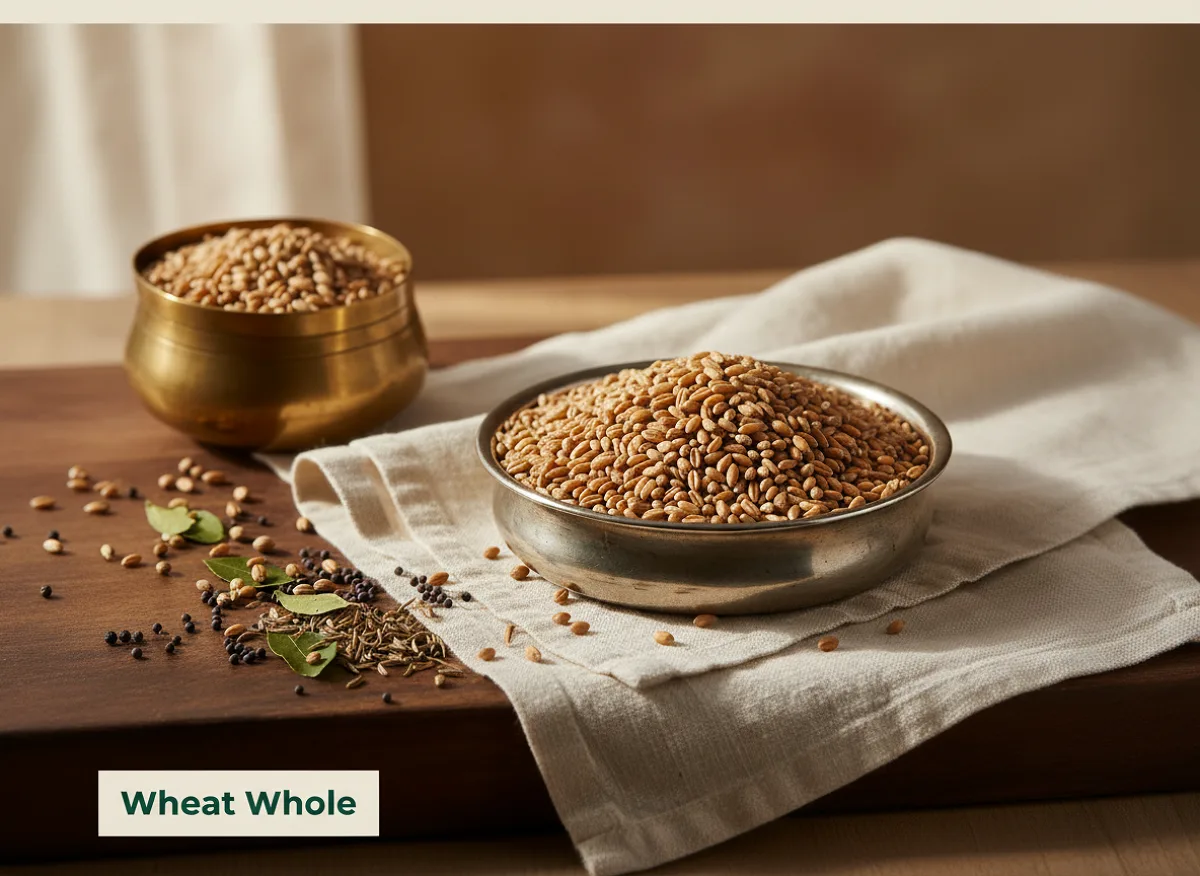
Whole wheat (गेहूँ, gehun) is the complete grain - kernel, bran, and germ intact - that forms the backbone of Indian bread-making and everyday cooking. Golden-brown, firm grains with a slightly nutty flavour, whole wheat is ground into atta for rotis, parathas, and pooris, or coo...
Nutrition per 100 g
Mean values ± IFCT published SD (edible portion).
More macros
Classification
About Wheat Whole
What it is
Whole wheat (गेहूँ, gehun) is the complete grain kernel - bran, germ, and endosperm together - harvested from the wheat plant and dried for storage. The grains are small, hard, and golden-brown, with a mild, slightly sweet and nutty flavour when cooked. In India, whole wheat is most commonly ground into fine atta flour for daily bread-making, but the whole grains themselves are also boiled, roasted, or sprouted for porridges, upma, and breakfast dishes. It is the staple cereal across North India and increasingly across the country. (IFCT 2017, Ref #A020)
Use in Indian Kitchen
Whole wheat atta is the foundation of Indian flatbreads - rotis, phulkas, parathas, and pooris - made fresh in home kitchens every day. In South India, whole wheat is sometimes mixed with rice flour for dosa or idli batter. Whole grains are boiled and eaten as a breakfast porridge (daliya or broken wheat upma), sprouted for salads and snacks, or roasted and ground into a coarse flour for ladoos and halwa. In North India, whole wheat khichdi (mixed with lentils and ghee) is comfort food and a light meal for recovery. A practical tip: sift atta through a fine mesh before kneading to remove any bran specks and ensure a smooth dough, especially for delicate pooris.
Key Nutrients
Whole wheat is rich in dietary fibre (from the bran), B vitamins (thiamine, niacin, folate), iron, magnesium, phosphorus, and manganese. It also contains plant proteins and complex carbohydrates. Exact nutrient composition varies slightly by variety and growing region; refer to IFCT 2017 (Ref #A020) for standardised Indian food values.
Health Benefits (Evidence-based)
- High in dietary fibre, which supports digestive health and may help maintain steady blood sugar levels.
- Contains B vitamins essential for energy metabolism and nervous system function.
- Good source of plant-based iron and magnesium, minerals important for oxygen transport and muscle function.
- The intact bran and germ retain antioxidants and phytonutrients lost in refined white flour.
- May support heart health when part of a balanced diet, linked to improved cholesterol profiles in some studies.
- Provides sustained satiety due to fibre and protein content, helpful for weight management.
Culinary Uses (Vegetarian)
- Ground into atta for rotis, phulkas, parathas, and pooris.
- Boiled whole grains as daliya (broken wheat porridge) with ghee and jaggery.
- Sprouted wheat in salads, upma, or mixed into dough for added nutrition.
- Roasted and ground for halwa, ladoos, and barfi fillings.
- Mixed with lentils for khichdi, a nourishing one-pot meal.
- Coarse flour in traditional sweets and savoury snacks across regions.
Caution
- People with celiac disease or gluten sensitivity must avoid wheat entirely.
- Those with wheat allergy should consult a healthcare provider before consumption.
- Whole wheat atta can turn rancid if stored in warm, humid conditions; keep in an airtight container in a cool, dry place.
- Sprouted wheat may carry bacterial contamination if not prepared hygienically; rinse thoroughly and sprout in clean conditions.
References
- Indian Council of Medical Research - National Institute of Nutrition (ICMR-NIN). Indian Food Composition Tables (IFCT 2017). Reference #A020 (Cereals and Millet - Wheat Whole).
- Seal, C. J., & Brownlee, I. A. (2015). Whole-grain foods and chronic disease: evidence from epidemiological and intervention studies. Proceedings of the Nutrition Society, 74(3), 313-319.
Health Benefits
- Supports Digestion
- Supports Heart Health
- Provides B Vitamins
- Provides Minerals
- Helps Blood Sugar Control
Sourcing & Storage
Storage
Store whole wheat grains in an airtight, food-grade container (glass jar, metal tin, or sealed plastic container) in a cool, dry place away from direct sunlight and moisture. In warm, humid climates, keep the container in a cupboard or pantry away from the stove. Whole wheat atta (flour) should also be stored in an airtight container; in high humidity or warm seasons, refrigerate or freeze to prevent rancidity and insect infestation. Keep away from strong-smelling foods, as wheat absorbs odours easily.
Shelf Life
Whole wheat grains, when stored in an airtight container in a cool, dry place, keep for 6-8 months. Whole wheat atta (flour) has a shorter shelf life - typically 2-3 months at room temperature in cool climates, or 1-2 months in warm, humid conditions. Refrigerated atta lasts 4-6 months; frozen atta can be stored for up to 1 year. Once opened, use within the timeframe above and watch for any musty smell or discolouration, which indicate spoilage.
Check Before You Buy
When buying whole wheat grains from a mandi or kirana store, look for grains that are uniform in colour (golden-brown), firm, and free of dust, debris, or broken pieces. Avoid grains with a musty or off smell, which suggests moisture or mould. Check the packaging date on branded atta; fresher is better. If buying loose atta, ask the shopkeeper when it was ground and milled. Reputable brands often list the milling date on the pack. Avoid atta that feels lumpy or damp to the touch, as this indicates moisture absorption and potential spoilage.
In Ayurveda
In Ayurveda, wheat (gehun) is classified as having a sweet (madhura) rasa and is considered heavy (guru) and unctuous (snigdha) in quality. It is traditionally believed to pacify Vata and Pitta doshas, making it a grounding and nourishing staple grain. Classical texts recommend whole wheat preparations, particularly as porridge or in bread form, to build strength (bala) and vitality, especially during winter months and for those recovering from illness.