Amaranth
Amaranthus cruentus · Also known as Rajgira, Ramdana
Amaranth, known as rajgira or ramdana in Hindi, is a tiny grain packed with protein and minerals that we've used in Indian kitchens for centuries. You'll find it popped like a snack, ground into flour for rotis and halwa, or cooked whole as a porridge. Its mild, slightly nutty fl...
Nutrition per 100 g
Edible portion values from the master catalog.
More macros
Classification
About Amaranth
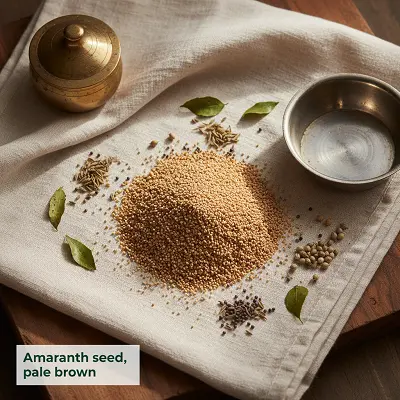
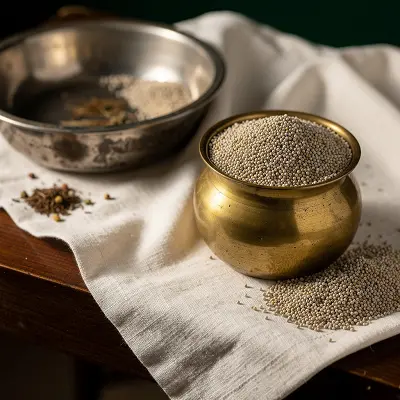
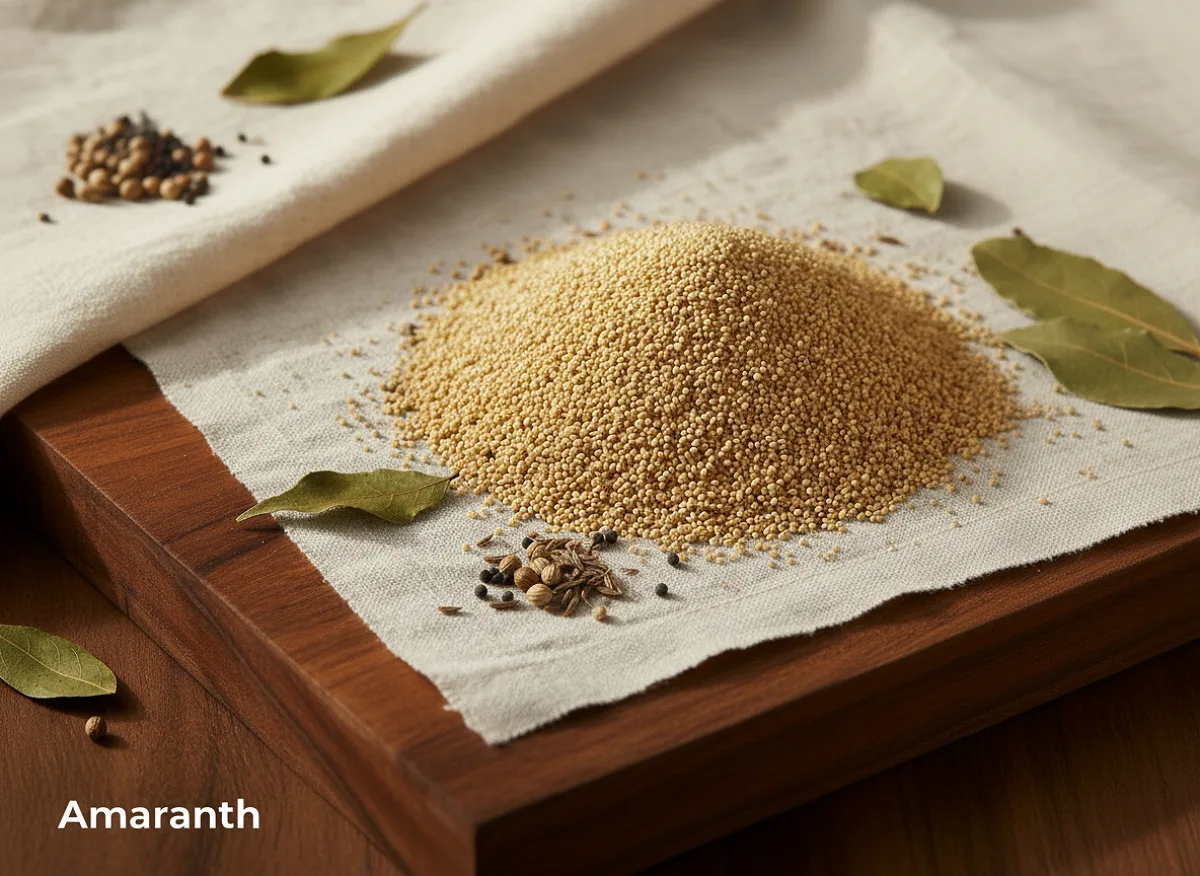
Amaranth is a tiny, round grain that ranges from cream to pale gold in colour. When cooked, the grains become soft and slightly sticky, with a mild, subtly sweet and nutty flavour. The grain is so small that it cooks faster than most cereals, making it convenient for everyday cooking. In Indian homes, we use both the whole grain and the flour - popped amaranth becomes a light, crispy snack, while the flour is ground fine for rotis, halwa, and upma.
Traditionally, amaranth has held a special place in fasting meals and vrat ka khana, where its gentle nature and quick cooking time made it ideal for simple, nourishing dishes. Over time, home cooks have embraced it beyond fasting seasons - in breakfast porridges, mixed into dough for soft rotis, and as a thickener in khichdi and dal preparations. The grain absorbs flavours well, so it pairs beautifully with ghee, jaggery, and warming spices like cardamom and cinnamon.
Some of the traditional benefits of amaranth include:
- High in plant-based protein, making it valuable for vegetarian and vegan diets
- Rich in minerals like iron, magnesium, and phosphorus
- Contains fibre, which may support digestion
- Naturally gluten-free, suitable for those avoiding wheat
- Traditionally considered light and easy to digest
- Known for its warming, grounding qualities in Ayurvedic cooking
- Often used in convalescent and post-natal diets for its nourishing nature
Whether you're making a simple breakfast porridge, a festive halwa, or soft rotis for the family meal, amaranth brings both nutrition and a gentle, comforting presence to the table.
Health Benefits
- Supports Digestion
- Supports Heart Health
- Helps Blood Sugar Control
- Provides Iron
- Supports Muscle Growth
Sourcing & Storage
Storage
Store amaranth grains and flour in airtight glass jars or containers, away from direct sunlight and heat. Keep them in a cool, dry cupboard or pantry - moisture and humidity are the main enemies, especially in Indian summers. If you live in a humid region or during the monsoon, consider storing the jar in the refrigerator or adding a food-grade silica packet inside the container to absorb any moisture. Once opened, seal the container tightly after each use. Amaranth flour, being finely ground, absorbs moisture more easily than whole grains, so extra care with airtight sealing is worth the effort.
Shelf Life
Amaranth grains, when stored in an airtight container in a cool, dry place, will keep for about 8 to 12 months. Amaranth flour has a slightly shorter shelf-life of around 4 to 6 months due to its finer texture and greater exposure to air and moisture. Once opened, use the grains within 2 to 3 months for best flavour and texture. In humid climates or during monsoon, refrigerating the container can extend freshness. If you notice any off-smell, discolouration, or signs of moisture clumping, it's best to discard and buy fresh.
Check Before You Buy
When buying amaranth from your local kirana or mandi, look for grains that are uniform in colour - a pale cream to light golden tone is ideal. The grains should be dry, free-flowing, and without any musty or stale smell. Avoid bags with visible moisture, clumping, or discolouration, which may indicate age or poor storage. Check the packaging for any tears or damage, and if buying loose from a vendor, ask when the stock arrived and ensure the container is clean and dry.
For amaranth flour, the colour should be pale and consistent, with no grey or brown streaks that might suggest adulteration or age. Smell the flour if possible - it should have a mild, slightly sweet grain aroma, never sour or musty. Avoid flour that feels damp or clumpy to the touch. If buying from a trusted vendor who grinds flour fresh, that's often your best bet for quality and freshness. Always check the date on packaged goods and choose the most recent batch available.
In Ayurveda
How Important is Amaranth?
Amaranth is a highly nutritious seed that has been valued for centuries due to its exceptional health benefits. It is considered a superfood because it is packed with essential nutrients such as protein, fiber, iron, magnesium, and vitamins like vitamin A and C. It is naturally gluten-free, making it an excellent choice for individuals with gluten sensitivity or those following a gluten-free diet.
In addition to its rich nutritional profile, Amaranth is known for its ability to improve digestion, boost immunity, and support heart health. The high fiber content aids in digestive health by promoting regular bowel movements, while its antioxidants help reduce inflammation and strengthen the immune system.
Amaranth is also a great source of plant-based protein, making it ideal for vegetarians and vegans looking to boost their protein intake. It can be easily incorporated into various dishes, including puddings, khichdi, parathas, and laddus, providing a healthy and delicious addition to any meal.
Overall, Amaranth is an essential food for those looking to enhance their diet with nutrient-dense, wholesome ingredients.