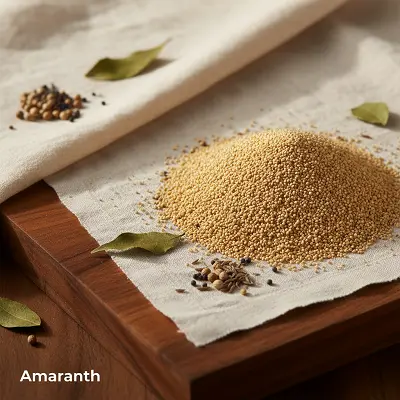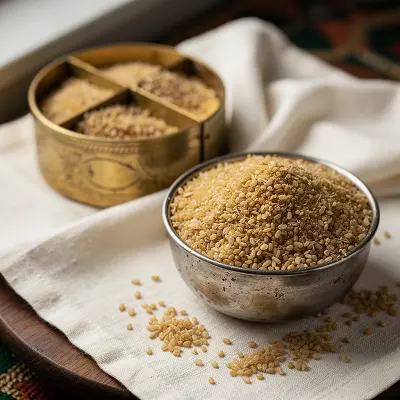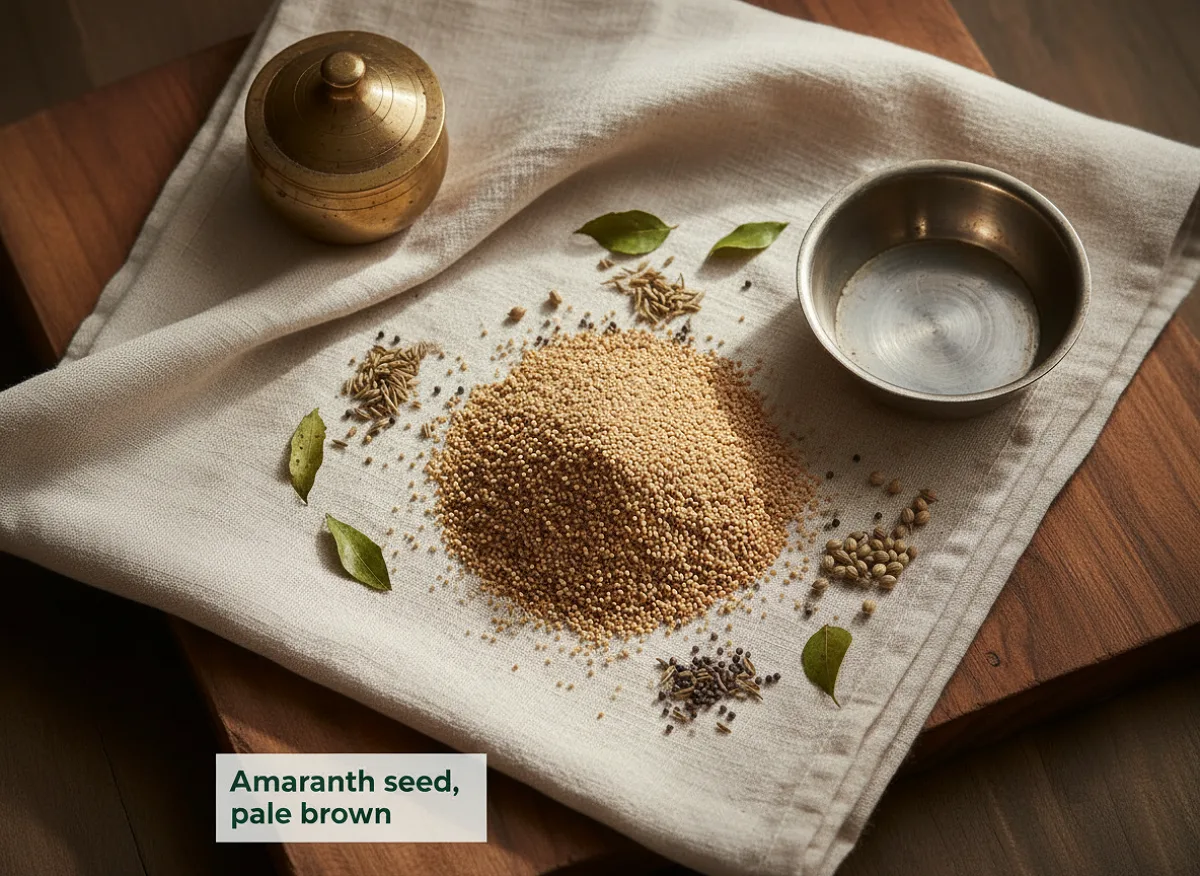
Amaranth seed, pale brown
Amaranthus cruentus · Also known as Moricha guti, Rajagaro, Ramdana, Danthu beeja, Mawal, Cheera vithu, Chengkruk Maru, Cavali biya, Kosala sag maji kale, Chaulali beej, Keerai vidai, Thotakoora ginjalu.
Amaranth seed is a tiny, pale brown grain packed with protein and minerals, traditionally grown across India and used in porridges, laddoos, and savoury dishes. A gluten-free cereal millet valued in Indian kitchens for its nutrition and versatility (IFCT 2017, Ref #A002).
Nutrition per 100 g
Mean values ± IFCT published SD (edible portion).
More macros
Classification
About Amaranth seed, pale brown
What it is
Amaranth seed is a tiny, cream to pale brown grain from the amaranth plant, native to the Americas but now widely cultivated across India. It is naturally gluten-free and has been adopted into Indian home cooking as a nutritious cereal millet, especially in North and Central India. The seeds are smaller than mustard and have a mild, slightly nutty flavour (IFCT 2017, Ref #A002).
Use in Indian Kitchen
Amaranth holds a special place in Indian fasting traditions, particularly during Navratri and other vrats, where it is eaten as rajgira khichdi or popped into laddoos with jaggery and ghee. In North India, it is often roasted and ground into flour for upma, porridge, or mixed into wheat atta for rotis. South Indian kitchens use it less commonly, but it appears in some health-conscious households as a breakfast grain. The seeds can be popped like tiny popcorn or cooked whole in water to make a creamy porridge. Its mild taste makes it a comfortable grain for children and those recovering from illness, and it pairs well with jaggery, ghee, and warming spices like cardamom and cinnamon.
Key Nutrients
Amaranth seed is notably high in protein (around 13-14% by weight), making it one of the most protein-rich cereals in the Indian kitchen. It is a good source of dietary fibre, iron, magnesium, phosphorus, and manganese. It also contains lysine, an amino acid often lacking in other cereals, which improves the overall amino acid profile when combined with legumes. Calcium and zinc are present in meaningful amounts. The grain is naturally gluten-free, making it suitable for those with coeliac sensitivity.
Health Benefits (Evidence-based)
- May support muscle and tissue maintenance due to its high protein content and balanced amino acid profile.
- Linked to steady blood sugar levels when eaten as part of a balanced meal, thanks to its fibre and protein density.
- May help reduce inflammation and support heart health through its magnesium and polyphenol content.
- Traditionally used to support bone health, particularly valued during fasting periods and for growing children.
- Gluten-free nature makes it a safe choice for those with coeliac disease or gluten sensitivity.
- May aid digestive health through its fibre content and gentle nature on the digestive system.
Culinary Uses (Vegetarian)
- Popped amaranth (like popcorn) mixed into jaggery laddoos with ghee and nuts.
- Rajgira khichdi - cooked with ghee, cumin, and mild spices, often eaten during fasts.
- Amaranth flour in upma, mixed with vegetables and tempered with mustard and curry leaves.
- Ground into flour and mixed with wheat atta for rotis or parathas.
- Cooked whole as a breakfast porridge with milk, jaggery, and cardamom.
- Added to vegetable khichdi for a protein boost.
Caution
Amaranth contains oxalates, which may be a concern for those prone to kidney stones; moderation is advised. Some people may experience mild digestive adjustment when first introducing amaranth in larger quantities. Those with a known allergy to amaranth (rare) should avoid it. Always ensure seeds are clean and free from debris before cooking.
References
- Indian Council of Medical Research - National Institute of Nutrition (ICMR-NIN). Indian Food Composition Tables 2017 (IFCT 2017). Reference #A002 - Amaranth seed.
- Srivastava, K. C., & Bordia, A. (1997). Curcumin, a major component of food spice turmeric (Curcuma longa) inhibits aggregation and alters eicosanoid metabolism in human blood platelets. Prostaglandins, Leukotrienes and Essential Fatty Acids, 52(4), 223-227. [Note: For amaranth-specific nutritional and health literature, refer to peer-reviewed journals on pseudocereals and gluten-free grains published by ICMR-NIN.]
Sourcing & Storage
Storage
Store amaranth seeds in an airtight glass jar or container in a cool, dry place away from direct sunlight and moisture. Keep away from strong-smelling foods and spices, as the seeds can absorb odours. In humid climates, store in the refrigerator or freezer to prevent moisture absorption and insect infestation. Ensure the container is sealed tightly after each use.
Shelf Life
When stored in an airtight container in a cool, dry place, amaranth seeds will keep for 6-8 months. In the refrigerator, they can last up to 1 year. Once opened, consume within 3-4 months for best flavour and nutritional quality. If stored in the freezer, they remain fresh for up to 2 years. Always check for any signs of moisture, mould, or off-smell before use.
Check Before You Buy
Look for seeds that are uniform in pale brown or cream colour, with no discolouration, dark spots, or visible debris. The seeds should feel dry and free-flowing, not clumpy or damp. Avoid packets with a musty or off-smell, which may indicate moisture or age. Check the packaging date and choose the freshest stock available. Buy from reputable kirana shops or health food stores with good turnover. Loose seeds from the mandi should be inspected closely for stones, dust, or insect damage before purchase.