Wheat, vermicelli, roasted
Triticum aestivum · Also known as Gom sewai, Semai, Very thin pasta, Ghaun ni Shekeli sev, Siwain, Shevige, Sewian, Sewai saw, Semiya, Simai, Bhooni sevian
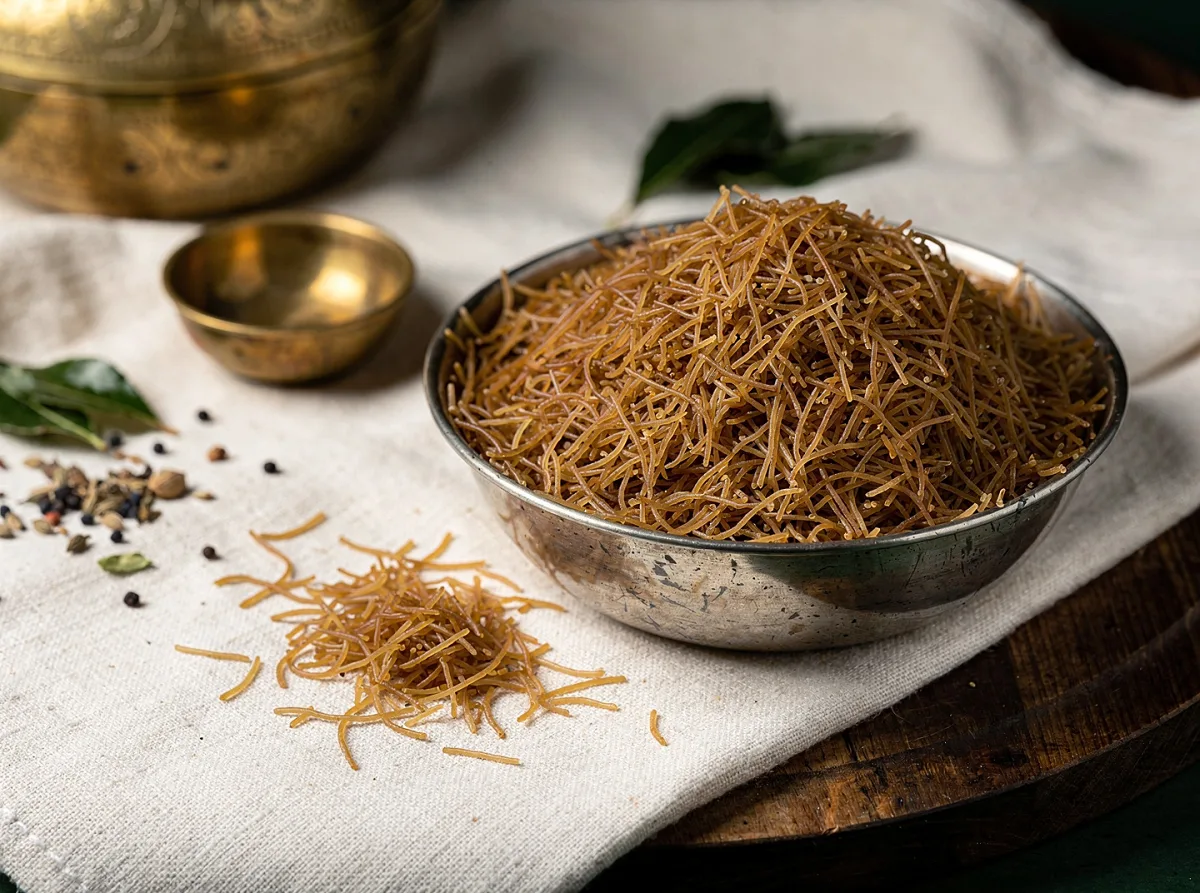
Roasted wheat vermicelli is a thin, crispy pasta made from wheat flour, lightly toasted to bring out a nutty flavour. A staple in Indian kitchens for both sweet and savoury dishes, it cooks quickly and absorbs flavours well. (IFCT 2017, Ref #A024)
Nutrition per 100 g
Mean values ± IFCT published SD (edible portion).
More macros
Classification
About Wheat, vermicelli, roasted
What it is
Roasted wheat vermicelli is a fine, strand-like pasta made from wheat flour, pre-toasted during manufacture to give it a light golden colour and a subtle nutty aroma. The roasting process reduces moisture and extends shelf life while adding depth to its flavour. It is a staple carbohydrate in Indian home cooking, used in both sweet and savoury preparations. (IFCT 2017, Ref #A024)
Use in Indian Kitchen
Vermicelli holds a cherished place across Indian regions. In North India, it is the soul of kheer - a creamy rice pudding made with milk, ghee, and dry fruits, especially during festivals and celebrations. In South India, it appears in upma (a savoury breakfast porridge) and sweet payasam. East and West Indian kitchens use it in both sweet and savoury contexts. The roasted variety is preferred because it browns quickly in ghee, releasing a warm, toasted aroma that transforms even simple dishes. Many Indian grandmothers keep a packet on hand for quick comfort meals - a handful of vermicelli, some ghee, milk, and jaggery can become a nourishing dessert in minutes.
Key Nutrients
Roasted wheat vermicelli is primarily a source of carbohydrates and provides dietary fibre, protein, and B vitamins (particularly thiamine and niacin). It also contains small amounts of iron and magnesium. Exact nutrient composition per serving is detailed in IFCT 2017, Ref #A024.
Health Benefits (Evidence-based)
- May provide sustained energy due to its carbohydrate content, making it suitable for breakfast or light meals.
- Contains dietary fibre, which may support digestive health when consumed as part of a balanced diet.
- A source of B vitamins, linked to energy metabolism and nervous system function.
- Iron content may help support oxygen transport in the body, particularly when paired with vitamin C-rich foods.
- Quick-cooking nature makes it practical for busy households seeking nutritious, home-cooked meals.
Culinary Uses (Vegetarian)
- Sweet kheer - cooked in milk with ghee, sugar, and garnished with nuts and cardamom.
- Savoury upma - tempered with mustard seeds, curry leaves, and vegetables.
- Payasam - a South Indian dessert made with jaggery or condensed milk.
- Quick pulao - mixed with vegetables, ghee, and spices for a one-pot meal.
- Breakfast porridge - cooked in milk or water with jaggery and ghee.
- Soup base - added to vegetable broths for body and texture.
Caution
- Contains gluten; unsuitable for those with coeliac disease or gluten sensitivity.
- High in refined carbohydrates; portion control recommended for those managing blood sugar levels.
- May cause bloating if consumed in large quantities without adequate water intake.
- Check packaging for added salt or preservatives, especially in commercial brands.
References
- Indian Council of Medical Research - National Institute of Nutrition (ICMR-NIN). Indian Food Composition Tables (IFCT) 2017. Reference #A024 - Cereals and Millet category.
- Gopalan, C., Rama Sastri, B. V., & Balasubramanian, S. C. (2016). Nutritive Value of Indian Foods. National Institute of Nutrition, ICMR, Hyderabad.
Sourcing & Storage
Storage
Store roasted wheat vermicelli in an airtight container or its original sealed packet in a cool, dry place away from direct sunlight and moisture. Keep away from strong-smelling foods as vermicelli can absorb odours. In humid climates, store in an airtight glass jar or sealed plastic container to prevent moisture absorption and insect infestation. Avoid damp kitchen shelves; a cupboard or pantry shelf is ideal.
Shelf Life
When stored properly in an airtight container in a cool, dry place, roasted wheat vermicelli typically keeps for 6 to 8 months. Once opened, transfer any remaining vermicelli to an airtight container and use within 2 to 3 months. In very humid conditions, shelf life may be shorter; discard if you notice any off-smell, discolouration, or signs of insect activity.
Check Before You Buy
Look for vermicelli that is light golden in colour with a uniform, fine texture. The strands should be dry, brittle, and break cleanly when bent - avoid any that feel soft or clumpy, which may indicate moisture absorption or age. Smell the packet if possible; good roasted vermicelli has a warm, toasted aroma without any musty or rancid notes. Check the manufacturing and expiry dates on the packet. Buy from reputable brands or trusted kirana shops to avoid adulteration. Avoid packets with visible dust, discolouration, or damage to the seal.