Wheat Vermicelli
Triticum aestivum · Also known as Seviyan, sewaiyan, vermicelli noodles
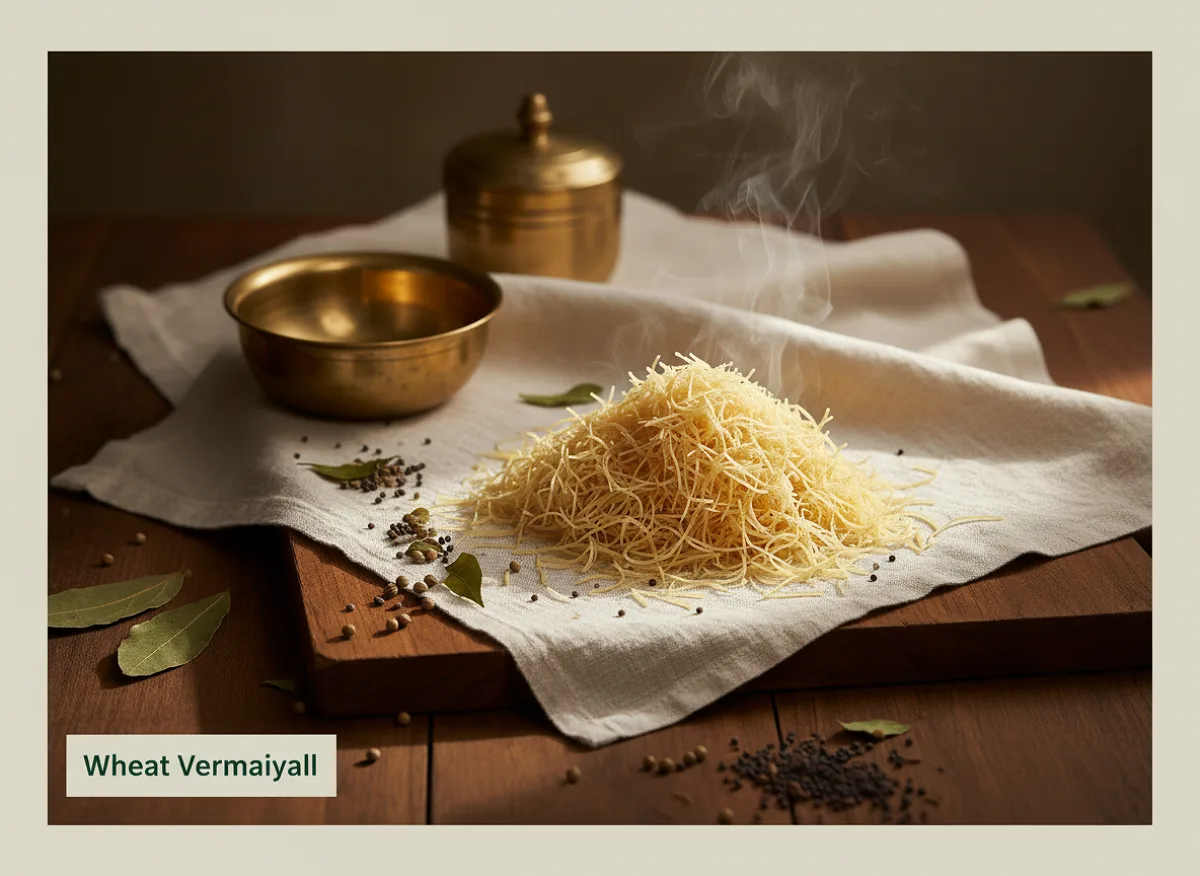
Wheat vermicelli (seviyan) is a fine, thread-like pasta made from wheat flour and water, pressed into delicate strands. Light golden when raw, it crisps quickly in hot ghee or oil and absorbs flavours beautifully. A beloved comfort ingredient across Indian kitchens - roasted in g...
Nutrition per 100 g
Mean values ± IFCT published SD (edible portion).
More macros
Classification
About Wheat Vermicelli
What it is
Wheat vermicelli (seviyan) is a fine, thread-like wheat pasta made from refined wheat flour and water, extruded into thin strands and dried. It is pale golden or cream-coloured when raw, and becomes crisp and light when roasted in ghee or oil. A staple across North and South Indian kitchens, it is used in both sweet and savoury dishes and cooks in minutes. (IFCT 2017, Ref #A023)
Use in Indian Kitchen
Wheat vermicelli is most loved roasted in ghee and folded into warm milk with jaggery, nuts, and cardamom for kheer - a festival and celebration dessert. In savoury form, it becomes upma when fried with mustard seeds, curry leaves, peas, and onions for a quick breakfast or light lunch. South Indian homes use it in sweet payasam, while some regions prepare it as a simple side dish (seviyan fry) with vegetables and spices. The key technique is to roast it gently in ghee until fragrant and light golden before adding liquid - this prevents clumping and gives a tender, separate texture.
Key Nutrients
Wheat vermicelli is primarily carbohydrate-rich, providing energy through starch. It contains protein, dietary fibre (especially in whole wheat versions), B vitamins including niacin and thiamine, and minerals such as iron and magnesium. Exact nutrient composition varies by brand and processing; refer to IFCT 2017 (Ref #A023) for standardised values.
Health Benefits (Evidence-based)
- Quick source of carbohydrate energy, useful for post-workout recovery or light meals.
- Provides B vitamins that support energy metabolism and nervous system function.
- Iron content may help support oxygen transport, particularly when paired with vitamin C sources.
- Low in fat when prepared with minimal ghee or oil, making it suitable for lighter diets.
- Easy to digest and gentle on the stomach, often recommended for convalescence or sensitive digestion.
Culinary Uses (Vegetarian)
- Roasted in ghee and simmered in warm milk with jaggery, cardamom, and nuts for kheer.
- Fried with mustard seeds, curry leaves, peas, onions, and spices for upma.
- Cooked in vegetable broth with carrots, beans, and peas for a light one-pot meal.
- Sweetened with jaggery and coconut milk for South Indian payasam.
- Toasted and added to soups or light broths for texture.
- Mixed with yoghurt and fresh herbs for a cold salad (less common but refreshing in summer).
Caution
- Refined wheat vermicelli is low in fibre; those seeking higher fibre intake may prefer whole wheat versions or combine with vegetable-rich dishes.
- Contains gluten; unsuitable for those with coeliac disease or gluten sensitivity.
- Often cooked with ghee or oil; portion control recommended for those managing fat intake.
- May cause bloating if eaten in large quantities without adequate water intake.
References
- Indian Council of Medical Research - National Institute of Nutrition (ICMR-NIN). Indian Food Composition Tables (IFCT 2017). Hyderabad: NIN; 2017. Reference #A023 (Cereals and Millet - Wheat Vermicelli).
- Food Safety and Standards Authority of India (FSSAI). Food Safety and Standards (Labelling and Display) Regulations, 2020. New Delhi: FSSAI.
Health Benefits
- Provides Energy
- Easy Digestion
- Quick Energy Source
Sourcing & Storage
Storage
Store wheat vermicelli in an airtight container or sealed packet in a cool, dry place away from direct sunlight and moisture. Keep away from strong-smelling foods, as vermicelli can absorb odours. In humid climates, store in the refrigerator or freezer in an airtight container to prevent moisture absorption and insect infestation. Ensure the container is completely dry before sealing.
Shelf Life
Unopened, good-quality wheat vermicelli lasts 6-12 months when stored in a cool, dry place. Once opened, transfer to an airtight container and use within 2-3 months. In humid or warm climates, refrigeration extends shelf life to 4-6 months after opening. Frozen vermicelli remains fresh for up to 1 year.
Check Before You Buy
Look for vermicelli that is pale golden or cream-coloured, with no discolouration, dark spots, or visible moisture. The strands should be intact and not broken or powdery. Check the packaging for the manufacturing and expiry dates, and ensure the packet is sealed and undamaged. Avoid any product with a musty or off smell, which indicates moisture or age. Buy from reputable brands or trusted kirana shops to reduce the risk of adulteration or poor storage.
In Ayurveda
Wheat vermicelli is considered a light, easily digestible carbohydrate in Ayurvedic practice. It is often recommended in convalescent diets and for those with weak digestion due to its quick assimilation. The refined flour base makes it suitable for gentle, nourishing preparations, particularly when combined with ghee and milk in traditional kheer.