Wheat Flour
Triticum aestivum · Also known as gehoon ka aata, maida (refined), atta, whole wheat flour, gehun
Wheat flour (gehoon ka aata) is the ground grain of wheat, a staple cereal that forms the foundation of Indian breads, sweets, and batters. Whole wheat flour retains the bran and germ, offering a nuttier taste and coarser texture; refined white flour (maida) is smoother and light...
Nutrition per 100 g
Mean values ± IFCT published SD (edible portion).
More macros
Classification
About Wheat Flour
What it is
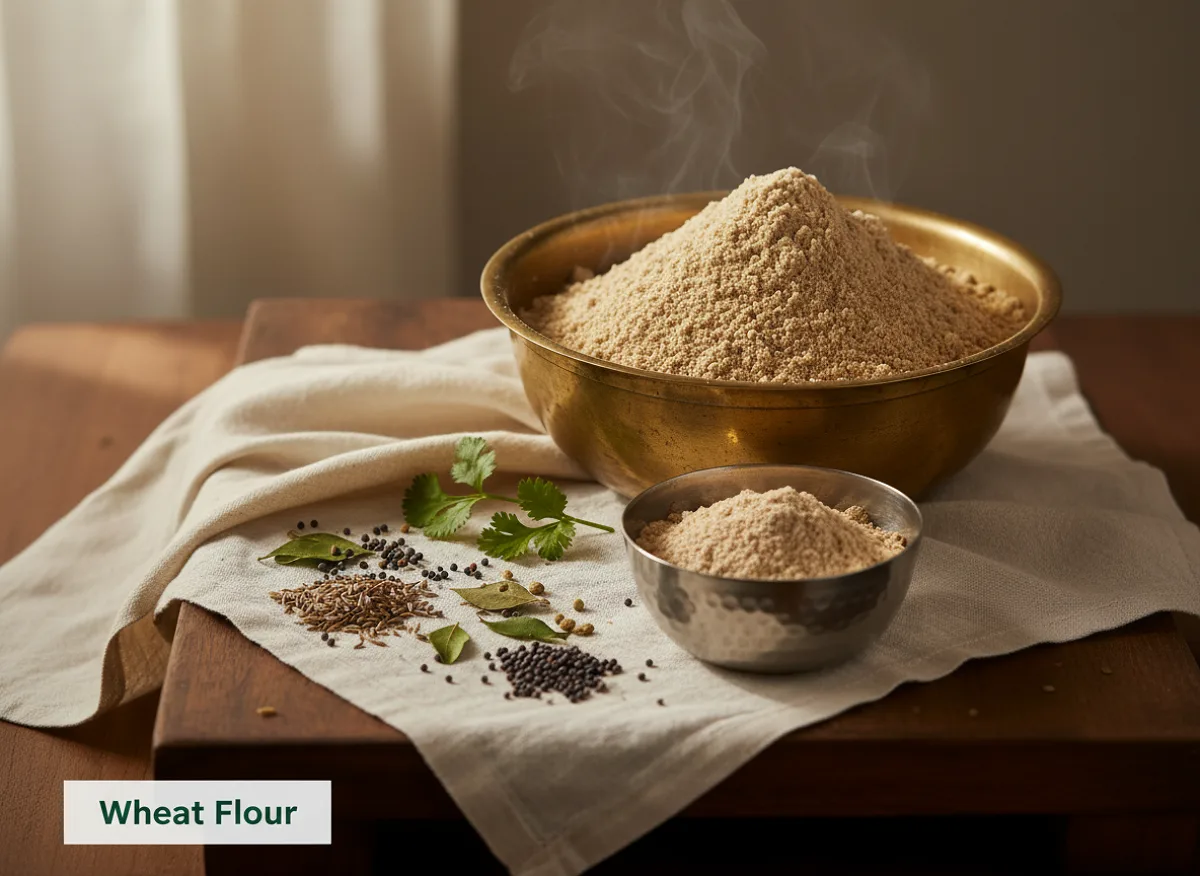
Wheat flour (gehoon ka aata) is milled from wheat grains, a cereal staple used across Indian kitchens in two main forms: whole wheat flour (atta), which retains the bran and germ for a darker, nuttier character; and refined white flour (maida), which is finely milled and bleached for a smooth, pale powder. Whole wheat flour has a slightly coarse texture and earthy flavour, while maida is silky and neutral. Both are essential for breads, batters, and sweets. (IFCT 2017, Ref #A019)
Use in Indian Kitchen
Wheat flour is the backbone of Indian bread-making: whole wheat atta is kneaded into dough for everyday rotis, parathas, and naan; maida features in refined breads, pastries, and sweets like halwa, laddu, and barfi. In North India, atta dough is rolled thin and cooked on a tawa for soft rotis; in the South, it appears in some regional breads and as a thickener in gravies. Whole wheat flour can be dry-roasted before grinding into sweets to deepen flavour and reduce raw taste. A practical tip: knead atta with warm water and a pinch of salt for softer, more pliable dough; rest it for 20-30 minutes before rolling to improve elasticity.
Key Nutrients
Wheat flour is rich in carbohydrates (the primary energy source), dietary fibre (especially in whole wheat), protein, B vitamins (thiamine, niacin, folate), iron, magnesium, and phosphorus. Whole wheat retains significantly more fibre and micronutrients than refined maida. Exact nutrient composition varies by milling method and variety; refer to IFCT 2017 for detailed values.
Health Benefits (Evidence-based)
- Whole wheat flour provides sustained energy and may help maintain steady blood sugar levels due to its fibre and lower glycaemic index compared to refined flour.
- Dietary fibre in whole wheat supports digestive health and regular bowel function.
- B vitamins, particularly in fortified or whole grain varieties, support energy metabolism and nervous system function.
- Iron and magnesium content contributes to oxygen transport and muscle function.
- Whole wheat flour may promote satiety, helping with portion control in meals.
Culinary Uses (Vegetarian)
- Whole wheat atta: rotis, parathas, naan, bhakri, and everyday flatbreads.
- Maida: refined breads, pastries, cakes, halwa, laddu, barfi, and batters for pakora and bhajiya.
- Thickener in curries, gravies, and soups.
- Base for dough in samosa, kachori, and other fried pastries.
- Dry-roasted flour (suji-style preparation) for sweets and upma-like dishes.
Caution
- Those with coeliac disease or gluten sensitivity must avoid wheat flour entirely and use certified gluten-free alternatives.
- Refined maida lacks the fibre and micronutrients of whole wheat; regular consumption of refined flour alone may not provide optimal nutrition.
- Store in airtight containers away from moisture and pests to prevent mould and insect infestation, especially in humid climates.
References
- Indian Council of Medical Research - National Institute of Nutrition (ICMR-NIN). Indian Food Composition Tables (IFCT 2017). Reference #A019 (Cereals and Millet - Wheat Flour).
- Food Safety and Standards Authority of India (FSSAI). Labelling and Display Regulations for Fortified Wheat Flour and Maida (relevant for packaged products in India).
Health Benefits
- Provides Energy
- Supports Digestion
- Supports Heart Health
- Provides B Vitamins
- Provides Minerals
Sourcing & Storage
Storage
Store wheat flour in an airtight, moisture-proof container (glass jar, metal tin, or sealed plastic container) in a cool, dry place away from direct sunlight and heat sources. In humid climates, keep the container in a cupboard or pantry with good ventilation. Avoid storing near spices or strong-smelling foods, as flour absorbs odours easily. If you notice any musty smell, discolouration, or signs of insect activity, discard the flour immediately.
Shelf Life
Whole wheat flour typically keeps for 2-3 months when stored in an airtight container at room temperature; refined maida lasts 4-6 months due to lower oil content. Once opened, use within 1-2 months for best quality. In hot, humid climates, shelf life may be shorter; refrigeration or freezing in airtight bags can extend freshness to 6-12 months. Always check for rancid smell or pest damage before use.
Check Before You Buy
When buying from a mandi or kirana shop, look for flour that is fine, uniform in colour (cream to light tan for whole wheat; white or off-white for maida), and free of lumps or discolouration. Smell the flour - it should have a mild, pleasant grain aroma with no musty or sour notes. Check the packaging date on branded products and choose the most recent batch. Avoid flour with visible insects, webbing, or moisture clumping. If buying loose flour, ask the shopkeeper about the milling date and storage conditions. Whole wheat flour should feel slightly coarser than maida; if maida feels gritty or has a yellowish tinge, it may be adulterated or poorly stored.
In Ayurveda
Wheat flour is traditionally regarded in Ayurveda as a grounding, nourishing grain that pacifies Vata dosha. Its rasa (taste) is sweet, its gunas (qualities) are heavy and oily, and its vipaka (post-digestive effect) is also sweet. This combination makes it warming and stabilizing for the nervous system and digestion.
Classically, whole wheat flour is prepared as a nutritive halwa with ghee and jaggery to support recovery from weakness, fatigue, and convalescence. It is also valued for building ojas (vital essence) and promoting strength and endurance.