Walnut
Juglans regia · Also known as Akharot, akhrot, walnut kernel, English walnut, Persian walnut
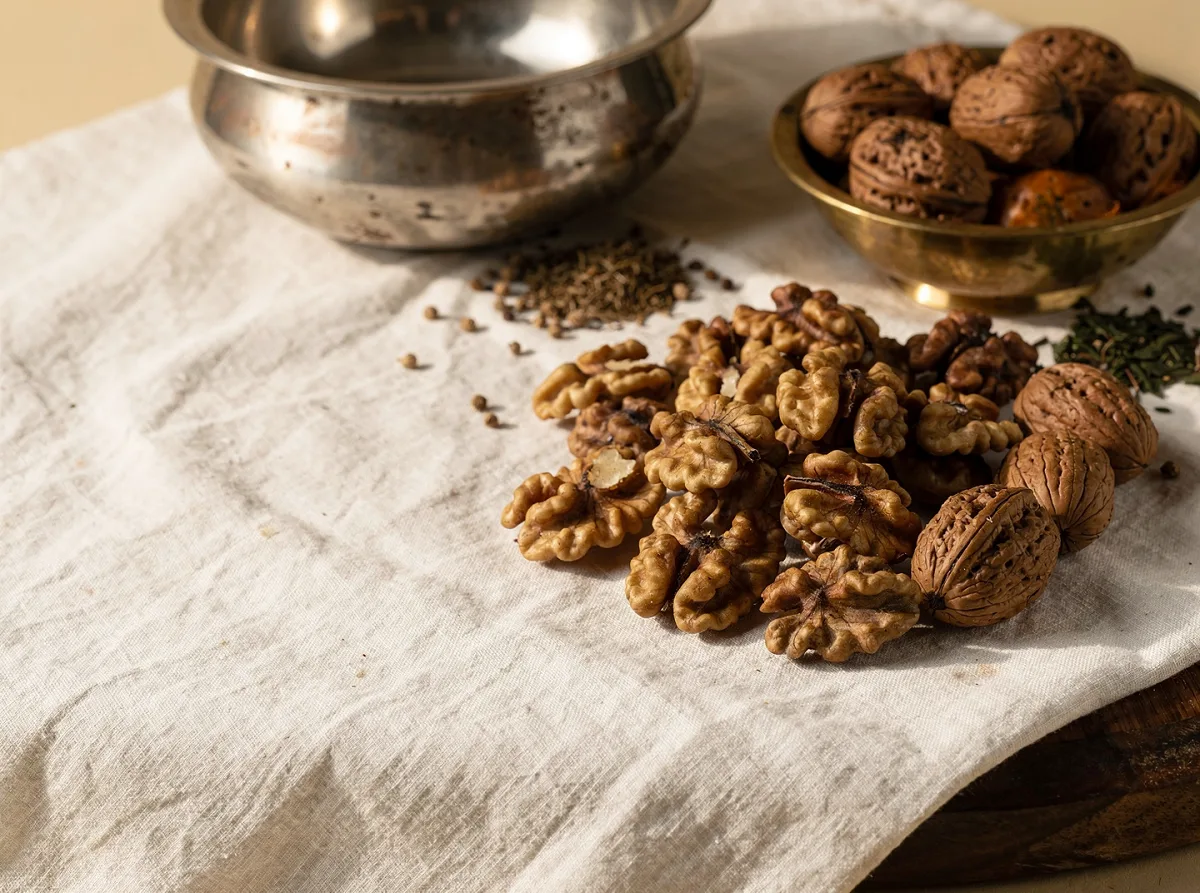
Walnut (अखरोट, akharot) is a brain-shaped tree nut with a hard, wrinkled shell and creamy ivory kernel inside. Rich in omega-3 fatty acids and antioxidants, walnuts are eaten whole, roasted, or ground into pastes and powders. They feature in Indian sweets, halwas, ladoos, and are...
Nutrition per 100 g
Mean values ± IFCT published SD (edible portion).
More macros
Classification
About Walnut
What it is
Walnut (अखरोट, akharot) is a tree nut enclosed in a hard, deeply wrinkled brown shell. The kernel inside is pale cream-coloured, with a slightly bitter, earthy flavour and a soft, buttery texture when fresh. Walnuts are sold whole in shell, shelled as halves or pieces, or as walnut powder and oil. They are a staple in North Indian and Kashmiri kitchens, and increasingly popular across India as a health food. (IFCT 2017, Ref #H021)
Use in Indian Kitchen
Walnuts are most commonly soaked overnight in water and eaten raw first thing in the morning, a practice rooted in Ayurvedic wellness routines. They are ground into pastes for halwas (walnut halwa), mixed into ladoos with jaggery and ghee, and crushed as a topping for kheer and payasam. In Kashmir, walnuts feature in wazwan dishes and are used to thicken gravies. Roasted and salted walnuts are a popular snack, and walnut oil is drizzled over salads and dals. A practical tip: soak walnuts for 8-12 hours to soften the skin and improve digestibility; the soaking water can be discarded or used in cooking.
Key Nutrients
Walnuts are rich in alpha-linolenic acid (ALA, a plant-based omega-3 fatty acid), polyunsaturated fats, protein, dietary fibre, magnesium, phosphorus, copper, and manganese. They also contain polyphenols and other antioxidants. Exact nutrient composition varies slightly by variety and harvest; refer to IFCT 2017 for detailed micronutrient profiles.
Health Benefits (Evidence-based)
- May support heart health through omega-3 fatty acids and polyphenols, which help maintain healthy cholesterol and blood pressure.
- Linked to improved brain function and memory, traditionally valued in Indian wellness for mental clarity and focus.
- May aid digestive health due to dietary fibre content and prebiotic compounds that support gut bacteria.
- Antioxidants in walnuts may help reduce oxidative stress and inflammation in the body.
- May support bone health through minerals like magnesium, phosphorus, and copper.
- Traditionally used in Ayurvedic practice to balance vata dosha and nourish the nervous system.
Culinary Uses (Vegetarian)
- Soaked overnight and eaten raw as a morning health ritual.
- Ground into walnut halwa with ghee, jaggery, and cardamom.
- Crushed and mixed into ladoos, barfis, and other Indian sweets.
- Topping for kheer, payasam, and rice puddings.
- Roasted and salted as a snack or added to trail mixes.
- Ground into nut butters or pastes for spreads and fillings.
- Walnut oil used in dressings for salads and drizzled over warm dals.
Caution
- Walnuts are calorie-dense; portion control is important for weight management (a small handful, about 28 g or 7-8 halves, is a standard serving).
- May cause allergic reactions in people with tree nut allergies; symptoms can range from mild itching to severe anaphylaxis.
- High in omega-6 polyunsaturated fats; balance intake with omega-3 sources for optimal fat ratio.
- Rancid or mouldy walnuts should be discarded, as they may contain harmful compounds.
- Pregnant and nursing women should consume walnuts in moderation and consult a healthcare provider if concerned.
References
- Indian Council of Medical Research - National Institute of Nutrition (ICMR-NIN). Indian Food Composition Tables (IFCT 2017). Hyderabad: NIN; 2017. Category H - Nuts and Seeds, Ref #H021.
- Ros E. Health benefits of nut consumption. Nutrients. 2010;2(7):652-682. (General reference on walnut nutrition and health; specific Indian studies on soaked walnut consumption available through NIN publications.)
Health Benefits
- Anti Inflammatory
- Heart Health Support
- Supports Brain Health
- Improves Cognition
Sourcing & Storage
Storage
Store walnuts in an airtight container in a cool, dry place away from direct sunlight and moisture. In warm, humid Indian climates, refrigerate shelled walnuts in an airtight glass jar or sealed plastic container to prevent rancidity. Whole walnuts in shell keep longer than shelled kernels. Keep away from strong-smelling foods, as walnuts absorb odours easily.
Shelf Life
Whole walnuts in shell, stored in a cool dry place, keep for 6-12 months. Shelled walnuts last 3-6 months at room temperature, and 6-12 months when refrigerated in an airtight container. Once opened, consume within 2-4 weeks for best flavour and freshness. Frozen walnuts in a sealed container can last up to 2 years.
Check Before You Buy
When buying whole walnuts in shell, choose nuts that feel heavy for their size and have no cracks, holes, or soft spots. Shake gently - a rattle inside suggests the kernel has shrivelled. Shelled walnuts should be pale cream-coloured, not darkened or discoloured, and should smell fresh and slightly sweet, never musty or rancid. Buy from reputable kirana shops or mandis with good turnover. Packed walnuts should have a clear expiry date and be sealed; avoid packages with visible moisture or mould. If buying walnut powder or oil, check the manufacturing date and ensure the container is properly sealed.
In Ayurveda
In Ayurveda, walnuts are considered warming (ushna virya) and nourishing, with a sweet taste (madhura rasa) and oily quality (snigdha guna). They are traditionally used to balance Vata and support Kapha, making them especially beneficial during winter months. Classical texts recommend walnuts for enhancing memory, mental clarity, and overall vitality, particularly for children and the elderly.