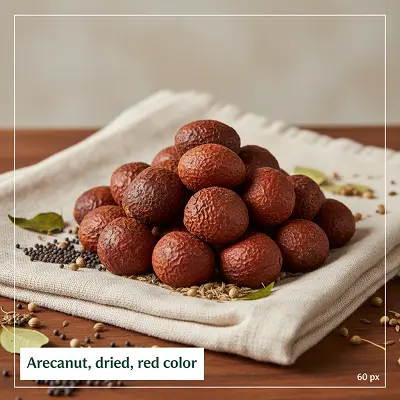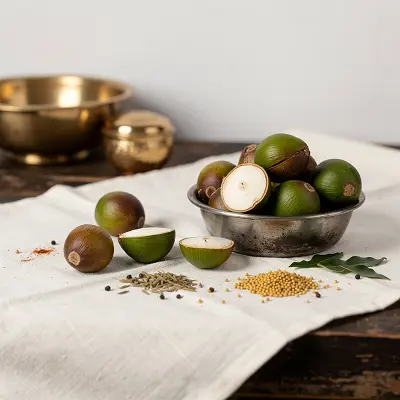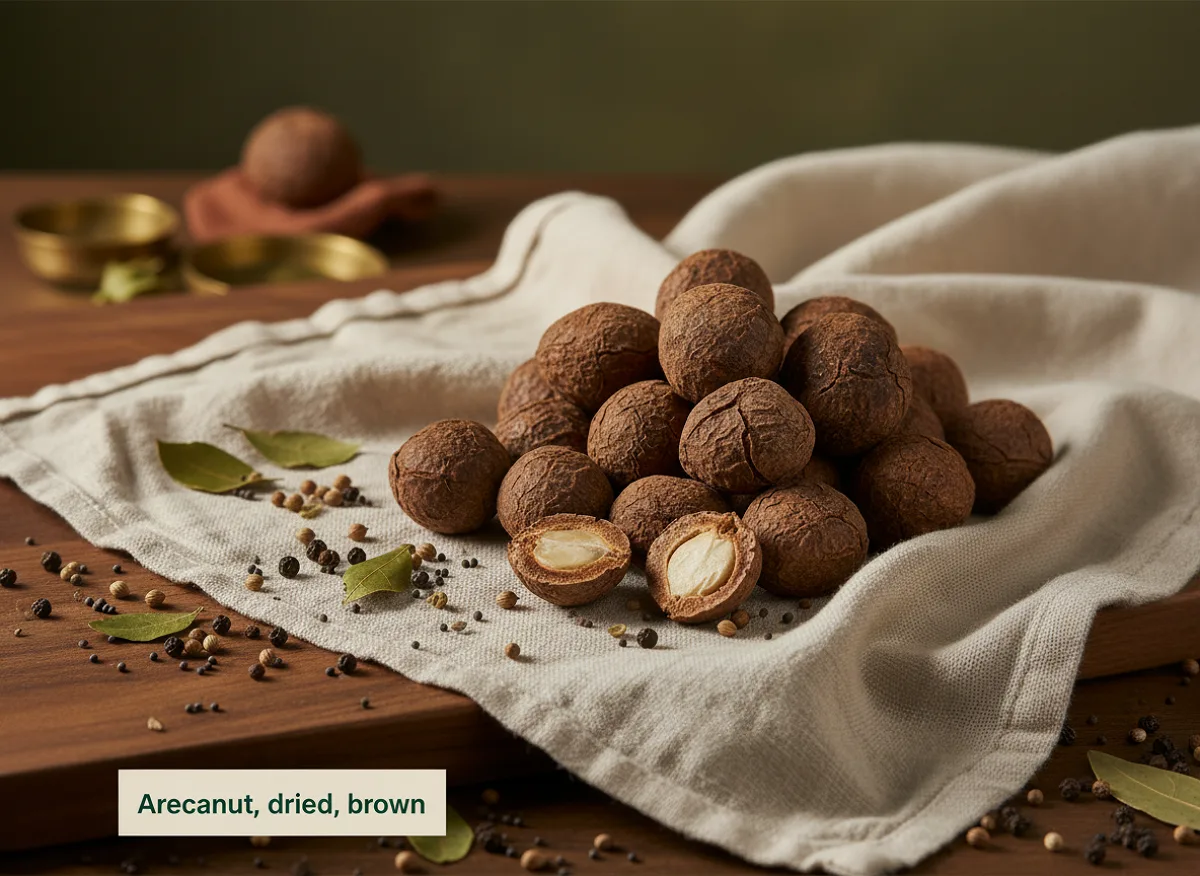
Arecanut, dried, brown
Areca catechu · Also known as Sufari, Supari, Areca nut, Betel nut, Sopari, Adike, Kwai tyrkhong, Adakka, Kwa Maru, Gua, Puuga, Kottai paakku, Vakka
Arecanut, also called betel nut or supari, is the dried seed of the areca palm. Commonly chewed after meals across India, it's also ground into powder for traditional sweets, spice blends, and Ayurvedic preparations (IFCT 2017, Ref #H002).
Nutrition per 100 g
Mean values ± IFCT published SD (edible portion).
More macros
Classification
About Arecanut, dried, brown
What it is
Arecanut is the dried seed kernel of the areca palm (Areca catechu), native to South and Southeast Asia. In India, it's harvested, dried, and often cured to a deep brown colour. Known as supari in Hindi and regional languages, it's a staple in Indian households and markets (IFCT 2017, Ref #H002).
Use in Indian Kitchen
Arecanut holds a special place in Indian tradition. Across the South - particularly in Karnataka, Tamil Nadu, and Kerala - it's a key ingredient in pan masala and mouth fresheners served after meals. In the North and West, it's ground into fine powder and mixed into traditional sweets like barfi and laddoo, or blended into spice powders for savoury dishes. The slightly astringent, warm flavour adds depth to chutneys and pickles. It's also central to Ayurvedic formulations and home remedies. Chewing supari after a heavy meal is a time-honoured custom believed to aid digestion and freshen the breath.
Ayurvedic Connection
In classical Ayurveda, arecanut is considered warming (ushna virya) and is traditionally used to support digestive health and oral wellness. It is said to have astringent and slightly bitter qualities, and is often included in digestive churns and mouth-care preparations. However, Ayurvedic texts also caution against excessive use, particularly for those with high pitta constitution.
Key Nutrients
Arecanut contains tannins, polyphenols, and alkaloids (including arecoline). It also provides fibre, minerals including manganese and copper, and small amounts of B vitamins. Exact nutrient composition is documented in IFCT 2017 (Ref #H002).
Health Benefits (Evidence-based)
- May support digestive function and help freshen breath when chewed in moderation.
- Contains polyphenols and tannins, which are linked to antioxidant activity.
- Traditionally used in Ayurvedic and folk medicine to support oral health and gum wellness.
- The astringent properties may help tone oral tissues when used in rinses or preparations.
Culinary Uses (Vegetarian)
- Ground into fine powder and mixed into traditional Indian sweets (barfi, laddoo, kheer).
- A key component of pan masala and mouth fresheners served after meals.
- Blended into spice powders and masalas for savoury curries and rice dishes.
- Used in chutneys, pickles, and digestive powders.
- Infused into Ayurvedic formulations and home digestive tonics.
Caution
- Arecanut contains arecoline and tannins; excessive or frequent chewing may stain teeth and gums over time.
- Some individuals may experience mild mouth irritation or allergic sensitivity; discontinue if discomfort occurs.
- Pregnant and nursing mothers should consult a healthcare provider before regular use.
- Those with high pitta constitution or sensitive digestion should use sparingly and preferably under Ayurvedic guidance.
- Not suitable for young children due to choking risk and potential for habit formation.
References
- Indian Council of Medical Research - National Institute of Nutrition (ICMR-NIN). Indian Food Composition Tables (IFCT 2017). Reference #H002 (Nuts and Seeds category).
- Gupta, P. C., & Ray, C. S. (2004). Epidemiology of betel quid usage. Annals of the Academy of Medicine, Singapore, 33(4), 31S-36S.
Sourcing & Storage
Storage
Store dried arecanut in an airtight container in a cool, dry place away from direct sunlight and moisture. In humid Indian climates, keep the container in a cupboard or sealed jar with a desiccant packet (such as silica gel) to prevent mould and moisture absorption. Whole nuts store better than ground powder; grind only as needed.
Shelf Life
Whole dried arecanut keeps for 6-12 months when stored in an airtight container in a cool, dry place. Ground arecanut powder has a shorter shelf life of 2-3 months due to faster oxidation and moisture absorption. Once opened, transfer to an airtight jar and use within the recommended timeframe, especially in humid conditions.
Check Before You Buy
When buying arecanut from a mandi or kirana shop, look for nuts that are hard, dense, and uniformly brown with no soft spots or visible mould. Avoid nuts that feel light or hollow, as they may be old or poorly dried. The aroma should be warm and slightly astringent, not musty or off-smelling. Check for signs of insect damage or discolouration. Packaged supari should have a clear label with harvest and expiry dates; prefer sealed packs over loose bulk to ensure freshness and reduce the risk of adulteration.