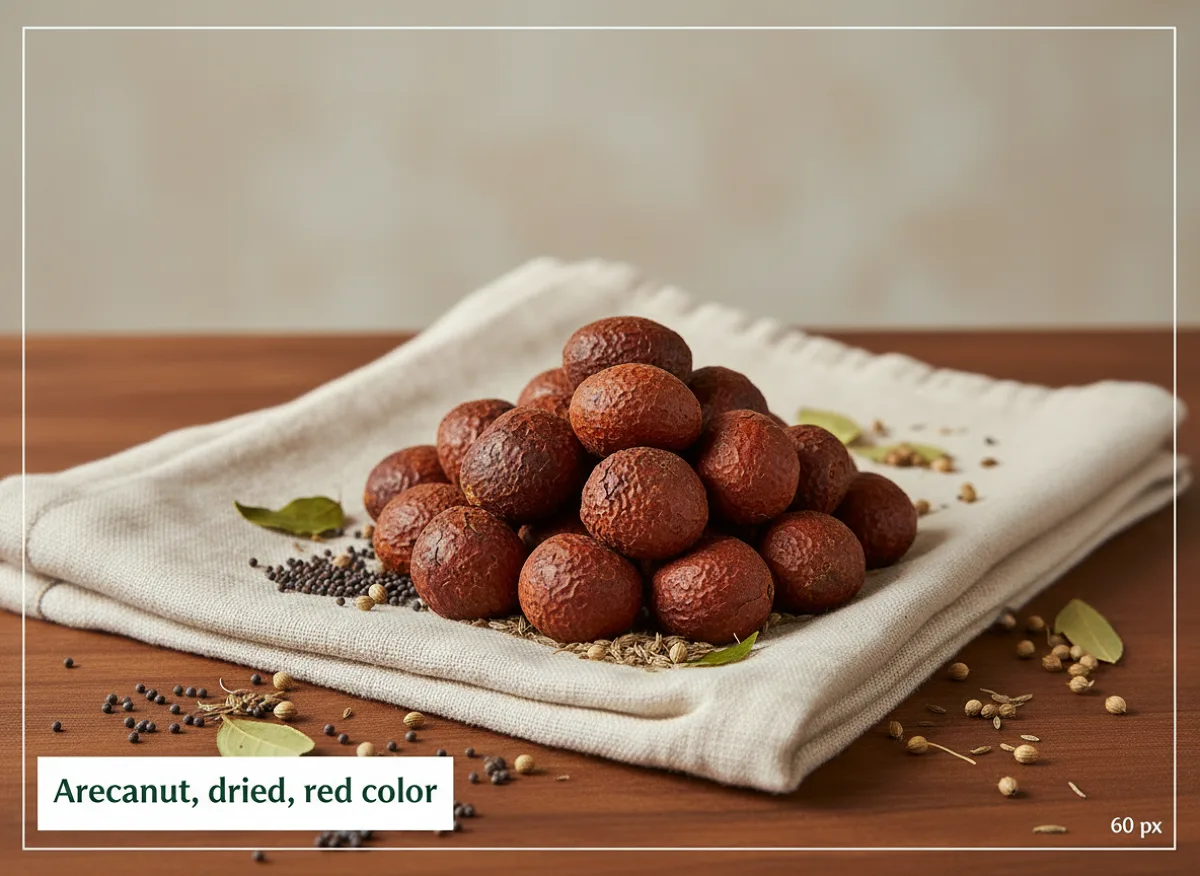
Arecanut, dried, red color
Areca catechu · Also known as Sufari, Supari, Areca nut, Betel nut, Sopari, Adike, Supaari, Kwai supari, Adakka, Kwa Maru, Gua, Puuga, Paakku, Vakka
Arecanut (also called betel nut or supari) is the dried seed of the areca palm, commonly used across India as a mouth freshener and digestive aid after meals. Rich in tannins and alkaloids, it has been part of Indian culinary and social traditions for centuries (IFCT 2017, Ref #H...
Nutrition per 100 g
Mean values ± IFCT published SD (edible portion).
More macros
Classification
About Arecanut, dried, red color
What it is
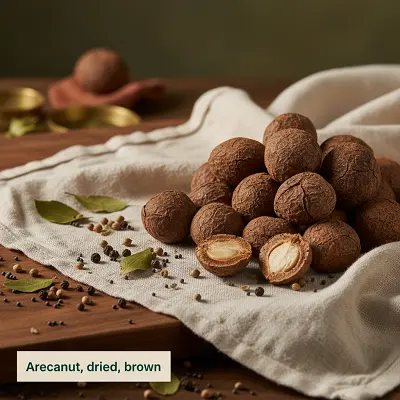
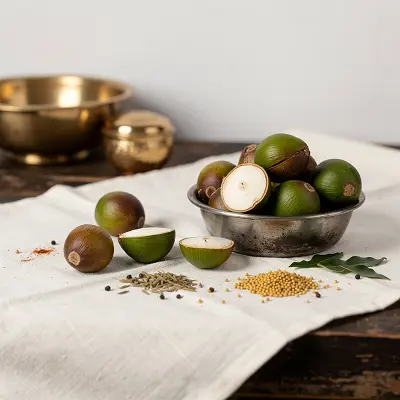
Arecanut is the dried seed kernel of the areca palm (Areca catechu), native to South and Southeast Asia. In India, it is most commonly sold as dried, reddish-brown pieces or whole nuts, ready to chew or slice. The nut has a hard, fibrous texture and a slightly astringent, earthy taste. It is classified under Nuts and Seeds in the IFCT food composition tables (IFCT 2017, Ref #H003).
Use in Indian Kitchen
Arecanut holds a special place in Indian culture, particularly across South India, Maharashtra, and Gujarat. It is traditionally offered as supari (often paired with betel leaf, lime, and spices) after meals as a digestive and mouth freshener. In North India, it appears in paan preparations and festive sweets. Sliced or powdered arecanut is also used in some regional spice blends and traditional remedies. The practice of chewing betel leaf with arecanut is deeply woven into Indian hospitality and social customs, though its use has evolved with modern health awareness.
Key Nutrients
Arecanut contains tannins, alkaloids (including arecoline), polyphenols, and trace minerals. Exact nutrient composition (protein, fat, fibre, and micronutrient levels) is documented in IFCT 2017 (Ref #H003); however, detailed figures are best consulted directly from the IFCT database or NIN publications for precision.
Health Benefits (Evidence-based)
- May support digestive function and stimulate saliva production, traditionally used as a post-meal digestive aid.
- Contains polyphenols and tannins linked to antioxidant properties in preliminary research.
- Traditionally valued for oral hygiene and freshening breath, though modern dental advice recommends moderation.
- Has been studied for potential antimicrobial activity, though evidence remains limited.
Culinary Uses (Vegetarian)
- Chewed plain or as part of betel leaf paan with lime, spices, and coconut.
- Sliced finely and added to festive sweets and mithai preparations.
- Ground into powder for use in traditional spice blends and home remedies.
- Offered as supari (often with fennel seeds and other spices) as a post-meal digestive.
Caution
- Arecanut is mildly addictive due to its alkaloid content and should be consumed in moderation.
- Prolonged or heavy chewing may stain teeth and gums and is linked to oral health concerns in some studies; dental professionals often advise limiting use.
- Pregnant and nursing women should consult a healthcare provider before regular consumption.
- May interact with certain medications; those on specific treatments should seek medical advice.
- Not suitable for young children due to choking risk and potential for habit formation.
References
- Indian Council of Medical Research - National Institute of Nutrition (ICMR-NIN). Indian Food Composition Tables (IFCT) 2017. Reference #H003 (Nuts and Seeds category).
- National Institute of Nutrition, ICMR. Food Composition Database. Available through NIN official publications and FSSAI regulatory resources.
Sourcing & Storage
Storage
Store dried arecanut in an airtight container in a cool, dry place away from direct sunlight and moisture. In humid Indian climates, keep the container in a cupboard or pantry with good ventilation. If you live in a very damp region, store in an airtight glass jar with a silica gel packet to prevent moisture absorption and mould growth. Avoid storing near strong-smelling foods, as arecanut can absorb odours.
Shelf Life
When stored properly in an airtight container in a cool, dry place, dried arecanut can last 6 to 12 months. Once opened, consume within 3 to 4 months for best quality and flavour. If stored in the refrigerator in an airtight container, shelf life may extend slightly, though room-temperature storage is typically sufficient if kept dry.
Check Before You Buy
Look for whole nuts or pieces that are firm, hard, and free from cracks or soft spots. The colour should be a consistent reddish-brown; avoid nuts that appear pale, greyish, or have dark mouldy patches. Check for a clean, slightly earthy aroma - musty or off smells indicate poor storage or age. If buying from a mandi or kirana shop, ask when the stock arrived and inspect the container for signs of moisture or insect damage. Packaged supari should have a clear manufacturing date and be sealed properly; avoid opened or damaged packets.