Arecanut, fresh
Areca catechu · Also known as Kesa tamul, Supari, Areca nut, Betel nut, Sopari, Adike, Supaari, Kwai im, Adakka, Kwa Maru, Gua, Puuga, Paakku, Vakka
Arecanut (betel nut), the seed of the areca palm, is a traditional ingredient across India, chewed fresh or dried, and used in regional sweets, spices, and ceremonial contexts. Rich in polyphenols and alkaloids, it has been part of Indian food culture for centuries (IFCT 2017, Re...
Nutrition per 100 g
Edible portion values from the master catalog.
More macros
Classification
About Arecanut, fresh
What it is
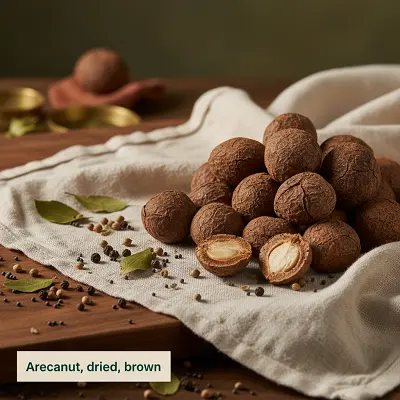
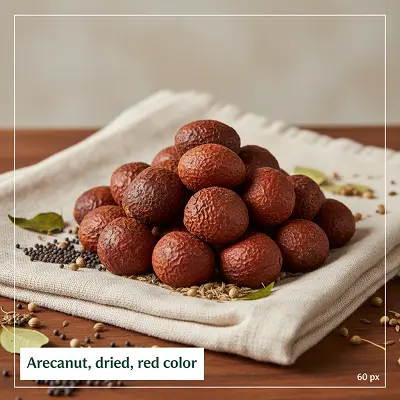
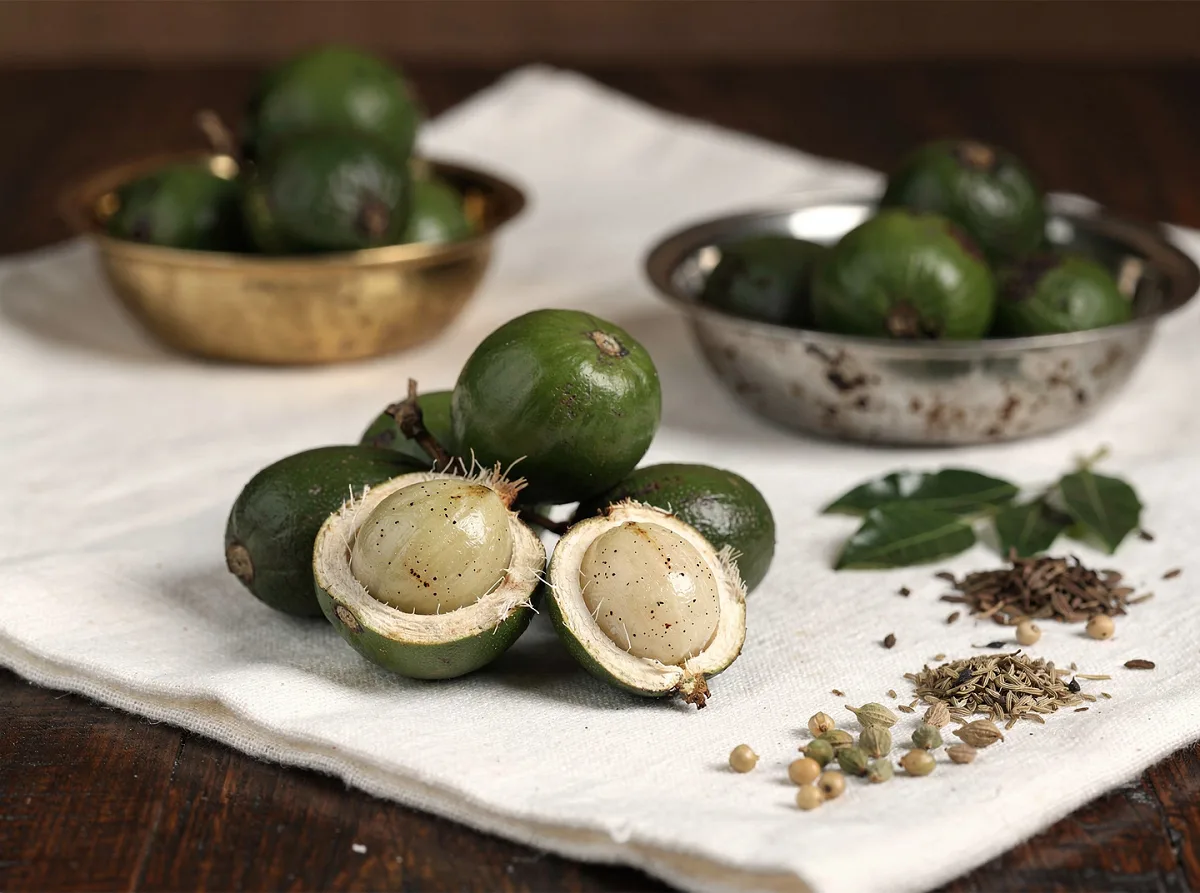
Arecanut, commonly called supari or betel nut in English, is the seed of the areca palm (Areca catechu). It grows in tropical regions across India, particularly in coastal and Western states. The fresh nut is pale, fibrous, and mildly astringent; when dried and sometimes roasted, it becomes harder and develops a deeper flavour. It is chewed fresh, dried whole, or ground into powder for use in sweets, spice blends, and traditional mouth fresheners (IFCT 2017, Ref #H004).
Use in Indian Kitchen
Arecanut holds deep cultural roots across India. In the South, particularly Kerala and Karnataka, fresh supari is chewed after meals as a digestive aid and mouth freshener. In the North and West, it is a key ingredient in mukhwas (spiced seed and nut mixes), traditional paan (betel leaf wraps), and festive sweets like supari pak. Ground supari is also added to spice powders, chutneys, and some regional pickles. It is offered during weddings, pujas, and family gatherings as a mark of hospitality and auspiciousness. The practice of chewing supari after meals is deeply woven into Indian home traditions, especially in coastal and peninsular households.
Key Nutrients
Arecanut contains polyphenols, tannins, alkaloids (including arecoline), fibre, and trace minerals. Exact nutrient composition varies by freshness and processing method; detailed micronutrient profiles are documented in IFCT 2017 under category H - Nuts and Seeds.
Health Benefits (Evidence-based)
- May support digestive function when chewed fresh, traditionally used as a post-meal digestive aid in Indian households.
- Contains polyphenols and tannins linked to antioxidant properties, which may help protect cells from oxidative stress.
- Traditionally associated with oral health and freshness; the mild astringency may help tone oral tissues.
- Has been used in classical Indian medicine to support general wellness and energy, though clinical evidence remains limited.
Culinary Uses (Vegetarian)
- Mukhwas and mouth fresheners: mixed with fennel, sesame, and spices for post-meal chewing.
- Paan filling: combined with betel leaf, lime, and spices for a traditional wrap.
- Supari pak: a festive brittle or fudge made with jaggery, ghee, and ground arecanut.
- Spice blends: ground into regional masalas and tempering mixes.
- Chutneys and pickles: added for depth and mild astringency in some regional recipes.
Caution
- Arecanut contains alkaloids and tannins; excessive or prolonged chewing may cause staining of teeth and gums over time.
- Some individuals may experience mild mouth irritation or allergic reactions; discontinue if discomfort occurs.
- Pregnant and nursing women should consult a healthcare provider before regular use.
- Not suitable for young children; supervise older children if offering as a mouth freshener.
References
- Indian Council of Medical Research - National Institute of Nutrition (ICMR-NIN). Indian Food Composition Tables 2017. Category H - Nuts and Seeds, Ref #H004.
- Gupta, P. C., & Ray, C. S. (2004). Epidemiology of betel quid usage. Annals of the Academy of Medicine, Singapore, 33(4), 31S-36S.
Sourcing & Storage
Storage
Store fresh arecanut in a cool, dry place away from direct sunlight and moisture. Keep in an airtight container or sealed pouch to prevent it from drying out too quickly or absorbing ambient humidity. In warm, humid climates (typical of coastal India), store in a cool cupboard or, if available, a refrigerator crisper drawer to slow mould growth. Dried supari should be kept in an airtight tin or glass jar in a dark, cool corner of the kitchen.
Shelf Life
Fresh arecanut keeps for 2 to 4 weeks in a cool, dry place; refrigeration can extend this to 6 to 8 weeks. Dried supari, when stored in an airtight container away from light and moisture, remains usable for 3 to 6 months. Once opened, consume within 2 to 3 weeks for best flavour and texture.
Check Before You Buy
When buying fresh arecanut at the mandi or kirana shop, look for nuts that feel firm and heavy for their size, with a pale cream or light brown colour and no soft spots or mould. Avoid nuts with cracks, dark patches, or a musty smell, which indicate age or moisture damage. If buying dried supari, check that it is hard and snaps cleanly when broken; soft or rubbery pieces suggest poor drying or storage. Packaged supari should have a clear date and be sealed; open the packet only if you can inspect the contents for uniformity and absence of debris or insect damage.