Sunflower Seeds
Helianthus annuus · Also known as Soorajamukhee ke beej, सूरजमुखी के बीज, sunflower kernels, helianthus seeds
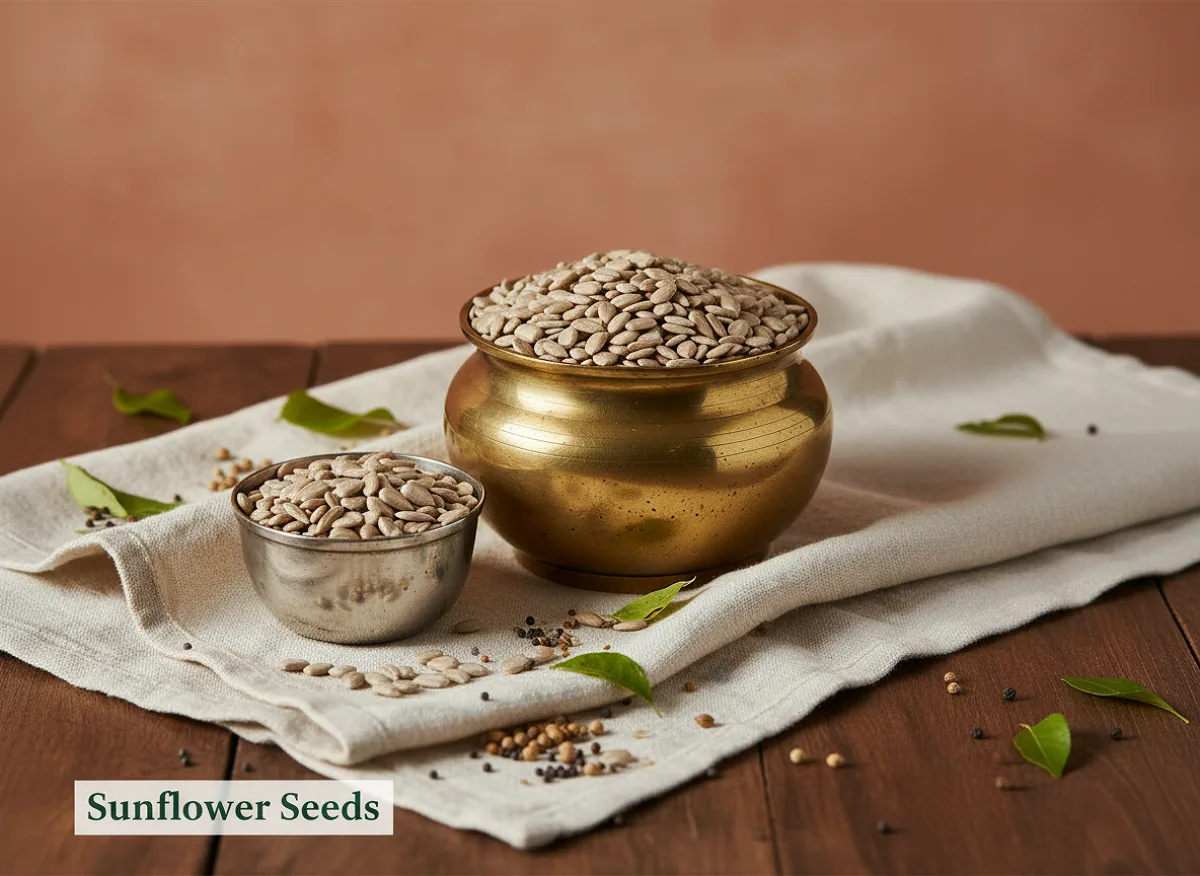
Sunflower seeds (सूरजमुखी के बीज, soorajamukhee ke beej) are small, flat, striped seeds with a mild, slightly nutty flavour and tender white kernel inside a thin shell. Whole or hulled, they are roasted as a snack, ground into flour for ladoos and barfi, or pressed for oil across...
Nutrition per 100 g
Mean values ± IFCT published SD (edible portion).
More macros
Classification
About Sunflower Seeds
What it is
Sunflower seeds (सूरजमुखी के बीज, soorajamukhee ke beej) are small, flat, striped seeds harvested from the large yellow sunflower bloom. Each seed holds a tender, pale kernel rich in oil and protein, enclosed in a thin black-and-white striped shell. They are sold whole (in shell), hulled (kernel only), or roasted and salted as a casual snack across North and South India. (IFCT 2017, Ref #H020)
Use in Indian Kitchen
Sunflower seeds appear in both sweet and savoury Indian cooking. In the North, they are roasted and eaten as a street snack or mixed into chikhalwali (seed and nut brittle). In the South, hulled seeds are ground into a fine flour and folded into ladoos, barfi, and halwa for a delicate nuttiness. They are also sprouted and added to salads, or dry-roasted and powdered as a thickener in curries and gravies. A light roasting before grinding releases their natural oils and improves digestibility; store roasted seeds in an airtight jar to keep them crisp.
Key Nutrients
Sunflower seeds are a good source of plant-based protein, dietary fibre, and healthy polyunsaturated fats (linoleic acid). They also contain vitamin E (a powerful antioxidant), B vitamins (especially folate and niacin), magnesium, phosphorus, and selenium. The hull contains additional fibre and phytochemicals.
Health Benefits (Evidence-based)
- May support heart health through their content of linoleic acid and vitamin E, which help maintain healthy cholesterol levels.
- Rich in antioxidants (vitamin E, selenium) that may help protect cells from oxidative stress.
- Good plant-based protein source, making them useful in vegetarian and vegan diets for muscle maintenance.
- High fibre content may support digestive health and regular bowel function.
- Magnesium content may help with bone health and muscle relaxation.
- Traditionally used in Indian wellness practices as a mild cooling food and energy booster.
Culinary Uses (Vegetarian)
- Roasted whole seeds as a casual snack or mixed into trail mix.
- Hulled kernels ground into flour for ladoos, barfi, and halwa.
- Sprouted seeds in salads and grain bowls.
- Dry-roasted and powdered as a thickener and flavour base in vegetable curries and dal.
- Cold-pressed oil for dressings and light cooking.
- Mixed into chikhalwali (brittle) with jaggery and other seeds.
Caution
- High in calories and fat; portion control is wise for those watching weight.
- May trigger allergies in sensitive individuals; introduce gradually if new to your diet.
- Whole seeds in shell can be a choking hazard for very young children; offer hulled kernels instead.
- Rancidity: roasted seeds can turn bitter if stored in warm, humid conditions; keep in a cool, dry place.
References
- Indian Council of Medical Research - National Institute of Nutrition (ICMR-NIN). Indian Food Composition Tables (IFCT 2017). Reference #H020 - Nuts and Seeds category.
- Goyal, A., Sharma, V., Upadhyay, N., Gill, S., & Sihag, M. (2014). Flax and flaxseed oil: an ancient medicine and modern functional food. Journal of Functional Foods, 17, 852-859. (General reference for seed-based nutrition in Indian diets.)
Health Benefits
- Anti Inflammatory
- Boosts Immunity
- Heart Health Support
- Improves Skin Health
Sourcing & Storage
Storage
Store sunflower seeds in an airtight glass jar or container in a cool, dry place away from direct sunlight and heat. In warm, humid Indian climates, keep them in the refrigerator or freezer to prevent rancidity and insect infestation. Whole seeds in shell last longer than hulled kernels. If you have roasted them at home, allow them to cool completely before sealing to avoid condensation.
Shelf Life
Whole sunflower seeds in shell, stored in a cool dry place, keep for 3-4 months. Hulled kernels last 1-2 months at room temperature, or 3-4 months refrigerated. Once opened, transfer to an airtight container; roasted seeds may lose crispness after 2-3 weeks if exposed to air or humidity. Frozen seeds remain fresh for up to 6 months.
Check Before You Buy
Look for seeds that are plump, uniform in colour, and free of cracks, mould, or dark spots. Smell them gently - fresh seeds have a mild, pleasant aroma; a musty or rancid smell indicates age or poor storage. Avoid seeds that feel damp or clumpy. If buying from a mandi or loose from a kirana shop, ask when they were harvested or roasted; seeds roasted within the last 2-3 weeks are fresher. Packed seeds should have a clear date and be sealed in moisture-proof packaging.
In Ayurveda
Sunflower seeds are not extensively documented in classical Ayurvedic texts, as the plant is a relatively modern introduction to the Indian subcontinent. However, in contemporary Ayurvedic practice, sunflower seeds are recognized for their warming (ushna) and nourishing (brimhana) properties. They are considered beneficial for vata and kapha constitutions when consumed in moderation, and are traditionally used to support skin health and digestive function.