Sesame - White
Sesamum indicum · Also known as til, gingelly seeds, white sesame seeds, तिल (til)
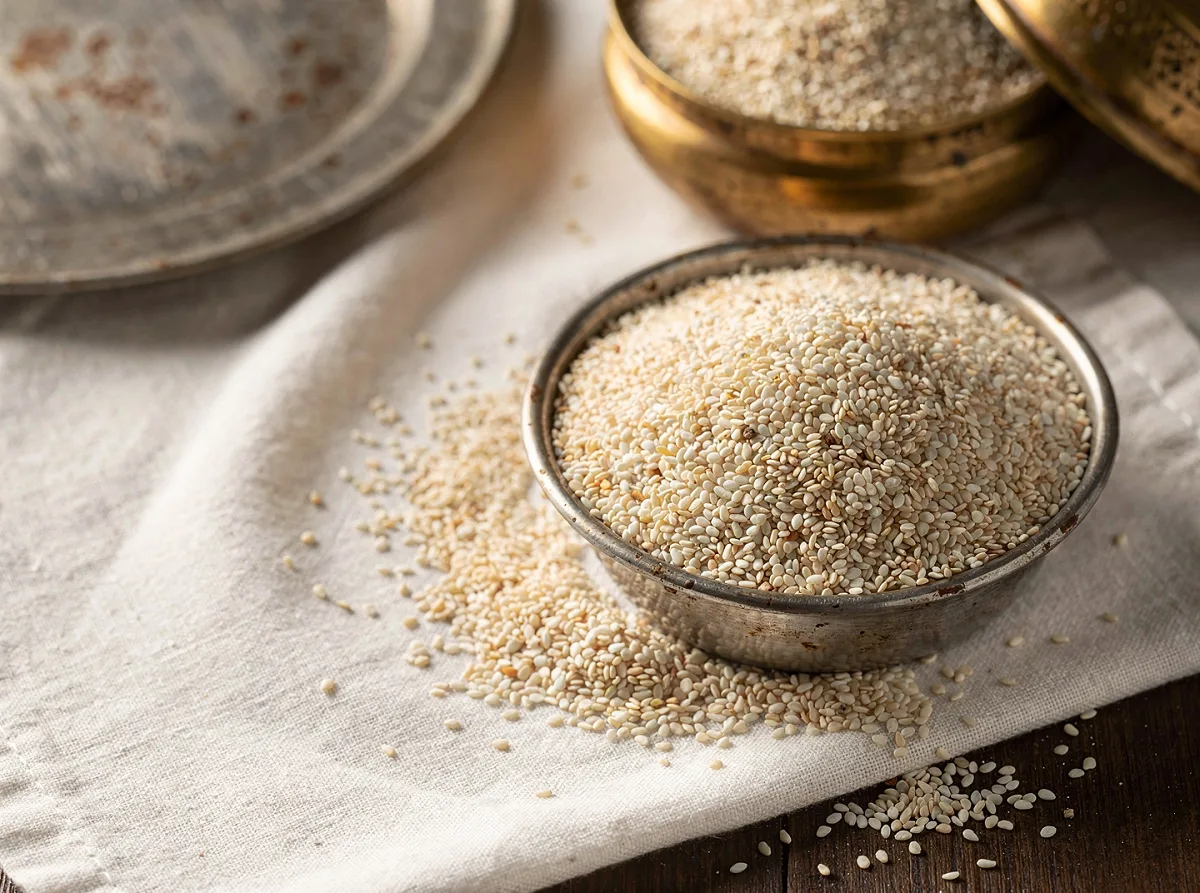
White sesame seeds (til) are small, flat, cream-coloured seeds packed with nutty flavour and rich oils. A cornerstone of Indian kitchens, they're toasted whole for tempering dals and curries, ground into paste for chutneys and sweets, or sprinkled over breads and salads. A light...
Nutrition per 100 g
Mean values ± IFCT published SD (edible portion).
More macros
Classification
About Sesame - White
What it is
White sesame seeds, known as til in Hindi and gingelly seeds in South India, are tiny oval seeds with a delicate cream colour and paper-thin hull. They have a mild, nutty taste and are rich in natural oils, making them one of India's oldest oilseed crops. Sold whole, hulled, or ground into paste (til ka paste or gingelly paste), they appear in both savoury and sweet dishes across the country. (IFCT 2017, Ref #H011)
Use in Indian Kitchen
White sesame seeds are essential to Indian cooking. In the South, they're toasted and tempered into sambar, rasam, and vegetable kootu; ground into a paste for coconut-sesame chutneys; and mixed with jaggery for brittle sweets like til ke laddu. In the North, they're sprinkled over rotis, parathas, and naan, or mixed into besan-based sweets. A light dry roast in a heavy-bottomed pan (2-3 minutes, stirring often) releases their full nutty aroma before grinding or tempering. Store roasted seeds in an airtight jar to preserve their flavour.
Key Nutrients
White sesame seeds are a source of plant-based protein, healthy fats (including linoleic acid), dietary fibre, and minerals including calcium, iron, magnesium, phosphorus, and zinc. They also contain lignans and vitamin E. Exact nutrient composition varies by source and processing; refer to IFCT 2017 (Ref #H011) for standardised Indian food values.
Health Benefits (Evidence-based)
- May support bone health due to their calcium and mineral content, particularly valued in traditional Indian nutrition.
- Linked to heart health through their unsaturated fat profile and natural antioxidants.
- May help maintain steady blood sugar levels when included as part of a balanced diet.
- Traditionally used to support digestive function and nutrient absorption in Ayurvedic practice.
- Rich in lignans and vitamin E, which may offer antioxidant support.
Culinary Uses (Vegetarian)
- Toasted and tempered into dals, sambar, rasam, and vegetable curries.
- Ground into paste for chutneys, sweets (til ke laddu, brittle), and halwa.
- Sprinkled over rotis, parathas, naan, and salads for texture and flavour.
- Mixed into besan-based sweets and milk-based desserts.
- Used to make sesame oil (gingelly oil) for cooking and tempering.
Caution
- Sesame is a common allergen; those with known sesame allergy should avoid.
- High in calories and fat; portion control recommended for weight-conscious diets.
- May interact with certain medications; consult a healthcare provider if on blood-thinning or immunosuppressant drugs.
- Whole seeds may be a choking risk for very young children; grind or soak if needed.
References
- Indian Council of Medical Research - National Institute of Nutrition (ICMR-NIN). Indian Food Composition Tables (IFCT 2017). Reference #H011 - Nuts and Seeds category.
- Namiki, M. (2007). Nutraceutical functions of sesame, olive, and palm oils. Journal of the Science of Food and Agriculture, 87(12), 2161-2173.
Health Benefits
- Supports Bone Health
- Heart Health Support
- Improves Skin Health
- Boosts Energy
Sourcing & Storage
Storage
Store white sesame seeds in an airtight glass jar or container away from direct sunlight and heat. Keep in a cool, dry place (ideally below 20°C in Indian climates with high humidity). Whole seeds last longer than ground paste. Once opened, transfer to an airtight container to prevent moisture absorption and rancidity. In warm, humid regions, refrigeration or freezing extends shelf life significantly.
Shelf Life
Whole white sesame seeds, when stored in an airtight container in a cool, dry place, typically last 6-8 months. Ground sesame paste (til ka paste) lasts 2-3 months at room temperature, or up to 6 months when refrigerated. After opening, consume within 1-2 months for best flavour and freshness. Freezing in an airtight container can extend shelf life to 12 months.
Check Before You Buy
Look for seeds that are uniform in colour (creamy white, not yellowed or greyish), dry, and free of debris or mould. Smell should be mild and nutty, not musty or rancid. Avoid seeds that feel damp or clumpy. When buying from a mandi or kirana store, ask for recently harvested stock and check the packaging date if buying pre-packed. Hulled seeds (white) are more delicate than unhulled (tan); handle carefully to avoid breakage.
In Ayurveda
In classical Ayurveda, sesame (til) is considered warm and nourishing. It is traditionally used to support bone health, joint mobility, and skin vitality. Sesame oil (til ka tel) is a staple in Ayurvedic massage (abhyanga) and is believed to balance Vata dosha. The seeds are thought to have grounding and strengthening properties, making them a valued ingredient in seasonal wellness practices, particularly during winter months.