Semolina
Triticum aestivum · Also known as Soojee, suji, rava, farina, wheat semolina
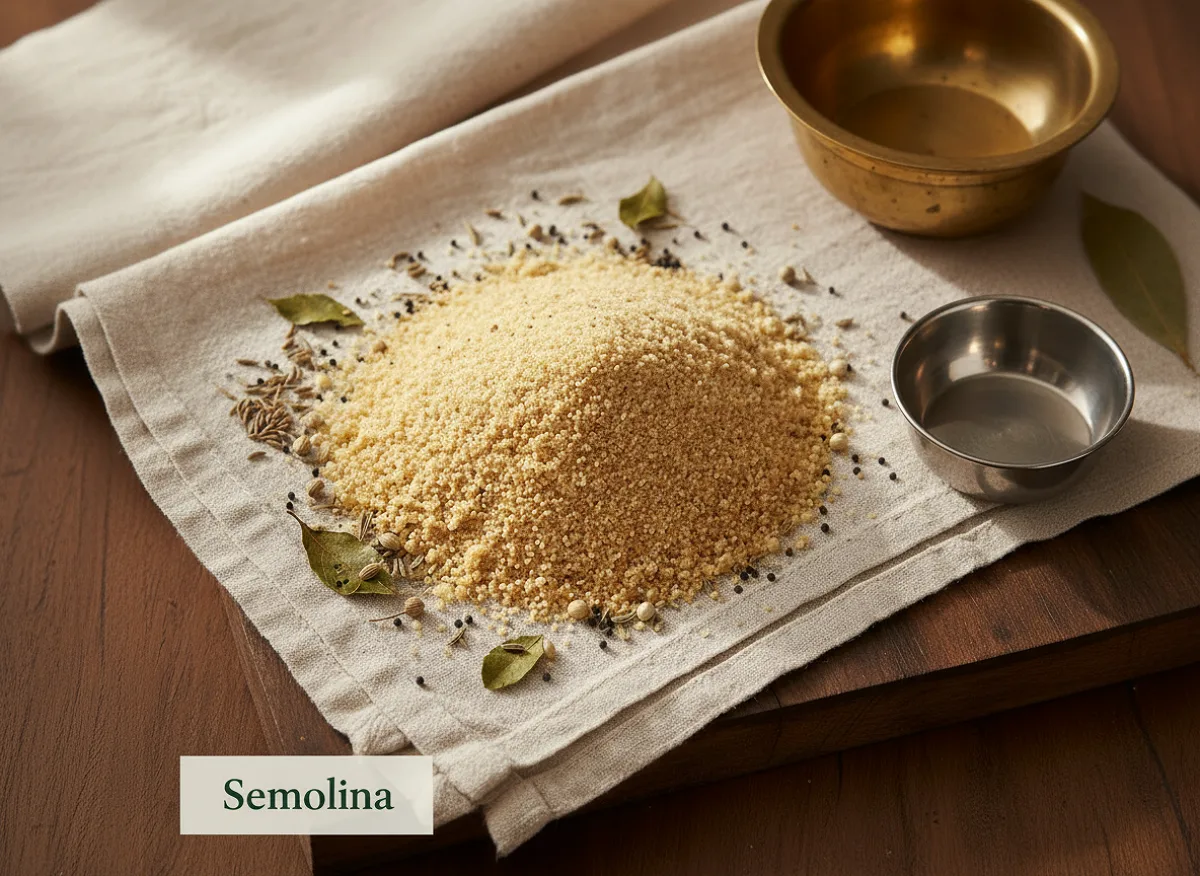
Semolina (soojee or suji) is coarsely ground durum wheat with a distinctive golden granular texture and mild, slightly nutty flavour. A staple in Indian kitchens, it appears in upma, halwa, khichdi, and countless sweet and savoury preparations across regions. Toast it lightly in...
Nutrition per 100 g
Mean values ± IFCT published SD (edible portion).
More macros
Classification
About Semolina
What it is
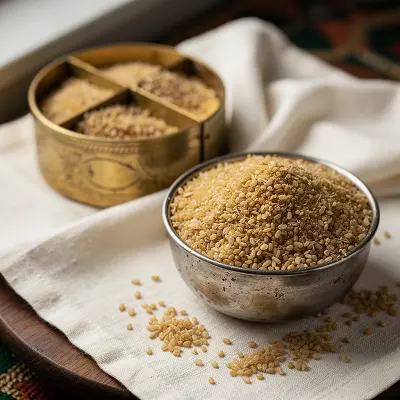
Semolina (soojee, suji, or rava in regional Indian languages) is the coarsely ground endosperm of durum wheat, with a granular texture ranging from fine to medium-coarse. It has a pale golden colour and a mild, slightly sweet and nutty flavour. Unlike refined wheat flour, semolina retains more of the wheat's protein and fibre, making it a versatile staple in Indian home cooking for both everyday and festive dishes. (IFCT 2017, Ref #A022)
Use in Indian Kitchen
Semolina is the backbone of countless Indian dishes. In South India, it is the foundation of upma (a savoury breakfast porridge), idiyappam (steamed noodles), and semolina halwa (a rich, ghee-laden sweet). North Indian kitchens use it for sooji khichdi, sooji ka sheera, and as a coating for pakora and cutlets. It also features in dosa batter, kheer, and traditional sweets like sooji barfi. A practical tip: always toast semolina in ghee or oil over medium heat for 2-3 minutes before adding liquid; this prevents lumping and brings out its nutty depth, transforming a simple ingredient into something aromatic and comforting.
Key Nutrients
Semolina is rich in carbohydrates, protein, and B vitamins (especially thiamine and niacin). It also contains iron, magnesium, and phosphorus. The exact nutrient profile per 100 g is documented in IFCT 2017 (Ref #A022); values vary slightly depending on the wheat variety and milling process used.
Health Benefits (Evidence-based)
- Good source of complex carbohydrates, providing sustained energy for daily activities.
- Contains protein and fibre, which may support digestive health and satiety.
- Rich in B vitamins, particularly thiamine and niacin, which play roles in energy metabolism and nervous system function.
- Provides iron and magnesium, minerals linked to oxygen transport and muscle function.
- Gluten-containing (unsuitable for coeliac disease), but well-tolerated by most people as part of a balanced diet.
Culinary Uses (Vegetarian)
- Upma - savoury breakfast porridge with vegetables, mustard seeds, and curry leaves.
- Semolina halwa - sweet pudding made with ghee, jaggery or sugar, and dry fruits.
- Idiyappam - steamed rice and semolina noodles, served with sambar or coconut chutney.
- Sooji khichdi - comfort dish with vegetables, ghee, and mild spices.
- Dosa batter - mixed with rice flour for crispy, golden crepes.
- Pakora and cutlet coating - for a light, crispy exterior.
- Kheer - creamy rice pudding variant using semolina instead of rice.
- Barfi and traditional sweets - combined with ghee, jaggery, and nuts.
Caution
- Contains gluten; unsuitable for people with coeliac disease or gluten sensitivity.
- High in carbohydrates; portion control recommended for those managing blood sugar or weight.
- May cause bloating or digestive discomfort in people with wheat intolerance (distinct from coeliac disease).
References
- Indian Council of Medical Research - National Institute of Nutrition (ICMR-NIN). Indian Food Composition Tables 2017 (IFCT 2017). Reference #A022 (Cereals and Millet - Semolina).
- Gopalan, C., Rama Sastri, B. V., & Balasubramanian, S. C. (2016). Nutritive Value of Indian Foods. National Institute of Nutrition, ICMR, Hyderabad.
Health Benefits
- Provides Energy
- Provides B Vitamins
- Supports Muscle Function
- Light Digestion
Sourcing & Storage
Storage
Store semolina in an airtight container (glass jar, metal tin, or food-grade plastic) in a cool, dry place away from direct sunlight and moisture. In warm or humid climates, keep it in the refrigerator or freezer to prevent rancidity and insect infestation. Ensure the container is sealed tightly after each use to maintain freshness and prevent moisture absorption.
Shelf Life
When stored in an airtight container in a cool, dry place, semolina typically keeps for 6-8 months. In the refrigerator, it can last up to 1 year; in the freezer, up to 18 months. Once opened, use within 3-4 months for best flavour and texture. Discard if you notice any off-odour, discolouration, or signs of insect activity.
Check Before You Buy
Look for semolina with a uniform pale golden or cream colour; avoid any that appears greyish, damp, or discoloured, as this may indicate age or moisture damage. The granules should feel dry and free-flowing, not clumpy. Check the packaging for the manufacturing and expiry dates, and ensure the seal is intact. If buying from a loose bin at a mandi or kirana shop, ask when it was last restocked and inspect for any visible debris or insects. Reputable brands often list the wheat variety and milling date on the pack, which is a good sign of quality.
In Ayurveda
In classical Ayurvedic texts, wheat (Triticum aestivum) is considered a staple grain with balancing properties. Semolina, being a refined form of wheat, is lighter and easier to digest than whole wheat flour. Ayurvedic practitioners traditionally view semolina as having a warming (ushna) quality and a sweet (madhura) taste, making it suitable for vata and kapha constitutions when prepared with ghee and warming spices. It is often recommended in convalescent diets and for those recovering from illness, as it is gentle on the digestive system while providing sustained energy.