Safflower seeds
Carthamus tinctorius · Also known as Kusum, Kusumbo, Kardi, Kusambe, Karadi, Sendurkan vidhai, Kusuma ginzalu
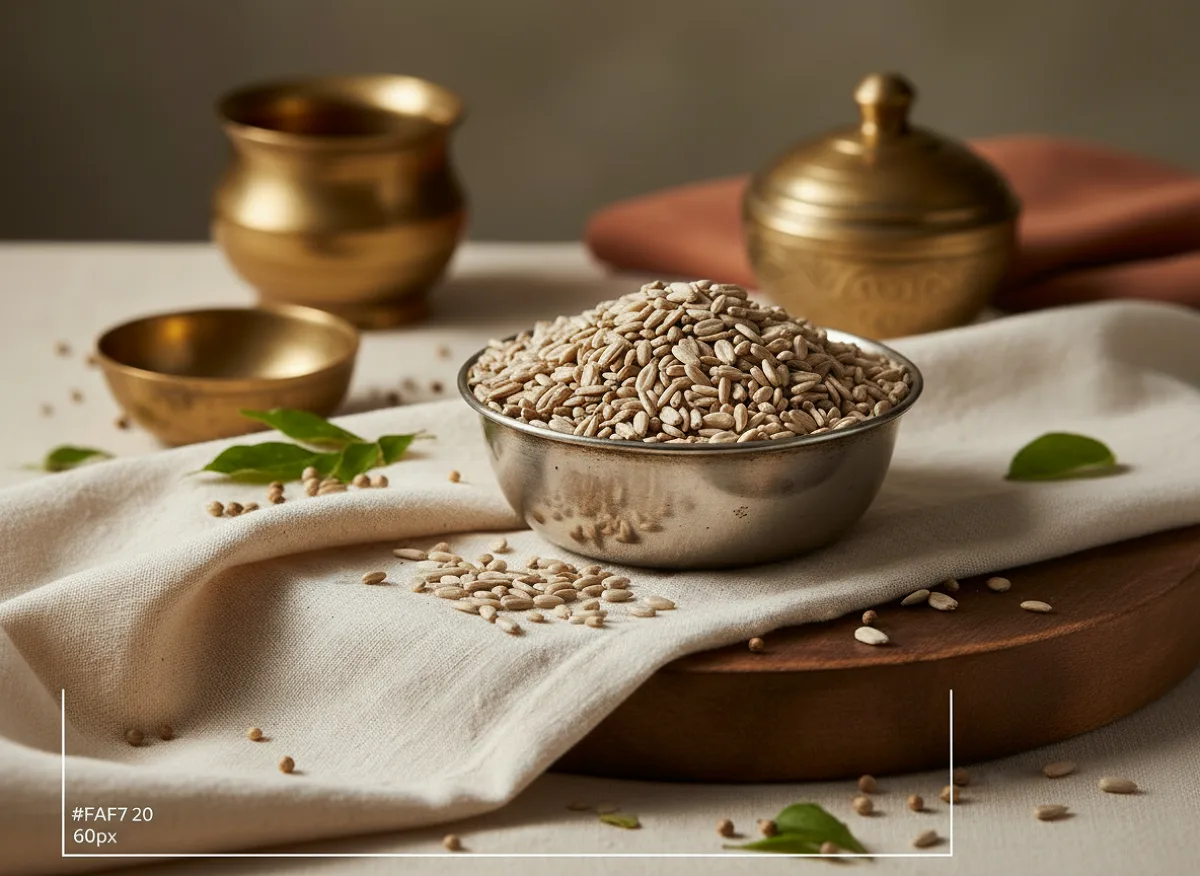
Safflower seeds (kusum) are small, cream-coloured, teardrop-shaped seeds from the safflower plant, prized in Indian kitchens for their mild, slightly nutty flavour and high oil content. Whole seeds are commonly dry-roasted and ground into flour for traditional sweets, ladoos, and...
Nutrition per 100 g
Mean values ± IFCT published SD (edible portion).
More macros
Classification
About Safflower seeds
What it is
Safflower seeds (kusum, kusumbo, or kardi in regional dialects) are small, oval seeds with a pale cream or off-white shell, harvested from the spiky safflower flower. They have a mild, slightly sweet and nutty taste, quite different from the vibrant red-orange dye the plant is famous for. In Indian kitchens, they are used whole, roasted, or ground into a fine flour. The seeds are rich in oil and have been cultivated across North India, Gujarat, and the Deccan for centuries. (IFCT 2017, Ref #H019)
Use in Indian Kitchen
Safflower seeds are most commonly dry-roasted and ground into a smooth flour to make traditional sweets such as kusum ke ladoo, kusum halwa, and barfi, especially during festivals and celebrations. In North India, the flour is mixed with jaggery, ghee, and dry fruits to create rich, nourishing confections. The seeds are also pressed to yield safflower oil, a light cooking oil used for tempering dals, preparing khichdi, and in everyday cooking. In some regions, whole roasted seeds are sprinkled as a garnish or mixed into grain-based dishes for added texture and flavour. A practical tip: always dry-roast the seeds lightly before grinding to deepen their nutty aroma and improve digestibility.
Key Nutrients
Safflower seeds are a good source of plant-based protein, dietary fibre, and essential fatty acids, particularly linoleic acid. They also contain vitamin E, magnesium, phosphorus, and iron. Exact nutrient composition per 100 g is available in IFCT 2017 (Ref #H019).
Health Benefits (Evidence-based)
- May support heart health due to high content of unsaturated fatty acids and linoleic acid.
- Rich in vitamin E, a powerful antioxidant that may help protect cells from oxidative stress.
- Good source of plant protein and fibre, which may aid digestion and support satiety.
- Traditionally used in Ayurvedic and folk medicine to support circulation and general wellness.
- May help maintain healthy cholesterol levels when included as part of a balanced diet.
Culinary Uses (Vegetarian)
- Ground into flour for traditional ladoos, halwas, and barfis mixed with jaggery and ghee.
- Pressed into oil for cooking, tempering dals, and preparing khichdi.
- Dry-roasted whole seeds as a garnish or mixed into grain-based dishes.
- Used in some regional sweet and savoury preparations across North and West India.
Caution
- Seeds are calorie-dense and high in fat; portion control is advisable for those watching calorie intake.
- May cause allergic reactions in individuals sensitive to plants in the Asteraceae family (ragweed, chrysanthemum).
- Safflower oil is prone to oxidation; store in a cool, dark place and use within a reasonable timeframe to avoid rancidity.
References
- Indian Council of Medical Research - National Institute of Nutrition (ICMR-NIN). Indian Food Composition Tables (IFCT 2017). Reference #H019 (Nuts and Seeds category).
- Weiss, E. A. (2000). Oilseed Crops (2nd ed.). Blackwell Science. Traditional and nutritional uses of safflower in Indian cuisine and Ayurvedic practice.
Sourcing & Storage
Storage
Store safflower seeds in an airtight glass jar or container in a cool, dry place away from direct sunlight and moisture. Keep away from strong-smelling foods, as seeds can absorb odours. In warm, humid climates (common in India), store in the refrigerator or freezer to prevent rancidity and insect infestation. Safflower oil should be kept in a dark glass bottle in a cool cupboard or refrigerator, away from heat and light.
Shelf Life
Whole safflower seeds, when stored in an airtight container in a cool, dry place, will keep for 6-8 months. Once ground into flour, use within 2-3 weeks at room temperature, or refrigerate for up to 2 months to preserve freshness. Safflower oil, when unopened and stored properly, lasts 12-18 months; after opening, use within 3-4 months to avoid oxidation and rancidity.
Check Before You Buy
When buying safflower seeds from a mandi or kirana store, look for seeds that are uniform in colour (pale cream to off-white), plump, and free from discolouration, mould, or insect damage. Avoid seeds that smell musty or rancid, which indicate poor storage. If buying pre-packed seeds, check the packaging date and ensure the seal is intact. Reputable sellers will offer seeds that are clean and free from debris or foreign matter. For safflower oil, choose cold-pressed or expeller-pressed varieties in dark glass bottles to ensure quality and prevent oxidation.
In Ayurveda
Safflower seeds hold a modest place in classical Ayurvedic texts. They are traditionally considered warming (ushna virya) and are believed to support healthy digestion and circulation. In Ayurvedic home practice, safflower oil has been used for massage and skin care, and the seeds themselves are sometimes included in herbal preparations for joint and bone health.
The seeds are not strongly linked to a single dosha in classical literature, but their warming nature and grounding quality suggest mild benefit for Vata and Kapha constitutions when used in moderation. Pitta individuals may prefer them in smaller quantities or balanced with cooling foods.