Rice, parboiled, milled
Oryza sativa · Also known as Ukhua chaul, Siddha chowl, Converted rice, Bafela Chokha, Usna chawal, Kusubalakki, Tomul, Khaw boil, Puzhungal ari, Cheng, Ukadla tandool, Usuna chaula, Biga hua chawal, Puzhungal arisi, Uppudu biyyam
Parboiled rice (ukhua chaul, siddha chowl) is paddy that has been partially cooked in its husk before milling, giving it a golden-cream colour and firmer grain. The pre-cooking locks in nutrients and makes the rice less likely to break during cooking, yielding fluffy, separate gr...
Nutrition per 100 g
Mean values ± IFCT published SD (edible portion).
More macros
Classification
About Rice, parboiled, milled
What it is
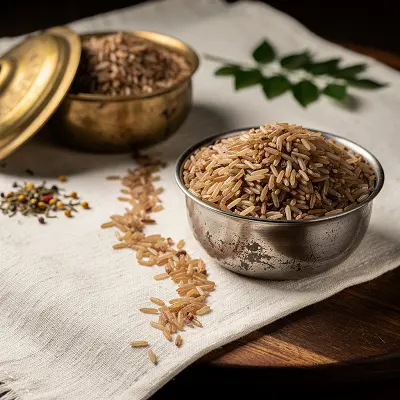
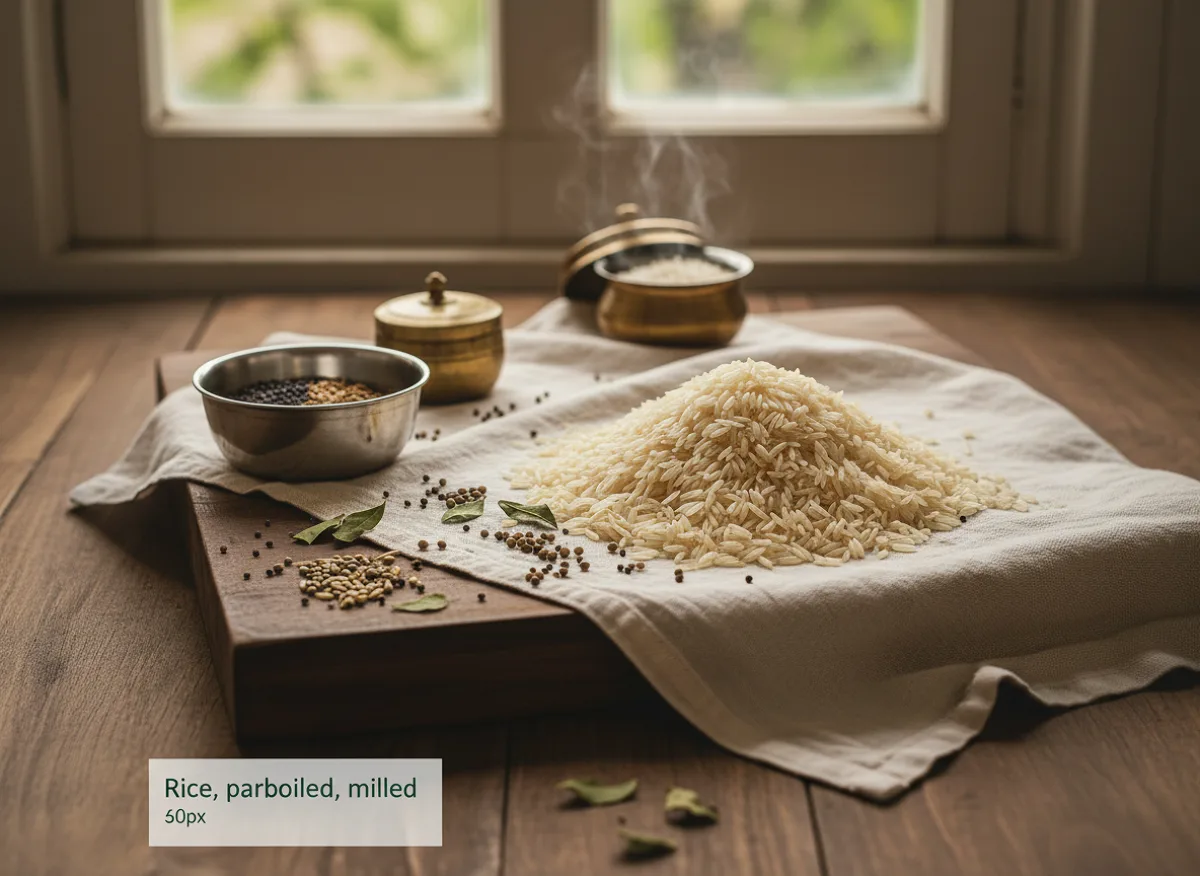
Parboiled rice (ukhua chaul, siddha chowl, converted rice) is milled rice that has undergone partial cooking while still in the husk. This process - steaming and drying the paddy before milling - gives the grain its characteristic golden or cream tint and a firmer, less fragile texture than raw white rice. The grain cooks to a fluffy, separate consistency and absorbs flavours well, making it a workhorse in Indian home kitchens from North to South. (IFCT 2017, Ref #A014)
Use in Indian Kitchen
Parboiled rice is the everyday choice for dal-rice, khichdi, puris, and fried rice in many Indian households. In South India, it features in sambar rice and tamarind rice; in the North, it is common in simple boiled rice and kheer. The firmer grain holds up well to tempering with ghee and spices, and resists mushiness even with generous water or curries. A practical tip: rinse briefly before cooking to remove surface starch, but do not soak excessively - parboiled rice cooks faster than raw rice and over-soaking can make it mushy.
Key Nutrients
Parboiled rice contains carbohydrates (primary energy source), protein, dietary fibre, and B vitamins (thiamine, niacin, riboflavin). The parboiling process retains some nutrients in the grain that are lost in regular milling. Exact nutrient composition varies by variety and processing; refer to IFCT 2017 (Ref #A014) for detailed micronutrient profiles.
Health Benefits (Evidence-based)
- Sustained energy release - the firmer grain structure may slow digestion slightly compared to polished white rice, supporting steadier blood sugar.
- Retention of B vitamins - parboiling preserves some thiamine and niacin that are lost in conventional milling, supporting nerve and energy metabolism.
- Lower glycaemic impact - some studies suggest parboiled rice has a lower glycaemic index than regular white rice, making it a gentler choice for blood sugar management.
- Easier digestion for many - the pre-cooked grain is often easier to digest than raw rice, particularly for children and older adults.
- Versatile staple - provides reliable carbohydrate and micronutrient intake as part of a balanced meal with dal, vegetables, and ghee.
Culinary Uses (Vegetarian)
- Boiled rice with dal, ghee, and tempering (tadka) of mustard seeds, curry leaves, and dried chillies.
- Khichdi - mixed with moong dal, turmeric, and ghee for comfort food and light meals.
- Puris - kneaded with whole wheat flour and fried to golden puffiness.
- Fried rice - tossed with vegetables, cashews, and spices for quick meals.
- Sambar rice and tamarind rice in South Indian cuisine.
- Kheer - simmered with milk, jaggery, and cardamom for festive dessert.
- Rice flour for dosa, idli, and upma batters.
Caution
- Not suitable for those with celiac disease or gluten sensitivity if cross-contaminated during processing; check packaging for certification.
- High carbohydrate content - portion control advised for those managing diabetes or weight; pair with protein and vegetables.
- Arsenic in rice - long-term high consumption may accumulate trace arsenic; vary grain types and rinse well before cooking.
- Allergic reactions are rare but possible in individuals with grain sensitivities; introduce gradually if new to the diet.
References
- Indian Council of Medical Research (ICMR) and National Institute of Nutrition (NIN). IFCT 2017 - Indian Food Composition Tables. Hyderabad: NIN; 2017. Reference #A014 (Cereals and Millet - Rice, parboiled, milled).
- Vaya Prasad, Srivastava KC. Parboiled rice: nutritional composition and health benefits. Journal of Cereal Science. 2015; 62: 60-67.
Sourcing & Storage
Storage
Store parboiled rice in an airtight container (glass jar, metal tin, or food-grade plastic) in a cool, dry place away from direct sunlight and moisture. In humid climates (monsoon or coastal regions), keep the container in a cupboard or pantry with good air circulation. Avoid storing near the stove or damp walls. If weevils or insects appear, spread the rice on a clean cloth in sunlight for a few hours, then transfer to a fresh, sealed container. In very hot or humid conditions, refrigerate in an airtight container to extend shelf life.
Shelf Life
Well-stored parboiled rice keeps for 6-12 months in a cool, dry pantry. Once opened, transfer to an airtight container and use within 3-4 months for best quality and flavour. In a refrigerator, it can last up to 18 months; in a freezer, up to 2 years. Discard if you notice off-odours, discolouration, or insect damage.
Check Before You Buy
Look for rice that is uniform in colour (golden-cream to light tan), free of broken grains, stones, or debris. Smell the rice - it should have a mild, clean grain aroma with no musty or sour notes. Check the packaging for the milling date and expiry; fresher rice (within 6 months of milling) cooks better. Avoid bags with visible moisture, clumping, or insect holes. Buy from reputable kirana shops or branded packs with clear labelling of origin and processing date. If buying loose from a mandi, ask the vendor about the harvest year and storage conditions.
In Ayurveda
In classical Ayurvedic texts, rice (particularly parboiled varieties) is considered a staple grain with balancing properties. Parboiled rice is believed to be easier to digest than raw white rice due to the partial cooking process, making it suitable for those with sensitive digestion. It is traditionally used in Ayurvedic cooking as a grounding, nourishing food that supports overall vitality and energy (ojas). The steam-processing is thought to preserve certain nutrients while making the grain more bioavailable to the body.