Refined Flour
Triticum aestivum · Also known as Maida, All-purpose flour, Plain flour, Refined wheat flour
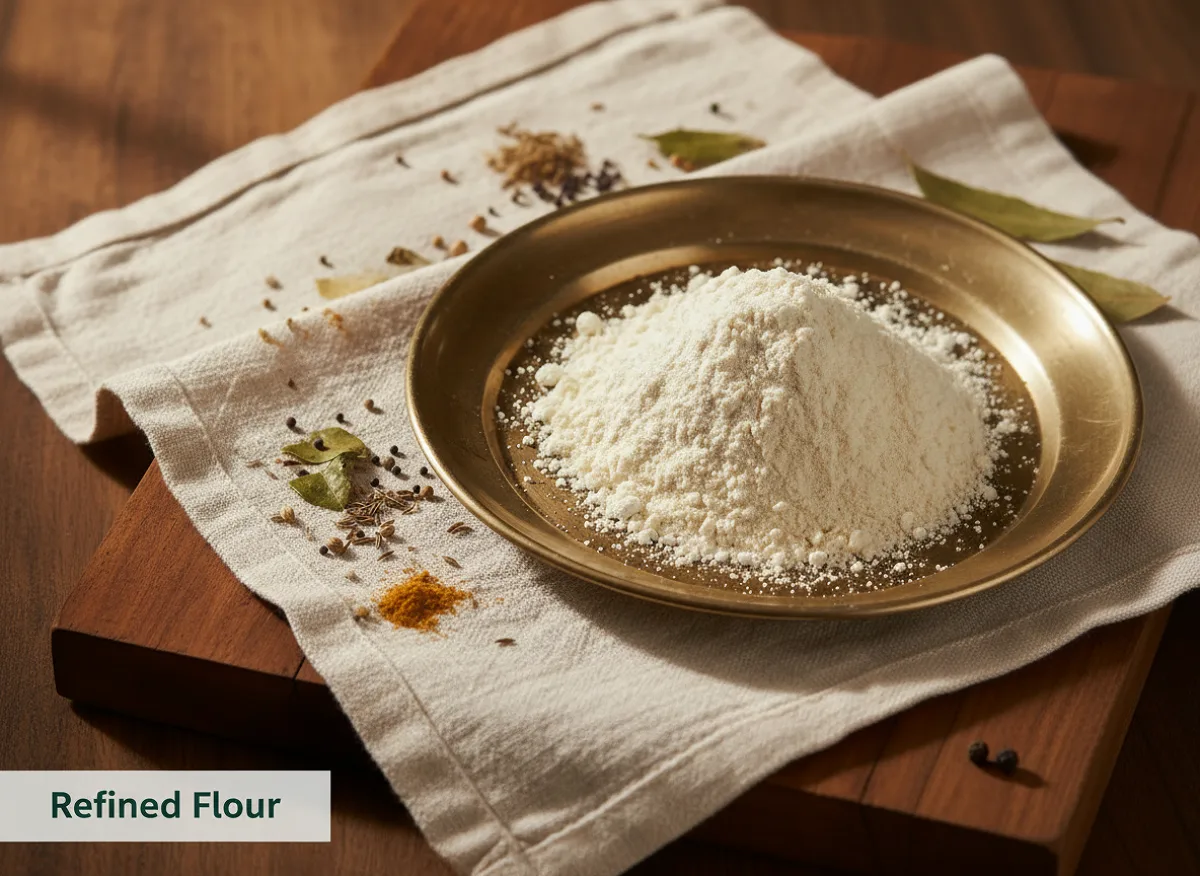
Refined flour, or maida as it is commonly called in Indian kitchens, is a finely milled white flour made from wheat. It has a silky, powdery texture and is stripped of bran and germ during processing, making it lighter and fluffier than whole wheat atta. Maida is the go-to flour...
Nutrition per 100 g
Mean values ± IFCT published SD (edible portion).
More macros
Classification
About Refined Flour
What it is
Refined flour, known as maida in Hindi, is a highly processed wheat flour with a fine, powdery white appearance. During milling, the bran and germ layers are removed, leaving only the starchy endosperm. This makes it lighter, whiter, and more shelf-stable than whole wheat flour, though it loses much of the fibre and some nutrients in the process. It is a staple in Indian bakeries and home kitchens for both sweet and savoury preparations. (IFCT 2017, Ref #A018)
Use in Indian Kitchen
Maida is essential for making samosas, kachoris, and other fried pastries where a crisp, flaky texture is prized. It is also used for naan, bhature, and luchi - breads that puff beautifully when deep-fried or baked. In sweet preparations, it forms the base for cakes, barfis, and many traditional Indian sweets. North Indian kitchens rely on maida for everyday breads and festival sweets, while it is equally valued across regions for bakery items. A practical tip: sieve maida once or twice before use to aerate it and ensure lighter, fluffier results in cakes and breads.
Key Nutrients
Refined flour is primarily carbohydrate-rich, providing energy through starch. It contains protein, though less than whole wheat flour. Most commercial maida in India is fortified with vitamins and minerals - typically iron, vitamin B1 (thiamine), B2 (riboflavin), and niacin - to restore some nutritional value lost during refining. Exact nutrient composition varies by brand and fortification level; check the package label for specific details.
Health Benefits (Evidence-based)
- Provides quick energy due to high carbohydrate content, making it useful for active individuals and children.
- When fortified, helps meet daily requirements for B vitamins and iron, supporting energy metabolism and oxygen transport.
- Easy to digest for most people, making it suitable for those with sensitive digestive systems or recovering from illness.
- Versatile in cooking, allowing for a wide range of culinary preparations and texture variations.
Culinary Uses (Vegetarian)
- Samosas, kachoris, and other fried pastries and snacks.
- Naan, bhature, luchi, and other Indian breads.
- Cakes, pastries, biscuits, and bakery items.
- Barfi, halwa, and traditional Indian sweets.
- Thickening agent in gravies and sauces.
- Coating for pakora and other fried vegetables.
Caution
- Refined flour lacks the fibre of whole grains, so regular consumption without whole grain alternatives may contribute to digestive sluggishness or blood sugar spikes in some individuals.
- Those with celiac disease or gluten sensitivity must avoid maida, as it contains gluten.
- Not suitable for low-carbohydrate or keto diets due to high starch content.
- Store away from moisture and pests; contamination or mould growth can render it unsafe.
References
- Indian Council of Medical Research - National Institute of Nutrition (ICMR-NIN). Indian Food Composition Tables (IFCT 2017). Reference code A018 - Cereals and Millet category.
- Food Safety and Standards Authority of India (FSSAI). Fortification of Flour and Refined Flour Standards. Regulatory guidelines for mandatory fortification in India.
Health Benefits
- Provides Energy
- Quick Energy Source
Sourcing & Storage
Storage
Store refined flour in an airtight container in a cool, dry place away from direct sunlight and moisture. In humid climates, keep it in a sealed glass jar or food-grade plastic container with a tight-fitting lid. Avoid storing near strong-smelling foods, as maida can absorb odours. In Indian kitchens, many cooks store maida in the pantry or a designated flour cupboard; during monsoon, refrigeration or an airtight container in a cool corner is wise to prevent moisture absorption and pest infestation.
Shelf Life
When stored properly in an airtight container at room temperature, refined flour typically lasts 6-8 months. Once opened, use within 3-4 months for best quality and taste. In warm, humid climates, shelf life may be shorter - 2-3 months after opening. Refrigeration can extend shelf life to 8-12 months, and freezing can preserve it for up to 1 year, though it must be brought to room temperature before use to avoid condensation.
Check Before You Buy
When buying refined flour from a kirana shop or mandi, check that the powder is bright white, fine, and free of lumps or discolouration. Avoid flour that smells musty, rancid, or off - a sign of age or moisture damage. For packaged maida, verify the manufacturing and expiry dates on the label, and check for any visible damage to the packet. Fortified flour should clearly state the fortification details (iron, vitamins) on the package. Buy from reputable brands or trusted local suppliers to ensure purity and avoid adulteration with cheaper fillers.
In Ayurveda
In classical Ayurvedic texts, refined wheat flour (मैदा) is not extensively documented as a standalone ingredient with specific dosha properties, as it is a modern processed form. However, wheat (गेहूँ) itself is traditionally considered to be balancing for Vata and Pitta doshas, with a sweet (मधुर) rasa and grounding quality. Refined flour, being lighter and easier to digest than whole wheat, may be gentler on sensitive digestion but lacks the warming and nourishing properties of whole grains. Ayurvedic practitioners generally recommend whole grain flours for sustained energy and better nutritional balance.