Puffed Rice
Oryza sativa · Also known as Murmure, muri, kurmura, puffed paddy, rice crisps
Puffed rice (murmure or muri) is a light, airy cereal made by heating rice grains under pressure until they burst into crispy, white puffs. Eaten as a snack, mixed into savoury trail mixes, or used as a base for chikhalwali and bhel puri across India, it offers a satisfying crunc...
Nutrition per 100 g
Mean values ± IFCT published SD (edible portion).
More macros
Classification
About Puffed Rice
What it is
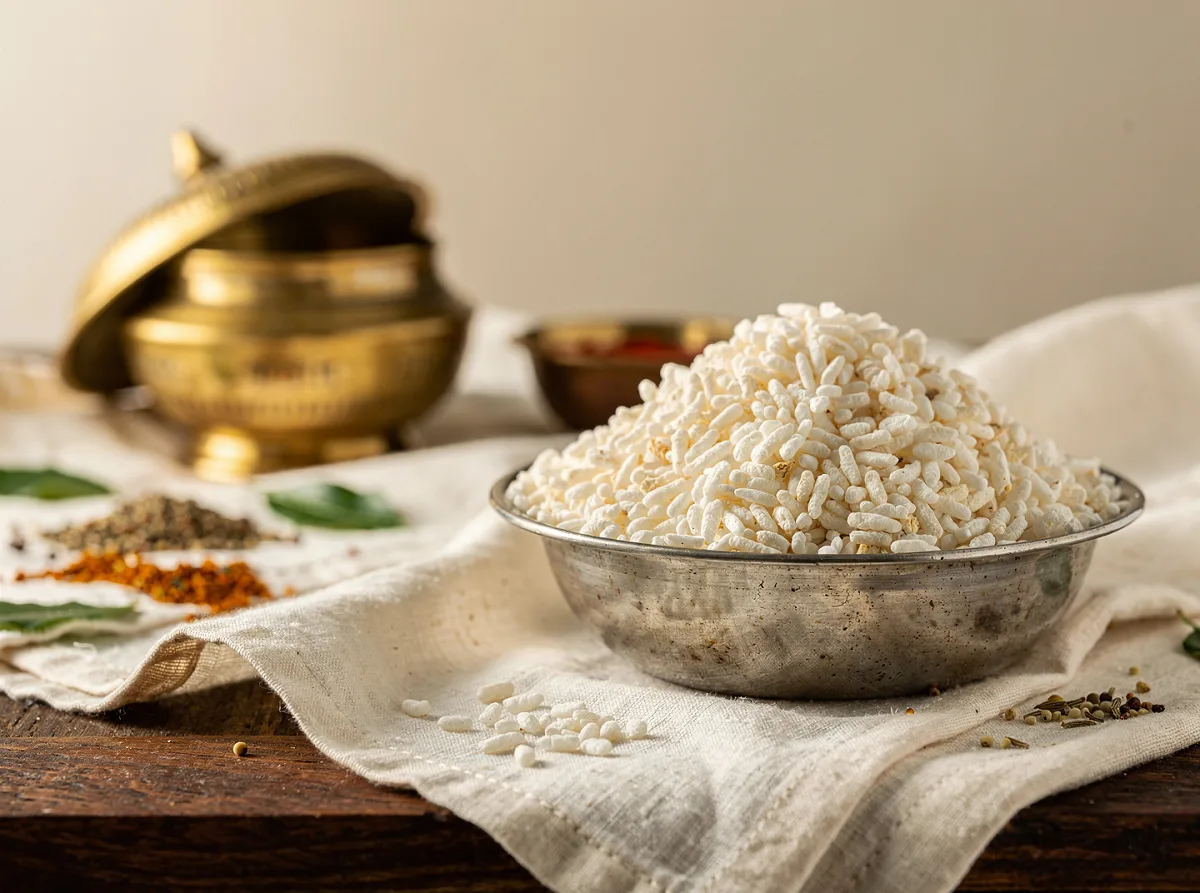
Puffed rice (murmure, muri, or kurmura in regional dialects) is rice that has been heated under high pressure and then rapidly depressurised, causing each grain to expand and turn crispy and white. The result is a light, airy cereal with a delicate crunch and mild, slightly sweet flavour. It is sold loose in markets or in sealed packets, and is a beloved snack and ingredient across North, South, East, and West India. (IFCT 2017, Ref #A012)
Use in Indian Kitchen
Puffed rice is most famous as the base of bhel puri, a tangy-sweet street snack mixed with tamarind chutney, onion, and sev. In the South, it appears in chikhalwali and as a garnish for upma. North Indian homes use it in chikki (brittle candy) or simply eat it as a light breakfast with jaggery and peanuts. It is also mixed into trail mixes with roasted chickpeas, peanuts, and dried fruit for a quick energy snack. A practical tip: store puffed rice in an airtight container away from moisture, as it absorbs humidity quickly and loses its crunch.
Key Nutrients
Puffed rice is primarily carbohydrate (starch), with small amounts of protein and minimal fat. It contains B vitamins (thiamine, niacin) when fortified, and trace minerals including iron and manganese. Being a refined cereal product, it is lower in fibre than whole grain rice. Exact nutrient composition varies by brand and fortification; refer to the pack label for specific values.
Health Benefits (Evidence-based)
- Quick source of energy due to high carbohydrate content and easy digestibility.
- Naturally gluten-free, making it suitable for those with coeliac disease or gluten sensitivity.
- Low in fat and cholesterol, supporting heart health when consumed in moderation.
- Light on the stomach and often recommended during recovery from illness or digestive upset.
- Fortified varieties provide added iron and B vitamins, helping to address micronutrient gaps in the diet.
Culinary Uses (Vegetarian)
- Bhel puri - mixed with tamarind chutney, onion, coriander, and sev.
- Chikhalwali - South Indian snack with puffed rice, peanuts, and spices.
- Chikki - brittle candy made by mixing puffed rice with jaggery and peanuts.
- Trail mix - combined with roasted chickpeas, peanuts, dried fruit, and spices.
- Upma garnish - sprinkled on top for texture and crunch.
- Breakfast bowl - served with jaggery, ghee, and roasted peanuts.
Caution
- Puffed rice is low in fibre and protein; pair it with legumes, nuts, or vegetables for a balanced meal.
- It absorbs moisture quickly and becomes stale; store in airtight containers in dry conditions.
- Commercial bhel puri and snack mixes may be high in salt and oil; check labels and portion sizes if managing sodium intake.
- Not suitable as a sole food for infants; introduce after 8 months alongside other grains and with supervision.
References
- Indian Council of Medical Research - National Institute of Nutrition (ICMR-NIN). Indian Food Composition Tables (IFCT) 2017. Hyderabad: NIN; 2017. Ref #A012 (Cereals and Millet - Puffed Rice).
- Food Safety and Standards Authority of India (FSSAI). Labelling and Display Regulations, 2020. New Delhi: FSSAI.
Health Benefits
- Provides Energy
- Easy Digestion
- Quick Energy Source
- Light On Stomach
Sourcing & Storage
Storage
Store puffed rice in an airtight glass jar or sealed plastic container in a cool, dry place away from direct sunlight and moisture. Keep away from the kitchen stove or any heat source. In humid climates, store in the refrigerator or add a silica gel packet to the container to absorb excess moisture. Ensure the lid is tightly closed after each use to prevent the rice from absorbing humidity and losing its crunch.
Shelf Life
When stored in an airtight container in a cool, dry place, puffed rice typically remains fresh and crispy for 2 to 3 months. Once opened, consume within 2 to 4 weeks for best quality. In humid conditions or if stored loosely, shelf life may reduce to 1 to 2 weeks. Refrigeration can extend shelf life by 1 to 2 months if kept in a sealed container.
Check Before You Buy
When buying puffed rice from a mandi or kirana shop, look for a bright white or pale cream colour and a light, airy texture. The grains should be uniformly puffed and crispy, not dense or partially collapsed. Avoid any musty or off odour, which indicates moisture damage or age. Check the manufacturing date on packed varieties and ensure the packet is sealed without any tears or dampness. If buying loose, ask the shopkeeper when it was puffed; fresher batches will have better crunch and flavour.
In Ayurveda
In classical Ayurvedic texts, puffed rice (murmure) is considered light and easy to digest (laghu and sukshma guna). It is traditionally used in post-fasting or convalescent diets because it provides quick energy without burdening digestion. The puffing process is believed to increase its digestibility compared to whole rice grains.
Puffed rice is often paired with ghee, jaggery, or warming spices in Ayurvedic home remedies to balance Vata dosha, particularly during winter or in cold climates. However, it is not extensively documented in classical Ayurvedic pharmacopeias as a standalone therapeutic agent.