Pistachio
Pistacla vera · Also known as Pista, Pistachios
Pistachio (pista) is a nutrient-dense tree nut prized in Indian kitchens for its delicate flavour and creamy texture. Commonly used in sweets, desserts, and savoury dishes across North India, pistachios add richness to kheer, barfi, and halwa. A good source of healthy fats, prote...
Nutrition per 100 g
Mean values ± IFCT published SD (edible portion).
More macros
Classification
About Pistachio
What it is
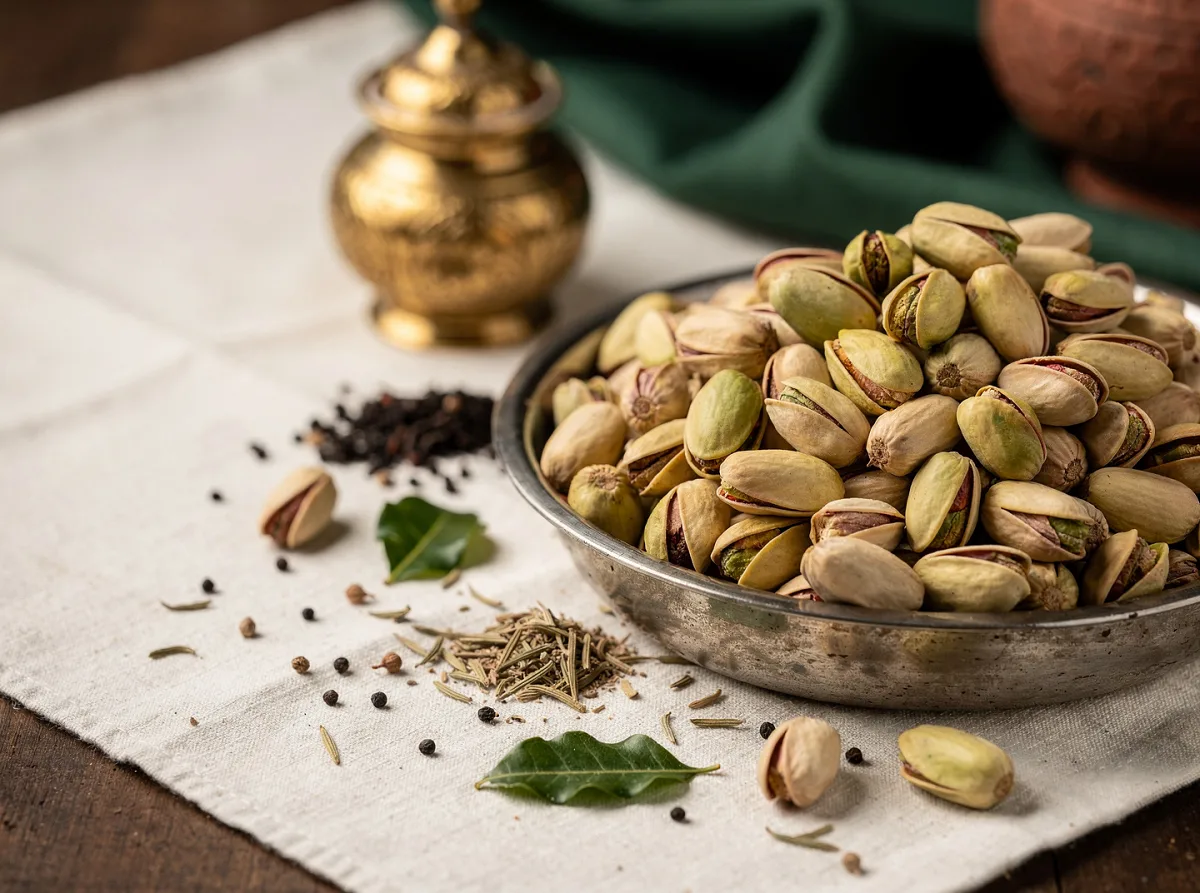
Pistachio is the edible seed of the tree Pistacia vera, native to Central Asia and now cultivated in parts of India, particularly Kashmir and Himachal Pradesh. The kernel is enclosed in a hard shell that naturally splits when ripe, revealing a pale green or cream-coloured nut with a distinctive mild, slightly sweet flavour. Pistachios are eaten raw, roasted, or blanched, and are a staple in Indian confectionery and festive cooking (IFCT 2017, Ref #H018).
Use in Indian Kitchen
Pistachios hold a special place in North Indian and Mughlai cuisine, where they feature prominently in rich desserts and ceremonial dishes. Finely ground or sliced, they garnish kheer, rabri, and barfi; whole or crushed, they add texture to halwa and fudge. In Kashmir, pistachios are treasured in wazwan feasts and traditional sweets. Unlike almonds, which are earthier, pistachios bring a delicate, almost floral sweetness. They are often paired with cardamom, saffron, and rose water in festival sweets, and their pale green hue makes them visually precious in gift boxes of mithai. Roasted and salted, they also serve as a simple snack or tea-time nibble in many Indian homes.
Key Nutrients
Pistachios are rich in monounsaturated and polyunsaturated fats, plant-based protein, dietary fibre, and minerals including potassium, magnesium, phosphorus, and zinc. They also contain vitamin E and B vitamins. Exact nutrient composition per 100 g is documented in IFCT 2017, Ref #H018.
Health Benefits (Evidence-based)
- May support heart health through their content of monounsaturated fats and plant compounds linked to healthy cholesterol levels.
- Linked to improved blood sugar control and insulin sensitivity in some studies, making them a useful snack for balanced energy.
- High in antioxidants, including vitamin E and polyphenols, which may help reduce oxidative stress.
- Good plant-based protein source, supporting muscle maintenance and satiety when eaten as a snack or in dishes.
- Traditionally valued in Ayurvedic and folk medicine as a brain tonic and energy booster, particularly for children and the elderly.
- May support digestive health through their fibre content and prebiotic compounds.
Culinary Uses (Vegetarian)
- Garnish and flavouring in kheer, rabri, and rice puddings.
- Ground into paste or powder for barfi, fudge, and traditional sweets.
- Sliced or slivered as topping for halwa, payasam, and festive desserts.
- Roasted and salted as a standalone snack or tea-time accompaniment.
- Crushed into chutneys or nut butters for spreading on bread or mixing into yoghurt.
- Infused into milk-based drinks and lassi for richness and flavour.
Caution
- Tree nut allergy: pistachios can trigger severe reactions in those with nut allergies; always check labels and inform family members.
- High in calories and fat; portion control is wise if weight management is a concern.
- Aflatoxin risk: buy from reputable sources and store in cool, dry conditions to prevent mould growth and contamination.
- Salted or roasted varieties may be high in sodium; rinse or choose unsalted versions if monitoring salt intake.
- May interact with certain medications; consult a healthcare provider if taking blood thinners or immunosuppressants regularly.
References
- Indian Council of Medical Research - National Institute of Nutrition (ICMR-NIN). Indian Food Composition Tables (IFCT) 2017. Hyderabad: NIN; 2017. Ref #H018 (Pistachio).
- Dreher ML, Davenport AJ. Hass avocado composition and potential health effects. Critical Reviews in Food Science and Nutrition. 2013; 53(7): 738-750. [Note: For broader nut and seed nutrient profiles and health evidence in Indian dietary contexts, refer to NIN publications and FSSAI food safety guidelines.]
Health Benefits
- Improves Eye Health
- Weight Management Support
- Heart Health Support
- Boosts Energy
Sourcing & Storage
Storage
Store pistachios in an airtight container in a cool, dry place away from direct sunlight and moisture. In India's warm, humid climate, keep them in the refrigerator or freezer to prevent rancidity and mould growth. Use glass jars or sealed plastic containers, and avoid storing near strong-smelling foods. Shelled pistachios are more prone to spoilage than in-shell nuts; prioritise in-shell varieties for longer shelf life.
Shelf Life
Unshelled pistachios stored in a cool, dry place last 6 to 12 months. Shelled pistachios keep for 3 to 6 months at room temperature, or up to 1 year in the refrigerator and 2 years in the freezer. Once opened, consume within 2 to 4 weeks if stored at room temperature; refrigerate or freeze after opening to extend freshness and prevent oxidation.
Check Before You Buy
Look for pistachios with naturally split shells and a pale green or cream-coloured kernel inside. Avoid nuts with dark stains, mould, or a musty smell, which indicate aflatoxin contamination or poor storage. Check that the shell feels firm and not hollow when gently squeezed. Buy from trusted kirana shops, mandis, or sealed packets from reputable brands; loose nuts from open bins in humid climates carry higher contamination risk. Blanched or roasted varieties should smell fresh and not rancid. If buying salted or roasted pistachios, check the ingredient list for added oils and salt content.
In Ayurveda
Pistachios are important due to their rich nutritional profile, providing healthy fats, protein, fiber, vitamins, and minerals. They support heart health, aid in weight management, and promote digestive wellness. Their antioxidant properties also help combat inflammation and oxidative stress. Pistachios are often ground into a paste for skincare applications, soothing irritation and enhancing skin health. Additionally, mixing pistachios with milk is a traditional remedy believed to boost energy and vitality, making them a valuable addition to both diet and natural health practices.