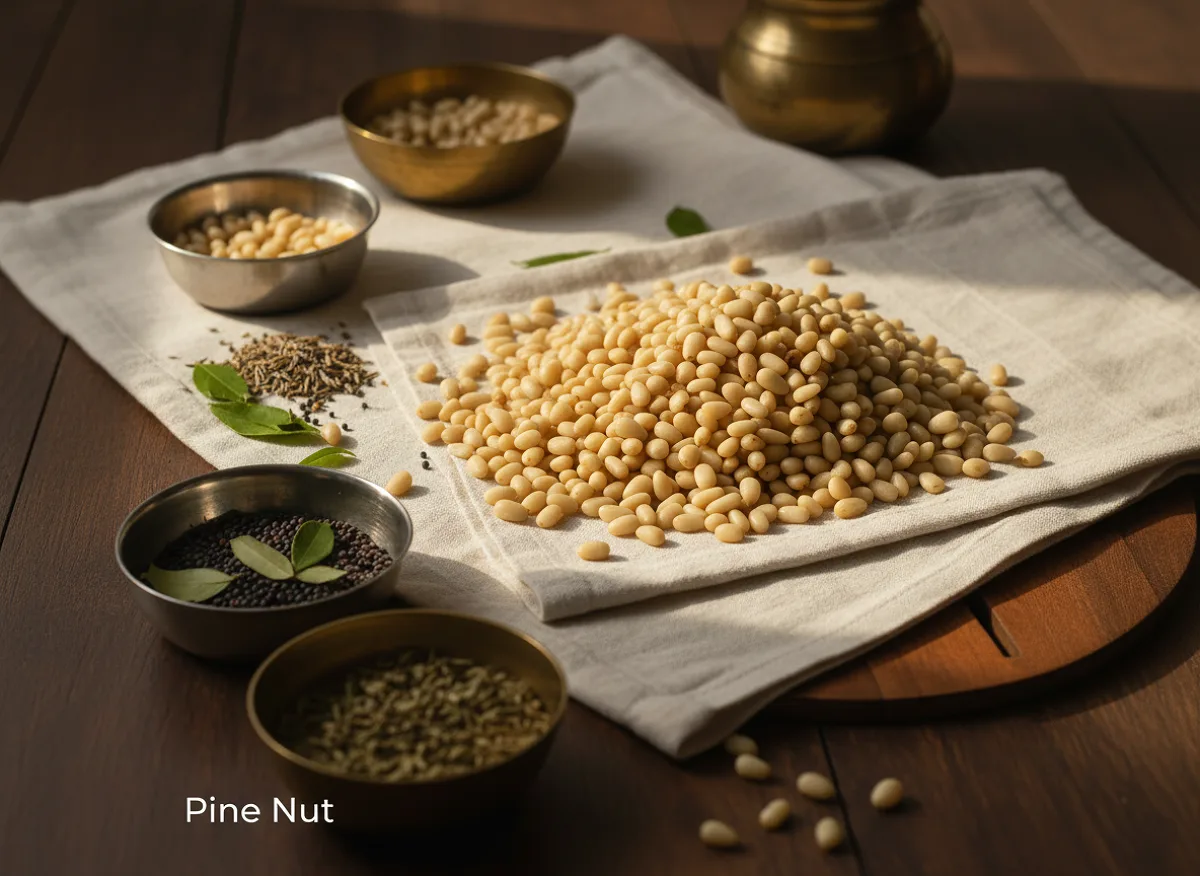
Pine Nut
Pinus gerardiana · Also known as चीढ़ की सुपारी, cheedh kee supaaree
Pine nuts (चीढ़ की सुपारी, cheedh kee supaaree) are small, creamy kernels from pine cones, prized in Indian kitchens for their delicate flavour and rich texture. Commonly used in Mughlai and North Indian cuisine, they add luxury to biryanis, pulaos, and festive sweets. Classified...
Nutrition per 100 g
Mean values ± IFCT published SD (edible portion).
More macros
Classification
About Pine Nut
What it is
Pine nuts are the edible seeds extracted from the cones of pine trees, particularly Pinus gerardiana (chilgoza pine) native to the Himalayas. They have a soft, buttery kernel enclosed in a hard shell and are harvested seasonally. In India, they are most commonly sourced from Kashmir and Himachal Pradesh. Classified under Nuts and Seeds (IFCT 2017, Ref #H017).
Use in Indian Kitchen
Pine nuts hold a special place in North Indian and Mughlai cooking, where they are valued for their subtle, slightly sweet flavour and creamy texture. They feature prominently in biryanis, pulaos, and rich meat-based gravies, though vegetarian cooks use them in paneer dishes, kheer, and festive halwas. In Kashmir, they are a traditional ingredient in wazwan feasts. Their high cost makes them a luxury ingredient reserved for celebrations and special occasions. The nuts are often blanched, roasted, or fried in ghee before use to enhance their flavour and create a golden garnish that signals festivity and abundance on the plate.
Key Nutrients
Pine nuts are energy-dense and rich in fat (primarily unsaturated), protein, and fibre. They contain magnesium, phosphorus, zinc, and B vitamins including thiamine and folate. Exact nutrient composition per serving is documented in IFCT 2017 (Ref #H017); values vary slightly depending on variety and processing method.
Health Benefits (Evidence-based)
- May support heart health due to their unsaturated fat profile and potential cholesterol-lowering properties.
- Linked to sustained energy and satiety, making them useful in balanced snacking.
- Contain magnesium and phosphorus, minerals traditionally associated with bone and muscle support.
- Rich in antioxidants and vitamin E, which may help protect cells from oxidative stress.
- May support cognitive function and nerve health through their B vitamin and mineral content.
Culinary Uses (Vegetarian)
- Fried in ghee and scattered as a garnish over biryanis, pulaos, and khichdi.
- Blended into creamy gravies for paneer and vegetable curries.
- Roasted and added to kheer, halwa, and festive sweets.
- Ground into pastes for rich, luxurious desserts and mithai.
- Toasted as a standalone snack or mixed into dry fruit and nut combinations.
Caution
- High in calories and fat; portion control is important for weight-conscious diets.
- May trigger allergic reactions in people with tree nut allergies; always check before serving to guests.
- Rancidity is common in poorly stored nuts; discard if they smell musty or taste bitter.
- Expensive and sometimes adulterated with cheaper nuts or old stock; buy from trusted sources.
References
- Indian Council of Medical Research - National Institute of Nutrition (ICMR-NIN). Indian Food Composition Tables (IFCT 2017). Hyderabad: NIN; 2017. Category H - Nuts and Seeds, Ref #H017.
- Savage GP, Dutta PC, Rodriguez-Estrada MT. Lipid composition and oxidative stability of nuts. Asia Pacific Journal of Clinical Nutrition. 2002;11(S7):S752-S758.
Health Benefits
- Anti Inflammatory
- Heart Health Support
- Supports Brain Health
- Boosts Energy
Sourcing & Storage
Storage
Store pine nuts in an airtight container in a cool, dry place away from direct sunlight and heat. In warm, humid Indian climates, refrigeration (4°C) or freezing (-18°C) is strongly recommended to prevent rancidity and insect infestation. Keep them away from strong-smelling foods, as they absorb odours easily. Shelled nuts are more prone to spoilage than in-shell nuts; use shelled nuts within a shorter timeframe.
Shelf Life
In-shell pine nuts, when stored in a cool, dry place, keep for 3 - 4 months. Shelled nuts last 1 - 2 months at room temperature, 3 - 4 months in the refrigerator, and up to 6 - 8 months in the freezer. Once opened, consume within 2 - 3 weeks if stored at room temperature, or within 1 month if refrigerated. Always check for rancid smell or taste before use.
Check Before You Buy
Look for plump, cream-coloured kernels with no dark spots, mould, or discolouration. Shake the container gently - nuts should not rattle excessively, as this indicates drying or hollowness. Smell the nuts if possible; they should have a mild, pleasant aroma, never musty or sour. Avoid nuts that are sticky, oily to the touch, or clumped together, as these signs indicate rancidity or moisture damage. Buy from reputable spice merchants, trusted online retailers, or premium kirana shops that have good turnover. Packaged nuts with a clear expiry date and sealed packaging are safer than loose bulk purchases, especially in warm climates. Be cautious of suspiciously cheap pine nuts, as adulteration with inferior nuts or old stock is common in the market.