Peanuts
Arachis hypogea · Also known as Moongaphalee, groundnut, peanut, mungfali, shengdana
Peanuts (मूंगफली, moongaphalee) are small, oil-rich legume seeds that grow in papery shells underground. Roasted whole or blanched and ground into powder, they bring a warm, nutty flavour to Indian kitchens - from street-side chikhalwali (roasted snack) to til-peanut brittle, pea...
Nutrition per 100 g
Mean values ± IFCT published SD (edible portion).
More macros
Classification
About Peanuts
What it is
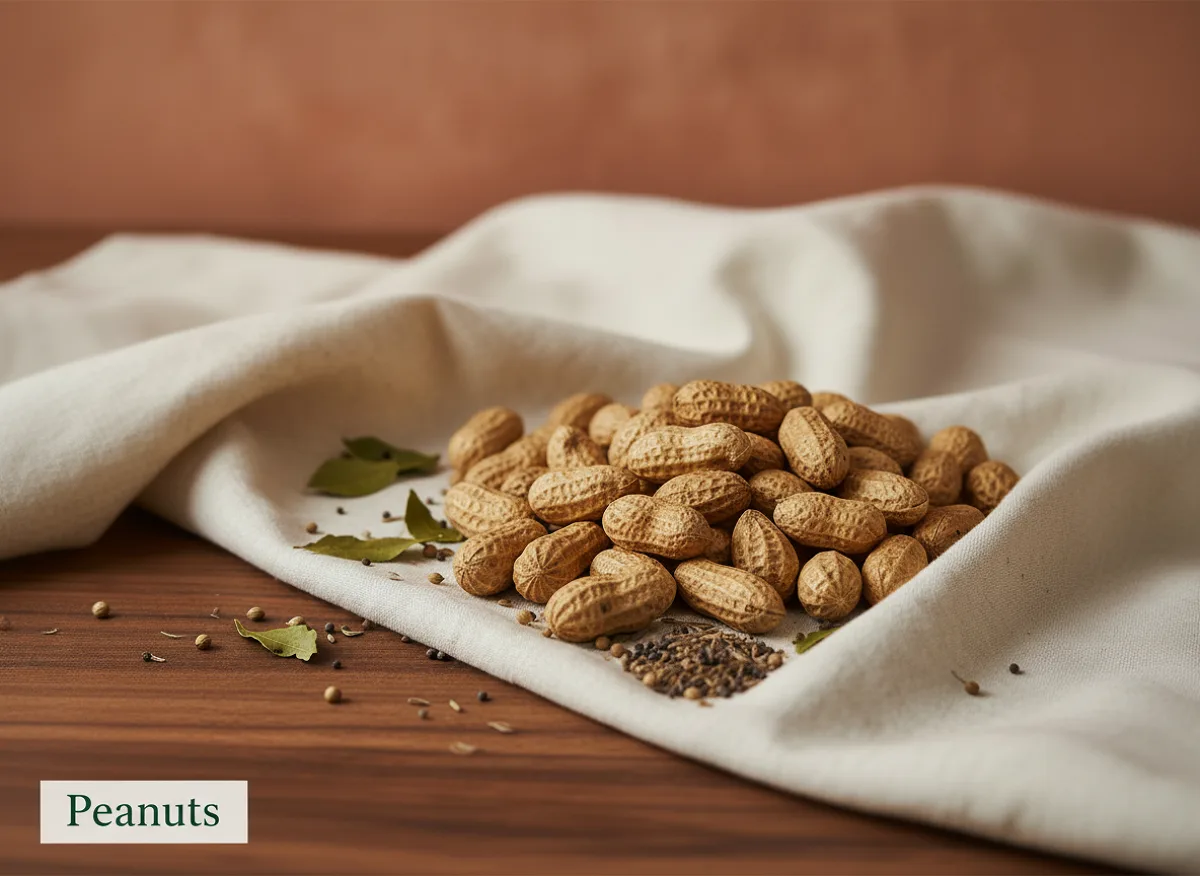
Peanuts (मूंगफली, moongaphalee) are legume seeds enclosed in a tan, papery shell, with 2-3 small kernels inside. Unlike tree nuts, they grow underground and are technically pulses - but their high oil content and culinary use place them among nuts and seeds in the Indian kitchen. Sold roasted and salted, blanched and raw, or ground into peanut butter, they are a year-round staple in Indian markets and home pantries. (IFCT 2017, Ref #H012)
Use in Indian Kitchen
Roasted peanuts are eaten as a street snack (chikhalwali) or mixed into chikhalwali masala with jaggery and sesame. Ground peanut powder thickens and enriches South Indian curries - sambar, rasam, and kootu - and is stirred into dal for body and flavour. Peanut chutney, made by grinding roasted peanuts with coconut, tamarind, and chilli, pairs with idli and dosa. In North India, peanut brittle (moongaphalee ki barfi) with jaggery is a festival sweet. A practical tip: lightly roast raw peanuts at home before grinding to deepen their flavour and reduce any raw taste; store the powder in an airtight jar to keep it fresh and prevent rancidity.
Key Nutrients
Peanuts are rich in plant-based protein, healthy monounsaturated and polyunsaturated fats, dietary fibre, and minerals including magnesium, phosphorus, and zinc. They also contain B vitamins (niacin, folate) and vitamin E. Exact nutrient composition varies by variety and processing; refer to IFCT 2017 (Ref #H012) for detailed values.
Health Benefits (Evidence-based)
- May support heart health due to high content of unsaturated fats and polyphenols, which are linked to improved cholesterol profiles.
- Protein-rich plant food, making them a valuable addition to vegetarian and vegan diets for muscle maintenance and satiety.
- Contain resveratrol and other antioxidants, traditionally associated with anti-inflammatory support.
- Fibre content may aid digestive regularity and support healthy gut bacteria.
- Magnesium and other minerals may contribute to bone health and metabolic function.
- May help stabilise blood sugar when eaten with whole grains or fibre-rich foods, though portion control is important due to calorie density.
Culinary Uses (Vegetarian)
- Roasted whole as a snack, salted or mixed with jaggery and sesame (moongaphalee ki barfi).
- Ground into powder for thickening and enriching dal, sambar, rasam, and kootu.
- Blended into peanut chutney with coconut, tamarind, and green chilli for idli and dosa.
- Stirred into vegetable curries and sabzi for depth and creaminess.
- Made into peanut butter for spreading or mixing into payasam and desserts.
- Crushed and sprinkled over salads, yoghurt, and vegetable sides for crunch and nutrition.
Caution
- Peanut allergy is common; those with known allergies must avoid completely and check packaged foods for cross-contamination warnings.
- High in calories and fat - portion control is important for weight management.
- Raw or improperly stored peanuts may develop aflatoxin (a mould toxin); buy from reputable sources and store in cool, dry conditions.
- May trigger migraines or digestive discomfort in sensitive individuals; introduce gradually if new to your diet.
- High arginine content may be a concern for those prone to herpes simplex; consult a healthcare provider if relevant.
References
- Indian Council of Medical Research - National Institute of Nutrition (ICMR-NIN). Indian Food Composition Tables (IFCT 2017). Reference #H012 (Nuts and Seeds category).
- Ros, E. (2010). Health benefits of nut consumption. Nutrients, 2(7), 652-682. - A comprehensive review of nut consumption and cardiovascular and metabolic health.
Health Benefits
- Antioxidant
- Supports Heart Health
- Helps Blood Sugar Control
- Supports Muscle Growth
- Provides Satiety
Sourcing & Storage
Storage
Store roasted peanuts in an airtight container or glass jar in a cool, dry place away from direct sunlight and moisture. In humid climates (common in India), keep them in the refrigerator or freezer to prevent mould and rancidity. Peanut powder or ground paste should be stored in an airtight jar in the fridge or freezer, as the exposed oils oxidise quickly at room temperature. Keep away from strong-smelling foods, as peanuts absorb odours easily.
Shelf Life
Roasted peanuts in the shell keep for 2-3 months in a cool, dry pantry; shelled roasted peanuts last 1-2 months at room temperature and 3-4 months refrigerated. Raw peanuts last longer - up to 6 months in the fridge. Once opened, consume within 2-3 weeks at room temperature or 1-2 months refrigerated. Peanut powder or paste, once made, should be used within 1-2 weeks if stored in the fridge, or up to 3 months if frozen in an airtight container. Discard if you notice any musty smell or visible mould.
Check Before You Buy
When buying roasted peanuts, look for a uniform tan colour and avoid any with dark spots, mould, or a musty smell - signs of aflatoxin contamination. Shells should be intact and not cracked or split. Buy from reputable kirana shops or mandi vendors with good turnover; avoid loose peanuts stored in damp conditions. For packaged peanuts, check the date and ensure the seal is intact. Raw peanuts should be plump and free of discolouration; blanched peanuts should be pale and uniform. If buying peanut powder or paste, ensure it is freshly ground or recently packaged, and refrigerate immediately after opening.
In Ayurveda
In classical Ayurveda, peanuts (मूंगफली) are considered warming and grounding, with a sweet (madhura) rasa and oily (snigdha) quality. They are believed to support Vata balance when consumed in moderation, particularly in cooler seasons. Traditionally, peanut oil has been used in Ayurvedic massage (abhyanga) and cooking for its nourishing properties.
However, peanuts are also heavy (guru) and may increase Kapha when eaten in excess. Ayurvedic practitioners often recommend roasting peanuts lightly to improve digestibility and reduce their heavy nature. Peanut oil is valued for its warming effect and is sometimes used in warm milk preparations for general wellness support.