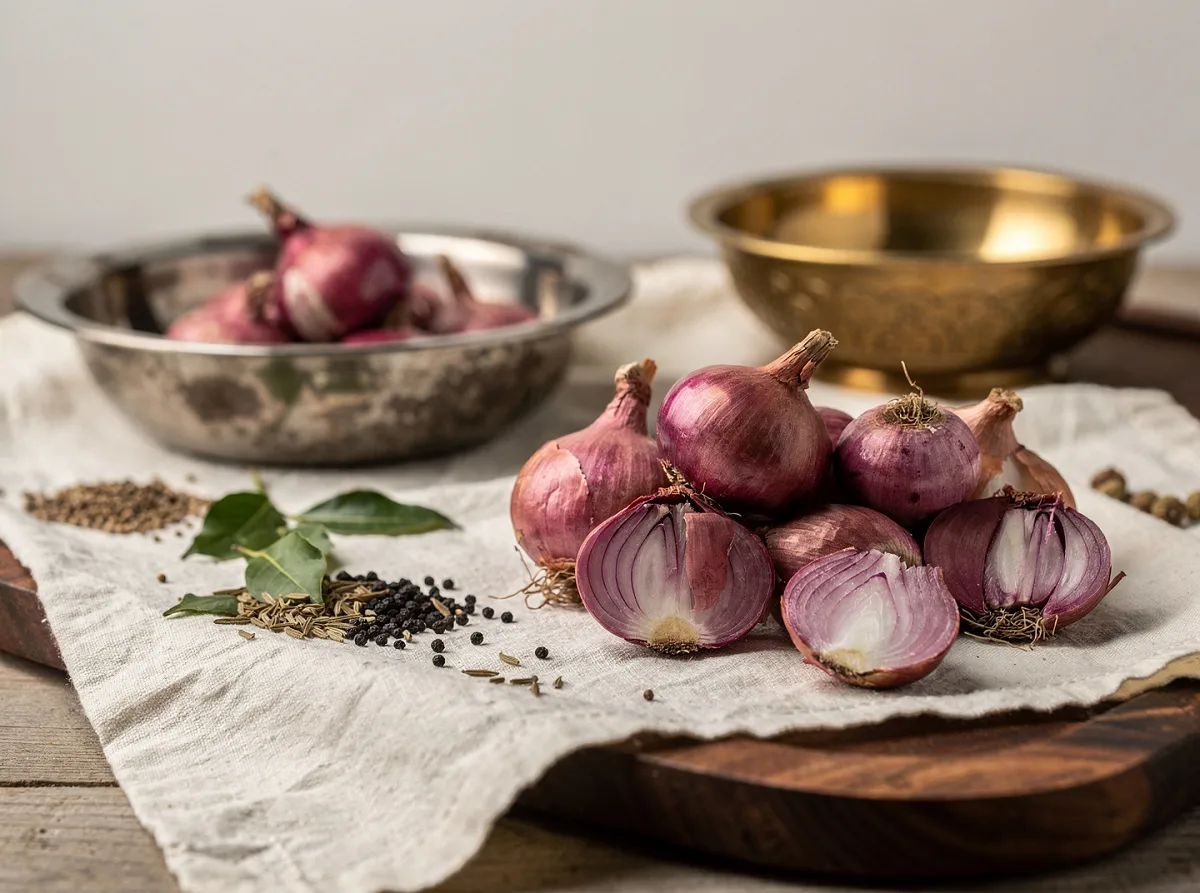
Onion Small
Allium cepa · Also known as pyaaj, chhoti pyaaz, small onion, pearl onion, baby onion
Small onions (pyaaj) are compact, mild-flavoured bulbs prized in Indian kitchens for whole roasting, pickling, and tempering. Their thin papery skin and tender layers make them ideal for quick cooking - pop them into sambar, pickle whole with turmeric and mustard, or char them in...
Nutrition per 100 g
Mean values ± IFCT published SD (edible portion).
More macros
Classification
About Onion Small
What it is
Small onions, or pyaaj, are miniature bulbs of Allium cepa with a diameter of 2-4 cm, wrapped in thin papery golden or reddish skin. They are milder and sweeter than large onions, with tender layers that cook quickly and soften beautifully when roasted or simmered whole. Widely used across Indian regional kitchens for pickling, tempering, and whole-bulb curries. (IFCT 2017, Ref #G018)
Use in Indian Kitchen
Small onions shine in sambar, where they add a gentle sweetness and hold their shape through long simmering. In the South, they are pickled whole with mustard seeds, fenugreek, and turmeric - a tangy, crunchy condiment that lasts months. North Indian cooks char them on a tawa or in a cast-iron skillet until the outer layers blacken and the insides turn jammy and sweet, serving them as a side to dal and roti. They are also essential in onion tempering (tadka) for dals and curries, releasing their mild sulphur notes quickly. A practical tip: peel small onions under running water or soak them briefly in warm water to loosen the skin and reduce tears.
Key Nutrients
Small onions contain carbohydrates, dietary fibre, vitamin C, and small amounts of B vitamins and minerals including potassium and manganese. They also provide quercetin and other polyphenolic compounds typical of the onion family.
Health Benefits (Evidence-based)
- May support heart health through compounds linked to blood pressure and cholesterol management.
- Quercetin and other antioxidants may help reduce inflammation in the body.
- Traditionally used to aid digestion and support gut health in Indian home remedies.
- Vitamin C content supports immune function and collagen formation.
- Low glycaemic index makes them suitable for balanced blood sugar management.
Culinary Uses (Vegetarian)
- Whole roasted or charred as a side dish with dal and bread.
- Simmered whole in sambar, rasam, and vegetable curries.
- Pickled whole with mustard seeds, fenugreek, and spices for long-term storage.
- Chopped finely for tempering (tadka) in dals, curries, and rice dishes.
- Caramelised slowly in ghee for a sweet garnish on khichdi or vegetable pulao.
Caution
- Raw onions may cause heartburn or acid reflux in sensitive individuals; cooking mellows this effect.
- Those with irritable bowel syndrome (IBS) may find raw onions trigger symptoms; cooked forms are often better tolerated.
- Onion breath is common; chewing fresh mint or fennel seeds can help freshen the mouth.
References
- Indian Council of Medical Research - National Institute of Nutrition (ICMR-NIN). Indian Food Composition Tables 2017 (IFCT 2017). Reference #G018 - Condiments and Spices-Fresh category.
- McGill, C. R., Kurilich, A. C., & Davignon, J. (2013). Role of dietary polyphenols in the management of atherosclerosis. Journal of the American College of Cardiology, 61(14), 1573-1579.
Health Benefits
- Improves Digestion
- Anti Inflammatory
- Boosts Immunity
- Supports Gut Health
- Heart Health Support
Sourcing & Storage
Storage
Store small onions in a cool, dry, well-ventilated place away from direct sunlight - a mesh bag or open basket in a pantry or kitchen shelf works well. Avoid plastic bags, which trap moisture and encourage sprouting or rot. In warm, humid climates, store in the refrigerator's vegetable drawer in a paper bag or perforated container to extend shelf life. Keep away from potatoes, as they release ethylene gas and speed onion decay.
Shelf Life
Small onions keep for 2-3 weeks at room temperature in a cool, dry place, or up to 4-6 weeks in the refrigerator. Once cut or peeled, use within 1-2 days. Pickled small onions, when properly sealed and stored in a cool cupboard, will keep for 3-6 months.
Check Before You Buy
Choose small onions that are firm to the touch with no soft spots, sprouting, or mould. The papery skin should be dry and intact, with a mild onion aroma - avoid any with a musty or fermented smell. Look for even size within a batch so they cook uniformly. At the mandi or kirana, avoid onions with visible blemishes, cuts, or dark patches, which indicate decay or pest damage.
In Ayurveda
In classical Ayurveda, onions (pyaaz) are considered to have a pungent (katu) rasa and warming (ushna) virya. They are traditionally used to support digestion and stimulate agni (digestive fire). Small onions, being milder and sweeter than larger varieties, are often preferred in Ayurvedic cooking for their gentler effect on the doshas.
Onions are believed to help balance Kapha and Vata when cooked, though raw onions may increase Pitta in excess. They are commonly used in Ayurvedic home remedies for respiratory health and as a digestive aid when prepared with warming spices like ginger and turmeric.