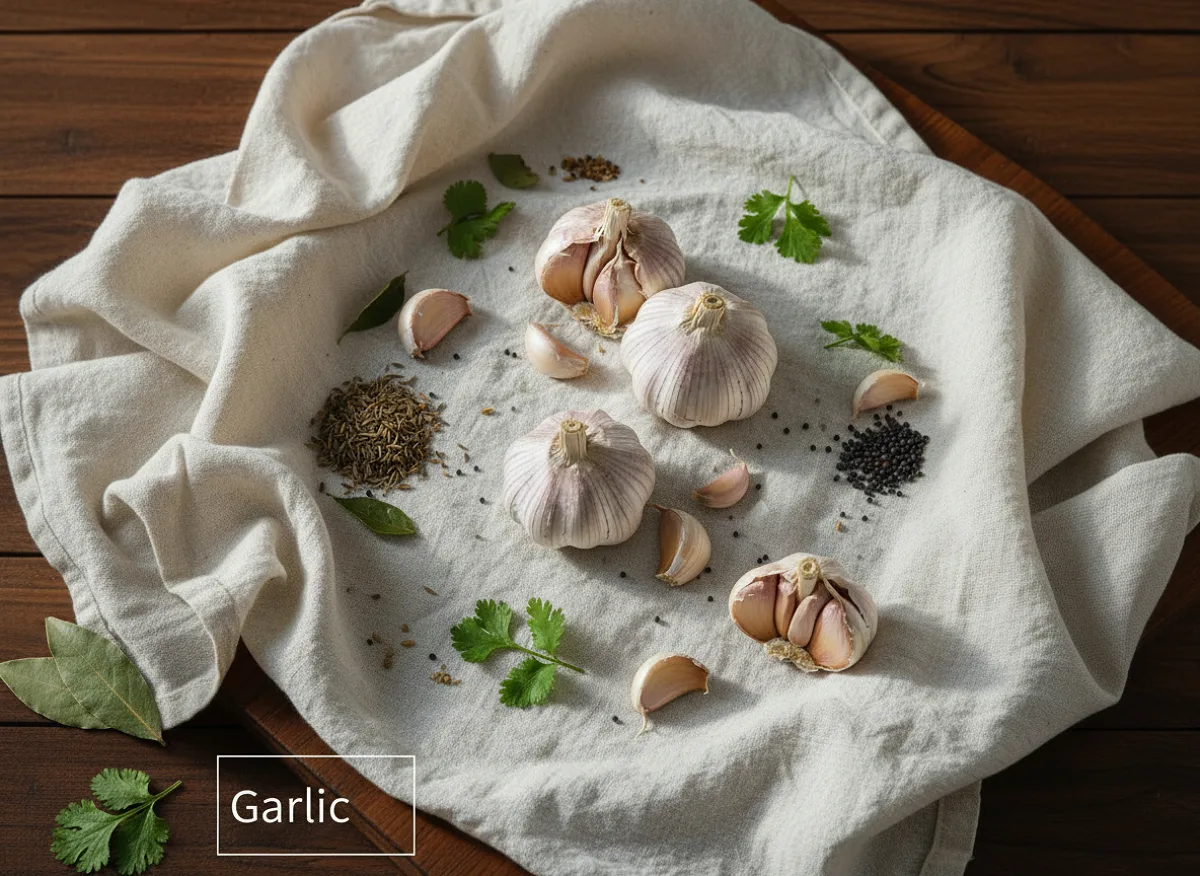
Garlic
Allium sativum · Also known as lahasun
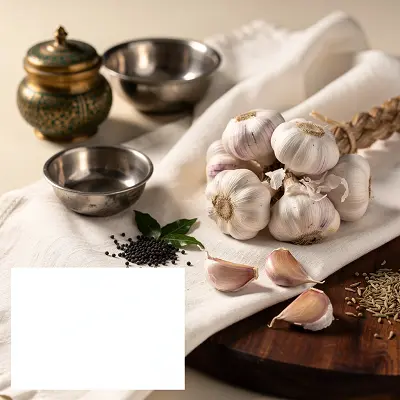
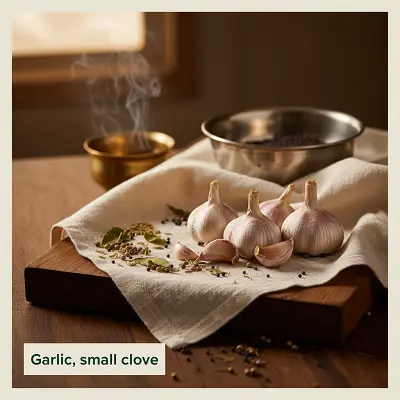
Garlic (lahasun) is a pungent bulb from the allium family, essential to Indian cooking across regions. Used fresh, dried, or as paste, it forms the flavour base for countless curries, dals, and temperings. A staple condiment rich in sulphur compounds and vitamin C.
Nutrition per 100 g
Mean values ± IFCT published SD (edible portion).
More macros
Classification
About Garlic
What it is
Garlic is the bulb of Allium sativum, a member of the onion family, composed of individual cloves wrapped in papery skin. Native to Central Asia, it has been cultivated in India for millennia and is now grown widely across the country. The bulb is harvested, dried, and stored whole or processed into paste, powder, or oil. Garlic is classified under fresh condiments and spices in the Indian Food Composition Tables (IFCT 2017, Ref #G011).
Use in Indian Kitchen
Garlic is foundational across all Indian regional cuisines. In North Indian cooking, it features prominently in curries, tandoori marinades, and dal temperings; in South India, it is a key component of sambar, rasam, and coconut-based curries. East and West Indian kitchens use it equally in sabzi, pickles, and chutneys. Fresh garlic cloves are crushed or minced for tadka (tempering in hot oil or ghee), while dried garlic powder suits quick cooking. Garlic paste, made by grinding peeled cloves with a little water, is a time-saver in modern kitchens. The flavour mellows when cooked slowly and becomes sharp and pungent when added raw or fried briefly. Traditionally, garlic is believed to warm the body and is often avoided during fasting or in certain Ayurvedic protocols, yet it remains indispensable in everyday home cooking.
Ayurvedic Connection
In Ayurveda, garlic (lahasun) is considered heating (ushna virya) and is believed to balance vata and kapha doshas. It is traditionally used to support digestion, circulation, and immunity. Classical texts recommend it for joint health and as a general rasayana (rejuvenative). However, it is often avoided during sattvic (pure) eating practices and certain fasting periods due to its strong, tamasic nature in spiritual contexts.
Key Nutrients
Garlic contains vitamin C, vitamin B6, manganese, and selenium. It is notably rich in sulphur-containing compounds such as allicin (formed when cloves are crushed or chopped), which are responsible for its characteristic aroma and many of its bioactive properties. The exact nutrient profile per 100 g is detailed in IFCT 2017, Ref #G011.
Health Benefits (Evidence-based)
- May support cardiovascular health through compounds that help maintain healthy cholesterol and blood pressure levels.
- Linked to immune system support due to its vitamin C and allicin content, particularly when consumed fresh or lightly cooked.
- Traditionally used to aid digestion and reduce bloating, especially when included in tadka or cooked into dal.
- Contains antioxidants that may help protect cells from oxidative stress.
- Historically valued in Indian home remedies for respiratory comfort and general wellness during seasonal changes.
Culinary Uses (Vegetarian)
- Tadka base: crushed or sliced garlic tempered in hot ghee or oil for dal, sabzi, and rice dishes.
- Curry pastes and marinades: ground with ginger, onion, and spices for paneer tikka, vegetable curries, and chutneys.
- Sambar and rasam: whole cloves or paste added for depth and warmth.
- Pickles and preserves: fermented or oil-preserved garlic for long-term storage and flavour.
- Garlic bread and naan: minced fresh garlic mixed with ghee and herbs for baked breads.
- Soups and broths: added to vegetable stocks and light curries for aromatic body.
Caution
- Raw garlic in large amounts may cause heartburn or digestive discomfort in sensitive individuals; cooking mellows its intensity.
- Those on blood-thinning medications should consult a healthcare provider, as garlic may have mild anticoagulant properties.
- Garlic breath and body odour are common; drinking milk or eating parsley may help reduce the smell.
- Avoid during certain Ayurvedic treatments or fasting protocols as advised by a practitioner.
References
- Indian Council of Medical Research - National Institute of Nutrition (ICMR-NIN). Indian Food Composition Tables 2017. Hyderabad: NIN; 2017. [Reference #G011 for fresh garlic]
- Banerjee, S. K., & Maulik, S. K. (2002). Effect of garlic on cardiovascular disorders: a review. Nutrition Journal, 1(4), 4. [General review on garlic and cardiovascular health]
Health Benefits
- Boosts Immunity
- Heart Health Support
- Antimicrobial Support
- Reduces Cholesterol
Sourcing & Storage
Storage
Store whole garlic bulbs in a cool, dry, well-ventilated place away from direct sunlight - a kitchen shelf, pantry, or mesh bag works well. Avoid plastic bags or airtight containers, which trap moisture and encourage sprouting or mould. In humid climates, store in a terracotta pot or open basket. Once a bulb is broken, individual cloves can be refrigerated in a paper bag or cloth for a few weeks, or peeled cloves can be submerged in oil in a glass jar (change oil weekly to prevent bacterial growth).
Shelf Life
Whole, unbroken garlic bulbs keep for 3 to 6 months in cool, dry conditions. Once cloves are separated or peeled, use within 1 to 2 weeks at room temperature or up to 3 weeks refrigerated. Garlic paste (homemade or store-bought) lasts 1 to 2 weeks in the fridge; garlic powder, when stored in an airtight container away from moisture and heat, remains potent for up to a year. Frozen peeled cloves or paste can be kept for several months.
Check Before You Buy
Choose bulbs that are firm, heavy for their size, and free of soft spots, mould, or sprouting. The papery skin should be intact and dry, with no dark patches or blemishes. Avoid bulbs that feel light or hollow, which indicate age or moisture loss. Smell should be mild and characteristic - not musty or fermented. At the mandi or kirana shop, break open a bulb gently to check that cloves are plump and white or pale cream, not shrivelled or discoloured. Pre-peeled or pre-minced garlic in jars should have a clean, bright appearance and no off-odours; check the manufacturing date and avoid cloudy or separated oil.
In Ayurveda
In Ayurveda, garlic is valued for its warming properties and ability to balance the doshas. It aids digestion, supports detoxification, and enhances immunity. Garlic is also used to alleviate respiratory issues, reduce inflammation, and promote overall vitality. In Ayurveda, garlic is valued for its medicinal properties. It is considered a powerful detoxifier and immune booster, promoting digestion and heart health. Known for its warming nature, garlic balances Vata and Kapha doshas while enhancing overall vitality and wellness. Moderation is key for optimal benefits.