Curry Leaves
Murraya koenigii · Also known as Kadi Patta, Mitho Limdo, Karuvepillai
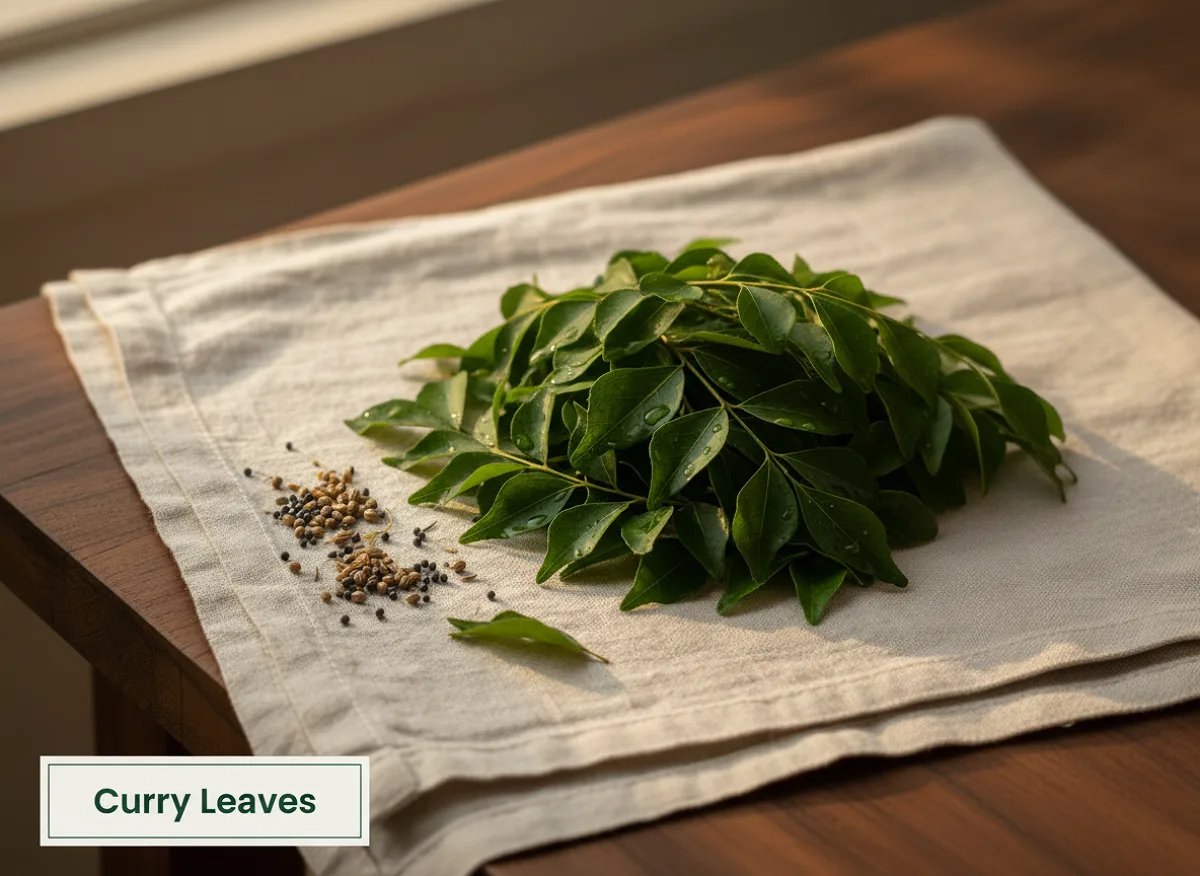
Curry leaves, known as kadi patta in Hindi and karuvepillai in South India, are small, aromatic green leaves from the curry plant. A staple tempering ingredient across Indian kitchens, they bring a warm, slightly citrusy flavour and are essential to tadka in dal, sambar, rasam, a...
Nutrition per 100 g
Mean values ± IFCT published SD (edible portion).
More macros
Classification
About Curry Leaves
What it is: Curry leaves are small, glossy green leaflets from the curry plant, native to South Asia. Used fresh, dried, or occasionally as a paste, they are a cornerstone of Indian tempering (tadka). Most common in South Indian, Maharashtrian, and Gujarati cooking, they add a distinctive warm, slightly bitter-sweet aroma and subtle citrus note to dal, curries, and vegetable dishes.
Key Nutrients: Vitamin A, Vitamin C, Calcium, Iron, Dietary Fibre, Antioxidants.
Health Benefits:
- Rich in antioxidants, which may help protect cells from everyday oxidative stress.
- Traditionally used in Ayurvedic and folk medicine to support digestive health and ease bloating.
- Good source of Vitamin A, linked to eye health and skin wellness.
- Contain compounds that may help maintain steady blood sugar levels when eaten regularly as part of meals.
- Iron and calcium content supports bone and blood health, especially valuable in vegetarian diets.
- Historically used in Indian kitchens to aid digestion and reduce inflammation in the gut.
- May help reduce nausea and support overall digestive comfort.
Culinary Uses: Curry leaves are most often used fresh in tadka (tempering) - fried briefly in hot oil or ghee with mustard seeds, cumin, and dried chillies to release their aroma before adding to dal, sambar, rasam, or vegetable curries. They are also added whole or chopped to chutneys, rice dishes, and vegetable stir-fries. Dried curry leaves work in a pinch but lack the fresh aroma. Occasionally ground into pastes for marinades or mixed into spice blends.
Caution: Curry leaves are generally safe for most people. Those with sensitive digestion may find large quantities slightly stimulating; use in moderation if prone to acidity. Pregnant women should consume in normal culinary amounts only, not as concentrated supplements. If taking blood-thinning medications, check with your doctor before significantly increasing intake, as some compounds may have mild anticoagulant properties.
Health Benefits
- Improves Digestion
- Boosts Immunity
- Regulates Blood Sugar
- Improves Hair Health
Sourcing & Storage
Storage
Store fresh curry leaves in a sealed container or plastic bag in the refrigerator, ideally in the vegetable drawer where it stays cool and humid. Keep away from direct light and moisture. For longer storage, spread leaves on a clean cloth, dry them completely in shade for 2-3 days, then store in an airtight glass jar away from heat and sunlight. In warm, humid Indian climates, refrigeration is essential to prevent mould and wilting. Frozen curry leaves (washed, dried, and frozen in an airtight container) retain flavour well for several months.
Shelf Life
Fresh curry leaves last 1-2 weeks in the refrigerator when stored properly. Dried curry leaves keep for 3-4 months in an airtight container away from heat and light. Frozen curry leaves remain usable for up to 6 months. Once opened or removed from the plant, use within a few days for best aroma and flavour.
Check Before You Buy
When buying fresh curry leaves, look for bright green, glossy leaflets with no yellowing, browning, or soft spots. The leaves should feel firm and snap cleanly when bent. Smell them gently - they should have a warm, aromatic, slightly citrusy scent; a musty or sour smell indicates age or mould. Avoid bunches with wilted, dried, or blackened leaves at the base.
If buying from a mandi or kirana, ask for recently harvested bunches and check that the stems are still green and fresh, not woody or grey. Packaged dried curry leaves should be vibrant green, not dull brown or dusty. Avoid packets with visible moisture inside or a stale smell when opened. Fresh leaves from a plant nursery or vegetable vendor are often fresher than pre-packed supermarket bunches; buy small quantities and use quickly for maximum flavour.
In Ayurveda
In Ayurveda, curry leaves are valued for their digestive benefits, helping to balance the digestive fire (Agni) and soothe the stomach. They aid in detoxification, improve metabolism, and are considered beneficial for skin health and managing blood sugar levels.
In Ayurveda, curry leaves are valued for their medicinal properties. They aid digestion, help control cholesterol levels, and have anti-diabetic effects. Rich in antioxidants, they promote healthy skin and hair. Their warming nature balances doshas, making them beneficial for overall health.