Ginger
Zinziber officinale · Also known as Adarak
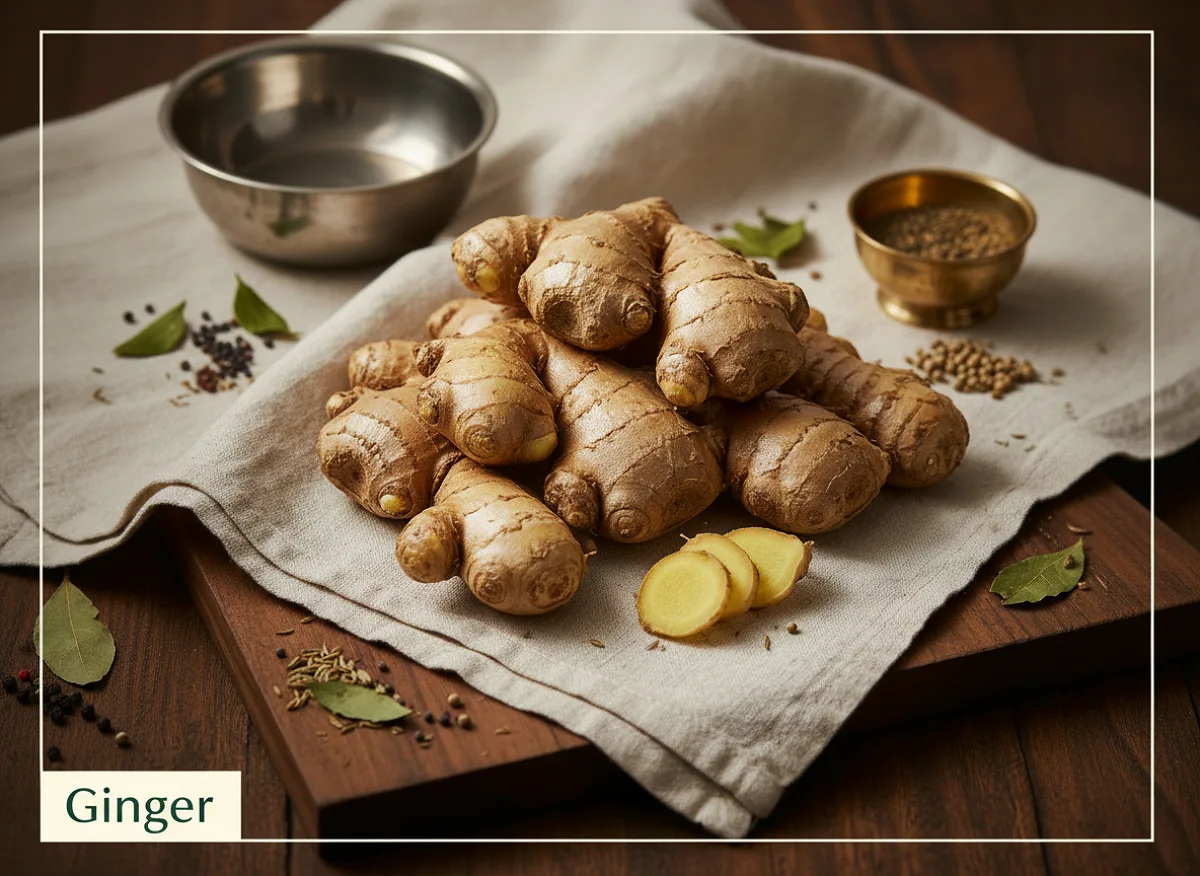
Ginger (adarak) is a pungent, warming rhizome widely used fresh in Indian kitchens for flavour, aroma, and digestive support. A staple in curries, chutneys, teas, and tempering, it brings heat and depth to both everyday dal and festive sweets (IFCT 2017, Ref #G014).
Nutrition per 100 g
Mean values ± IFCT published SD (edible portion).
More macros
Classification
About Ginger
What it is
Ginger is the underground rhizome of Zingiber officinale, prized across Indian regions for its sharp, warming flavour and aromatic oils. Young ginger (spring harvest) is tender and milder; mature ginger (autumn/winter) is fibrous, peppery, and more pungent. It is one of the oldest spices in Indian trade and remains essential in home kitchens from Kerala to Kashmir (IFCT 2017, Ref #G014).
Use in Indian Kitchen
Ginger is foundational across all Indian cuisines. In the North, it is ground into ginger-garlic paste for curries, dal, and marinades; in the South, thin slices temper sambar and rasam, and ginger-jaggery candy (adrak ki kheer) soothes winter colds. East Indian cooking uses it in fish curries and vegetable stir-fries; Western India favours it in pickles, chutneys, and milk-based sweets. Fresh ginger tea (adrak ki chai) is a year-round comfort, especially during monsoon and winter. Its warming nature makes it a natural pairing with ghee, turmeric, and black pepper in traditional remedies and everyday cooking.
Ayurvedic Connection
Ginger is classified as warming (ushna virya) and is traditionally valued in Ayurveda for supporting digestion and reducing bloating. It is believed to kindle agni (digestive fire) and is often used in classical formulations for joint comfort and respiratory wellness. Ginger tea with honey and lemon is a time-honoured home remedy during seasonal transitions and colds.
Key Nutrients
Fresh ginger contains volatile oils (gingerol, shogaol), fibre, potassium, manganese, and vitamin C. Exact nutrient composition is documented in IFCT 2017 (Ref #G014); amounts vary with freshness, variety, and growing conditions.
Health Benefits (Evidence-based)
- May support digestive comfort and reduce bloating, particularly when consumed fresh or as a warm infusion.
- Linked to anti-inflammatory properties that may ease joint and muscle discomfort, especially when combined with turmeric.
- Traditionally used to soothe nausea and support stomach settling, particularly during travel or seasonal changes.
- May help maintain healthy circulation and support cardiovascular wellness as part of a balanced diet.
- Contains antioxidants that contribute to overall cellular health and immune support.
Culinary Uses (Vegetarian)
- Ginger-garlic paste: ground with garlic for curries, dal, and vegetable stir-fries.
- Tempering: thin slices or crushed pieces in hot ghee or oil for sambar, rasam, and vegetable dishes.
- Fresh ginger tea: sliced or crushed with water, honey, and lemon for warmth and comfort.
- Chutneys and pickles: fresh ginger with green chilli, coconut, or jaggery for condiments.
- Sweets and milk-based dishes: ginger-jaggery candy, kheer, and halwa for festive and winter cooking.
- Marinades and dressings: grated ginger with curd, lemon, and spices for paneer and vegetable preparations.
Caution
- Those with sensitive digestion or acid reflux should consume in moderation, as ginger is warming and may intensify symptoms in some individuals.
- Pregnant women should consult a healthcare provider before using ginger in medicinal quantities, though culinary amounts are generally safe.
- Ginger may interact with certain blood-thinning medications; seek medical advice if on such treatment.
- Excessive consumption may cause mild heartburn or mouth irritation in sensitive individuals.
References
- Indian Council of Medical Research - National Institute of Nutrition (ICMR-NIN). Indian Food Composition Tables 2017. Hyderabad: NIN; 2017. [Reference code G014 for fresh ginger].
- Mashhadi NS, Ghiasvand R, Askari G, et al. Anti-oxidative and anti-inflammatory effects of ginger in health and physical activity: review of current evidence. International Journal of Preventive Medicine. 2013;4(Suppl 1):S36-S42.
Health Benefits
- Improves Digestion
- Anti Inflammatory
- Boosts Immunity
- Reduces Nausea
Sourcing & Storage
Storage
Store fresh ginger in a cool, dry place (ideally 15–20°C) in a paper bag or breathable cloth to allow air circulation and prevent moisture buildup. In warm, humid Indian climates, keep ginger in the vegetable drawer of the refrigerator wrapped loosely in paper towel. Avoid plastic bags, which trap moisture and encourage mould. For longer storage, peel and freeze ginger pieces in an airtight container or freeze ginger paste in ice-cube trays for convenient portioning.
Shelf Life
Fresh, unpeeled ginger keeps for 2 - 3 weeks at room temperature in a cool, dry place, and up to 3 - 4 weeks in the refrigerator vegetable drawer. Peeled or cut ginger should be used within 1 - 2 weeks when refrigerated. Frozen ginger pieces or paste last 2 - 3 months in the freezer. Once ginger shows soft spots, wrinkles, or mould, discard it.
Check Before You Buy
Choose ginger that is firm, heavy for its size, and free of soft spots or blemishes. The skin should be thin and smooth (young ginger) or thick and papery (mature ginger), depending on your preference. Smell should be peppery and aromatic; avoid ginger with a musty or fermented odour. At the mandi or kirana, gently press the rhizome - it should not yield easily. Avoid pieces that are shrivelled, sprouting, or show signs of mould or rot. Packed ginger should have a clear date and no visible moisture inside the packaging.
In Ayurveda
In Ayurveda, ginger (Zinziber officinale) is revered as a "Mahaaushadhi" (great medicine). It possesses a pungent (katu) and acrid (tikta) rasa (taste), light and sharp guna (qualities), and a heating virya (potency). Ginger is traditionally used to kindle agni (digestive fire), improve digestion, and pacify vata dosha. Fresh ginger is considered warming and stimulating, while dried ginger (sonth) is more concentrated and intensely heating. Ginger tea and ginger-based preparations are classical home remedies for colds, coughs, and digestive complaints.