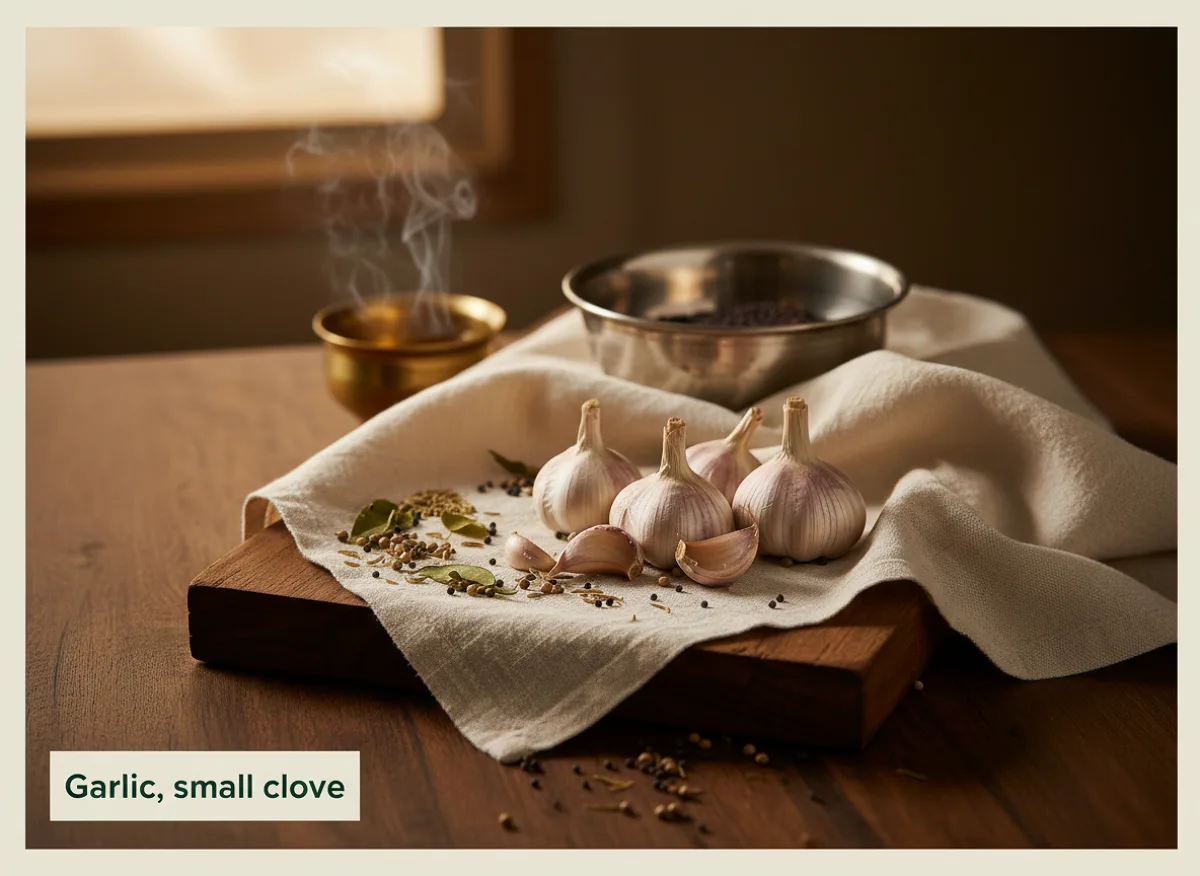
Garlic, small clove
Allium sativum · Also known as Lasun, Lasoon, Lasan, Lehsan, Rashun, Nohoru, Bellulli, Ruhan, Vellulli, Chanam, Lashoonam, Poondu
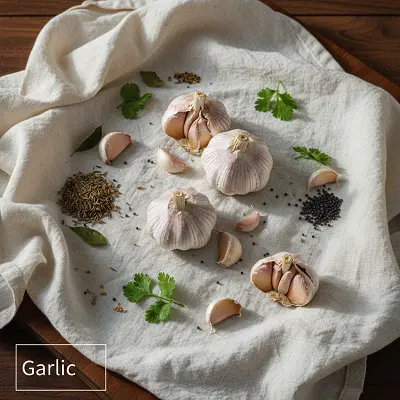
Garlic (लहसुन, lasun) is a pungent, creamy-white bulb clove with papery skin and a sharp, warming bite that mellows into sweetness when cooked. A cornerstone of Indian tadka and tempering, small cloves are prized for their concentrated flavour in curries, dals, pickles, and chutn...
Nutrition per 100 g
Mean values ± IFCT published SD (edible portion).
More macros
Classification
About Garlic, small clove
What it is
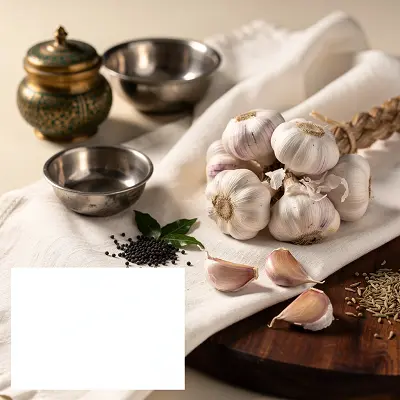
Garlic (लहसुन, lasun) is a small, creamy-white clove with thin papery skin, belonging to the allium family alongside onion and leek. Each bulb contains 8-12 cloves, and the small clove variety is favoured in Indian home kitchens for its concentrated, peppery warmth and ease of mincing or crushing. Fresh garlic has a sharp bite that softens into a sweet, mellow richness when fried in oil or ghee - a transformation central to Indian cooking. (IFCT 2017, Ref #G012)
Use in Indian Kitchen
Garlic is the backbone of Indian tadka and tempering. In the South, it is fried with mustard seeds and curry leaves to open dal, sambar, and rasam; in the North, crushed garlic and ginger form the aromatic base for curries, kormas, and meat-free paneer dishes. Garlic pickle (अचार, achar) is a beloved condiment, and raw garlic paste sharpens chutneys and dressings. A practical tip: crush or mince garlic just before cooking to preserve its volatile oils and pungent compounds; if you find raw garlic too strong, soak sliced cloves in water for 10-15 minutes to soften the bite, or roast whole cloves until golden and sweet.
Key Nutrients
Garlic is rich in vitamin C, manganese, and selenium. It contains allicin, a sulphur compound released when cloves are crushed or chopped, which is responsible for its distinctive aroma and many of its traditional health associations. IFCT 2017 data confirms presence of carbohydrates, fibre, and trace minerals including potassium and phosphorus.
Health Benefits (Evidence-based)
- May support cardiovascular health through compounds that help maintain healthy cholesterol and blood pressure levels.
- Traditionally linked to immune support, particularly during seasonal changes; modern research suggests allicin has antimicrobial properties.
- Often used in Ayurvedic and folk remedies for respiratory comfort and as a warming digestive aid.
- Contains antioxidants that may help protect cells from oxidative stress.
- Historically valued as a natural preservative in pickles and fermented foods.
Culinary Uses (Vegetarian)
- Tempering (tadka) in dals, sambar, rasam, and vegetable curries.
- Crushed or minced in curry pastes, chutneys, and marinades for paneer and tofu.
- Roasted whole or sliced in dry curries (sukha sabzi) and stir-fried vegetables.
- Pickled with turmeric and chilli for long-term storage and condiment use.
- Raw in salad dressings, raita, and fresh chutneys for sharp, peppery notes.
Caution
- Raw garlic can cause heartburn or digestive discomfort in sensitive individuals; cooking mellows this effect.
- Those on blood-thinning medications should consult a healthcare provider before significantly increasing garlic intake.
- Garlic breath is common; chewing parsley or drinking milk may help freshen the mouth after eating.
References
- Indian Council of Medical Research - National Institute of Nutrition (ICMR-NIN). Indian Food Composition Tables (IFCT) 2017. Reference #G012 (Condiments and Spices - Fresh, Garlic).
- National Institute of Nutrition, ICMR. Nutritive Value of Indian Foods. Hyderabad: NIN; regularly updated resource on Indian food composition and traditional uses.
Sourcing & Storage
Storage
Store garlic cloves in a cool, dry, well-ventilated place away from direct sunlight - a mesh bag or open basket in a kitchen cupboard or pantry is ideal. Avoid plastic bags or airtight containers, which trap moisture and encourage sprouting or mould. In humid Indian climates, store in the coldest part of the kitchen or in a refrigerator crisper drawer if the kitchen is very warm. Do not refrigerate whole bulbs unless the climate is extremely hot and humid; cold temperatures can soften cloves and promote sprouting.
Shelf Life
Whole, unpeeled garlic bulbs keep for 3-4 weeks in a cool, dry pantry, or up to 2 months in a cool cellar or refrigerator. Once a clove is peeled or crushed, use it within 1-2 days for best flavour and potency. Minced or crushed garlic stored in an airtight container in the refrigerator will keep for 3-5 days; freezing minced garlic in ice-cube trays extends storage to 2-3 months, though texture becomes softer after thawing.
Check Before You Buy
Choose firm, heavy bulbs with tight, papery skin free of soft spots, mould, or sprouting. Cloves should feel dense and not rattle inside the skin. Avoid bulbs that are shrivelled, discoloured, or have a musty smell - signs of age or poor storage. At the mandi or kirana shop, squeeze gently to check firmness; reject any with visible green shoots or dark patches. Packaged garlic should have a harvest or best-by date; check that the pack is dry and cloves are not stuck together or damp.
In Ayurveda
In classical Ayurveda, garlic (Rasun) is classified as having a sharp (tikshna), heating (ushna) potency and is considered a rasayana (rejuvenative) herb. It is traditionally believed to balance Vata and Kapha doshas, though excessive consumption may increase Pitta. Garlic has been used in traditional Indian household remedies for centuries, particularly during winter months to support immunity and overall vitality.