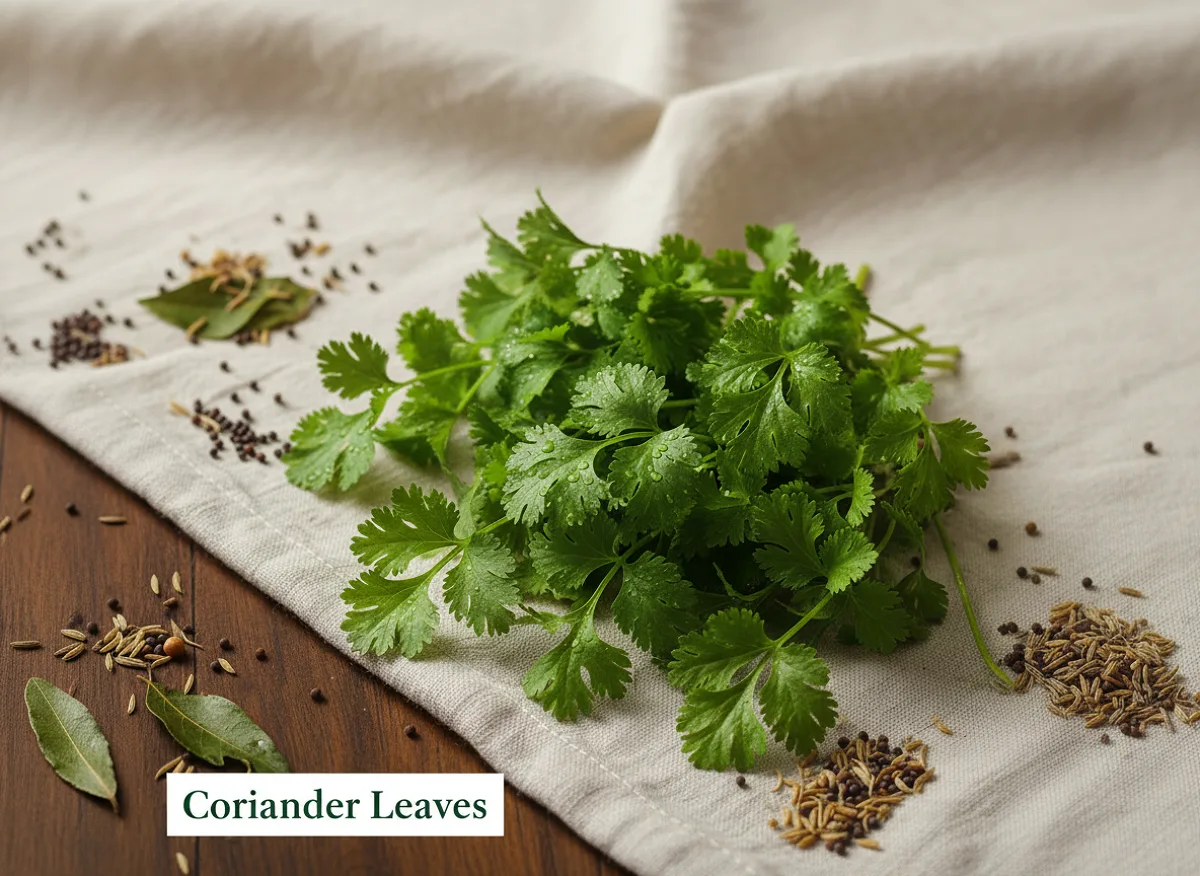
Coriander Leaves
Coriandrum sativum · Also known as dhaniya
Coriander leaves, or dhaniya, are the fresh green herb of the coriander plant - bright, citrusy, and essential to Indian cooking. Used raw in chutneys, salads, and as a finishing garnish, or cooked into curries, dal, and rasam, these tender leaves bring both flavour and a light h...
Nutrition per 100 g
Mean values ± IFCT published SD (edible portion).
More macros
Classification
About Coriander Leaves
What it is: Coriander leaves are the soft, feathery green foliage of the coriander plant (Coriandrum sativum). Fresh and aromatic, they are a staple in Indian kitchens - used raw as a garnish, chopped into chutneys and salads, or stirred into hot curries and dal just before serving. The leaves have a bright, slightly citrusy flavour that lifts and balances spiced dishes.
Key Nutrients: Vitamin C, Vitamin A, Dietary Fibre, Calcium, Iron, Antioxidants.
Health Benefits:
- Rich in Vitamin C, which may support immune function and skin health.
- Contains Vitamin A, traditionally valued for eye health and overall wellness.
- Dietary fibre supports digestive comfort and regular bowel function.
- Antioxidants and phytonutrients may help protect cells from everyday stress.
- Traditionally used in Indian home cooking to aid digestion and freshen the palate.
- Low in calories, making it a nutrient-dense addition to meals without adding bulk.
- The fresh aroma is believed to stimulate appetite and improve meal enjoyment.
Culinary Uses: Coriander leaves are used fresh and raw - chopped into mint-coriander chutney, scattered over sambar or rasam, mixed into raita, or layered into salads. They are also stirred into curries, dal, and vegetable sabzi at the end of cooking to preserve their bright flavour. In South Indian cooking, they are a classic pairing with coconut and tamarind; in North Indian kitchens, they feature in chutneys, biryani, and kebab marinades. A small handful of fresh leaves can transform a simple dal or soup.
Caution: Coriander leaves are generally safe for most people. Those with sensitive digestion may find large raw quantities slightly stimulating - start with small amounts if new to the herb. Always rinse thoroughly under running water before use to remove any soil or dust. If you are taking certain medications, particularly blood thinners, consult a healthcare provider before consuming large quantities regularly, as the herb contains compounds that may interact.
Health Benefits
- Improves Digestion
- Boosts Immunity
- Detox Support
- Heart Health Support
Sourcing & Storage
Storage
Store fresh coriander leaves in the refrigerator to keep them crisp and green. Wrap the bunch loosely in a damp paper towel or cloth, then place in a perforated plastic bag or container - this keeps moisture around the leaves without trapping excess water, which can cause rot. Alternatively, stand the bunch upright in a glass of water (like flowers) and cover loosely with a plastic bag; change the water every 2-3 days. Keep away from direct sunlight and ethylene-producing fruits (apples, bananas). In hot, humid Indian climates, refrigeration is essential to prevent wilting and yellowing.
Shelf Life
Fresh coriander leaves will stay crisp and green for 7-10 days when stored properly in the refrigerator. Once the leaves begin to yellow or wilt noticeably, flavour and nutrient quality decline. For longer storage, you can freeze chopped leaves in ice-cube trays with a little water, or dry them in a cool, dark place - dried leaves keep for 2-3 months but lose much of their fresh brightness and are best used in cooked dishes rather than as a garnish.
Check Before You Buy
Look for bunches with bright green, tender leaves that feel crisp and smell fresh and aromatic - avoid any that are yellowed, wilted, slimy, or have dark spots or mould. The stems should be firm and pale green, not brown or mushy. Gently squeeze the bunch; it should feel light and springy, not heavy with excess moisture. If buying from a mandi or loose from a kirana shop, ask for a fresh bunch that was cut that morning if possible.
If buying pre-packed coriander in plastic clamshells, check the date and inspect through the packaging for any visible yellowing or condensation inside - these are signs the leaves are ageing or have been stored too long. Avoid bunches with a sour or musty smell, which indicates decay. Fresh coriander should smell bright and herbaceous, never dull or off.
In Ayurveda
Coriander leaves in Ayurveda are valued for their cooling properties, aiding digestion, detoxifying the body, and balancing Pitta dosha. They enhance flavor while promoting overall well-being.
In Ayurveda, coriander leaves are valued for their cooling properties and digestive benefits. They help alleviate digestive issues, reduce inflammation, and enhance appetite. Rich in antioxidants, they support overall health and balance the body's doshas, making them a key ingredient in traditional remedies.