Garlic - Kashmir
Allium sativum · Also known as lahasun, lahsun, garlic, Kashmiri garlic, white garlic
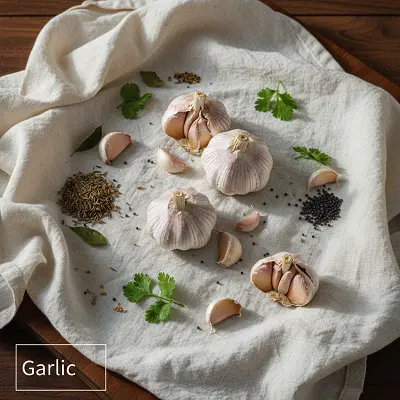
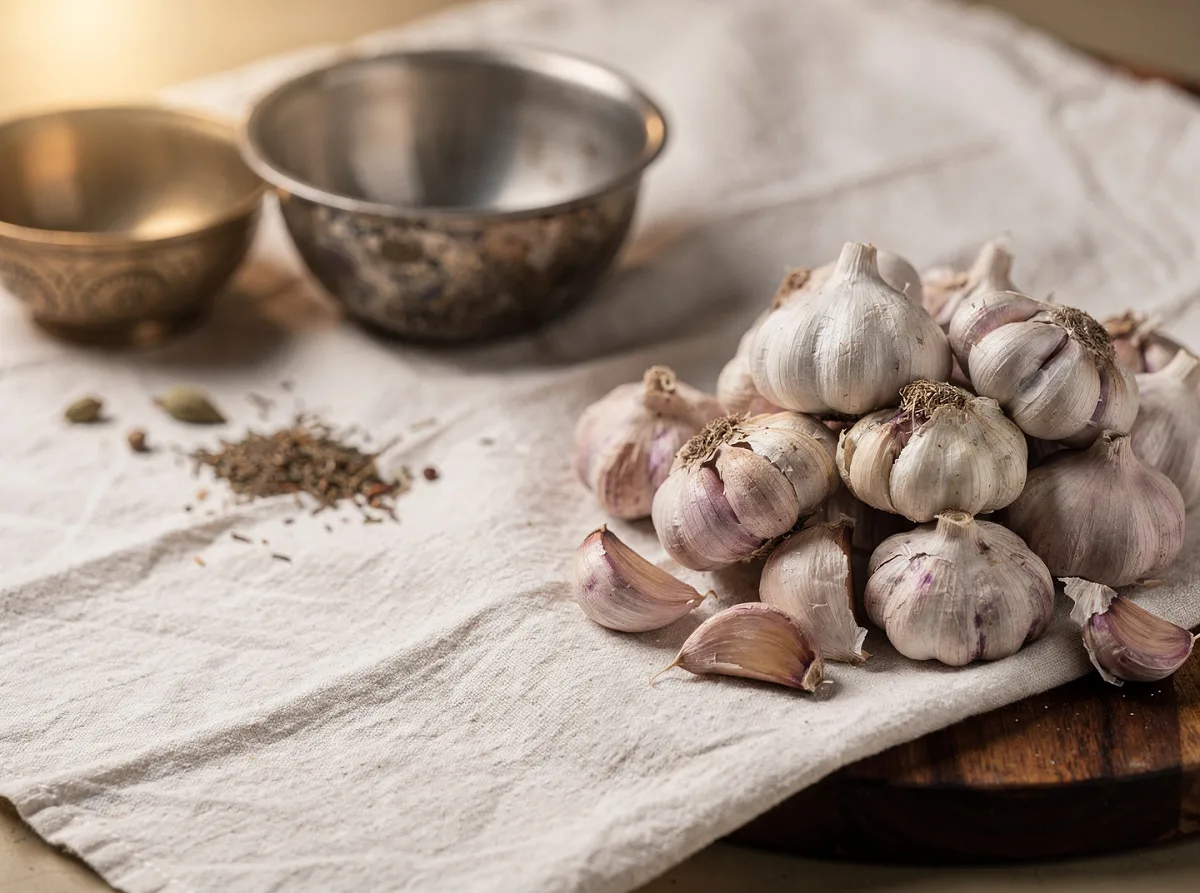
Kashmiri garlic (lahasun) is prized for its mild, sweet flavour and large, plump cloves with papery white skin. Unlike sharper varieties, these bulbs bring a gentle warmth to tadka, curries, and pickles without overpowering the dish. Fresh Kashmiri garlic is a cornerstone of Nort...
Nutrition per 100 g
Edible portion values from the master catalog.
More macros
Classification
About Garlic - Kashmir
What it is
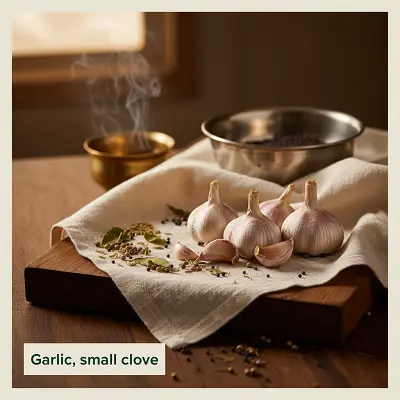
Kashmiri garlic (lahasun) is a premium variety grown in Kashmir's cool climate, known for its large, ivory-white cloves and distinctly milder, sweeter profile compared to other Indian garlic. The bulbs are firm and dense, with a papery skin that peels cleanly. Fresh Kashmiri garlic is harvested in spring and early summer, and its gentle flavour makes it ideal for home cooks who want garlic's warmth without harsh bite. (IFCT 2017, Ref #G013)
Use in Indian Kitchen
Kashmiri garlic is essential in North Indian kitchens. Whole cloves or crushed garlic form the base of dal tadka, tempering hot oil or ghee at the start of curries and sabzi. Finely minced, it goes into garlic chutney (lahasun ki chutney), pickles, and marinades for paneer. In South Indian cooking, it appears in sambar and rasam pastes. A practical tip: roast whole cloves lightly in a dry pan before crushing to deepen their sweetness and reduce any sharpness. Store-bought Kashmiri garlic is often fresher and milder than local varieties, making it a favourite for those who find regular garlic too pungent.
Key Nutrients
Garlic is rich in vitamin C, manganese, and selenium. It contains allicin, a sulphur compound released when cloves are crushed or chopped, which is linked to many of garlic's traditional health properties. Kashmiri garlic also provides B vitamins and potassium. Exact nutrient composition varies with soil and storage; refer to IFCT 2017 for standardised Indian food values.
Health Benefits (Evidence-based)
- May support heart health through compounds that help maintain healthy cholesterol and blood pressure.
- Traditionally used to boost immunity and help the body resist seasonal colds and coughs.
- Linked to anti-inflammatory properties that may ease joint discomfort and support general wellness.
- Contains antioxidants that may help protect cells from oxidative stress.
- Historically valued in Ayurvedic and home remedies for digestive support and appetite stimulation.
Culinary Uses (Vegetarian)
- Tadka (tempering) in hot ghee or oil for dal, sabzi, and curries.
- Garlic chutney (lahasun ki chutney) with curd and spices.
- Pickles and preserves, often combined with turmeric and chilli.
- Minced into sambar and rasam pastes.
- Roasted whole as a mild side or garnish for rice and bread.
- Infused into ghee for flavoured cooking fat.
Caution
- Raw garlic in large amounts may cause heartburn or digestive upset in sensitive individuals.
- Those on blood-thinning medications should consult a healthcare provider before significantly increasing garlic intake.
- Garlic odour on breath and skin is normal; chewing parsley or drinking milk may help reduce it.
References
- Indian Council of Medical Research - National Institute of Nutrition (ICMR-NIN). Indian Food Composition Tables 2017 (IFCT 2017). Reference #G013 - Condiments and Spices-Fresh.
- Banerjee, S. K., & Maulik, S. K. (2002). Effect of garlic on cardiovascular disorders: a review. Nutrition Journal, 1(4), 4. [General review on garlic and cardiovascular health in Indian dietary context.]
Health Benefits
- Improves Digestion
- Boosts Immunity
- Reduces Bloating
- Relieves Gas
Sourcing & Storage
Storage
Store Kashmiri garlic in a cool, dry, well-ventilated place away from direct sunlight - a kitchen cupboard, pantry, or mesh bag hung in a shaded corner works well. Avoid plastic bags or airtight containers, which trap moisture and encourage sprouting or mould. In humid climates, store in the refrigerator's vegetable drawer in a paper bag or open container. Do not refrigerate if your kitchen is naturally cool and dry.
Shelf Life
Whole, unpeeled Kashmiri garlic bulbs keep for 2-3 months when stored in a cool, dry place. In the refrigerator, they last 4-6 months. Once cloves are peeled or crushed, use within 1-2 weeks in the fridge, or freeze minced garlic in ice-cube trays for up to 3 months. Garlic that has sprouted green shoots is still safe to eat; remove the green germ if it tastes bitter.
Check Before You Buy
Choose firm, heavy bulbs with papery white or cream-coloured skin and no soft spots, mould, or dark patches. Gently squeeze - the bulb should feel solid, not spongy. Avoid bulbs that are sprouting or have a musty smell. Kashmiri garlic is often sold in small nets or loose at mandis and kirana shops; buy from vendors with good turnover to ensure freshness. Packed garlic should have a harvest or packing date visible; prefer recent dates.
In Ayurveda
In Ayurvedic medicine, garlic (लहसुन) is classified as a rasayana - a rejuvenating tonic that supports longevity and vitality. Its rasa (taste) is pungent (तीक्ष्ण), its guna (quality) is hot (उष्ण), and its virya (potency) is warming. Traditionally, garlic is believed to balance vata and kapha doshas, though in excess it may aggravate pitta. When consumed with ghee or yogurt, its sharp heating effects are moderated, making it safer for sensitive constitutions.