Onion Big
Allium cepa · Also known as pyaaj
Onion (pyaaj) is a pungent, layered bulb vegetable used as a foundational flavour base across Indian cooking. Rich in quercetin and vitamin C, onions are essential to tadka, curries, and raw salads. IFCT 2017, Ref #G017.
Nutrition per 100 g
Mean values ± IFCT published SD (edible portion).
More macros
Classification
About Onion Big
What it is
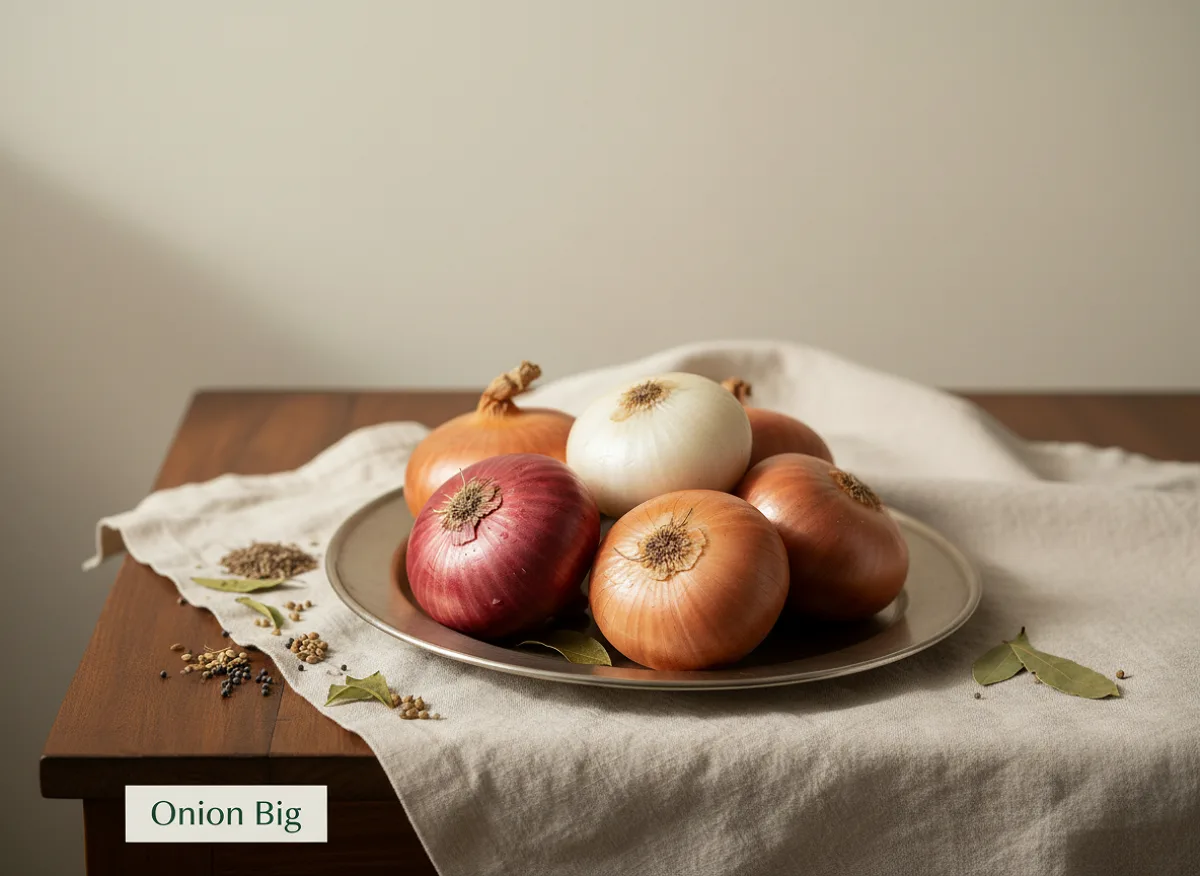
The onion is a layered bulb from the allium family, with papery golden or reddish skin and crisp, juicy layers inside. Mild to pungent depending on variety and storage, onions are one of the oldest cultivated vegetables in India and remain indispensable to every regional kitchen. IFCT 2017, Ref #G017.
Use in Indian Kitchen
Onions are the backbone of Indian cooking. In the North, they are sliced thin for biryanis, caramelised for gravies, and used raw in raita and salads. In the South, they feature in sambar, rasam, and as a tempering base for dals and vegetables. In the East and West, they are equally central to curries, pickles, and street food. Whether fried golden in ghee for a tadka, ground into paste for marinades, or sliced paper-thin for chaat, onions carry the flavour of home kitchens across India. Many families prefer storing onions in cool, dark places to preserve their sweetness through the year.
Key Nutrients
Onions contain vitamin C, folate, potassium, and manganese. They are notably rich in quercetin, a flavonoid antioxidant, and contain sulphur compounds that develop during cooking and storage. Exact nutrient composition is documented in IFCT 2017, Ref #G017.
Health Benefits (Evidence-based)
- May support heart health through quercetin and sulphur compounds linked to cardiovascular wellness.
- Traditionally used to aid digestion and reduce bloating when cooked into curries and dals.
- Vitamin C content supports immune function and skin health.
- Quercetin may help reduce inflammation and support respiratory comfort.
- Linked to stable blood sugar levels when part of a balanced meal.
Culinary Uses (Vegetarian)
- Tadka base: fried in ghee or oil with mustard seeds, cumin, and curry leaves for dals and vegetables.
- Curry gravies: caramelised or ground into paste for sambar, rasam, and vegetable curries.
- Raw: sliced thin for raita, salads, and as a cooling side to spiced meals.
- Pickles and chutneys: fermented or cooked with spices for long-term preservation.
- Breads and stuffings: minced into paratha dough or mixed with paneer for samosa and kachori fillings.
Caution
Raw onions may cause heartburn or acid reflux in sensitive individuals; cooking softens them and aids digestion. Those with histamine sensitivity or taking certain blood-thinning medications should consult a healthcare provider. Onion breath is normal and can be managed by chewing mint or fennel seeds after eating.
References
- Indian Council of Medical Research - National Institute of Nutrition. IFCT 2017 (Indian Food Composition Tables). Hyderabad: NIN, ICMR.
- Griffiths, G., Trueman, L., Crowther, T., Thomas, B., & Smith, B. (2002). Onions - a global benefit to health. Phytotherapy Research, 16(7), 603-615.
Health Benefits
- Anti Inflammatory
- Supports Digestion
- Boosts Immunity
- Heart Health Support
Sourcing & Storage
Storage
Store onions in a cool, dark, well-ventilated place (ideally 10-15°C) away from direct sunlight and moisture. Use mesh bags or open baskets to allow air circulation and prevent rot. Keep away from potatoes, as they release ethylene gas that speeds onion sprouting. In humid climates, store in a dry cupboard or pantry rather than the refrigerator, which can soften them and shorten shelf life.
Shelf Life
Well-stored onions keep for 2-3 months in a cool pantry. Once cut, wrap the remaining half tightly in cling film and refrigerate for up to 1 week. Peeled or chopped onions stored in an airtight container in the fridge last 3-5 days. Frozen chopped onions (blanched or raw) keep for up to 3 months in the freezer and are convenient for curries and tadka.
Check Before You Buy
Choose onions that are firm, heavy for their size, and free of soft spots, sprouting, or mould. The papery skin should be dry and intact with no visible blemishes. Avoid onions with a musty smell or green shoots emerging from the top. At the mandi or kirana shop, gently squeeze to check firmness; reject any that feel hollow or spongy. Packed onions should show no moisture inside the bag and should feel dry to touch.
In Ayurveda
In Ayurveda, big onions are valued for their warming properties and ability to enhance digestion. They help balance Vata and Kapha doshas while promoting overall health. Rich in antioxidants, onions also support detoxification and boost immunity, making them a beneficial addition to the diet.