Niger seeds, gray
Guizotia abyssinica · Also known as Sorguja, Ram til, Tal, Kala til, Gurellu, Bazar-Bhang, Karim jeerakam, Karale, Kattelu
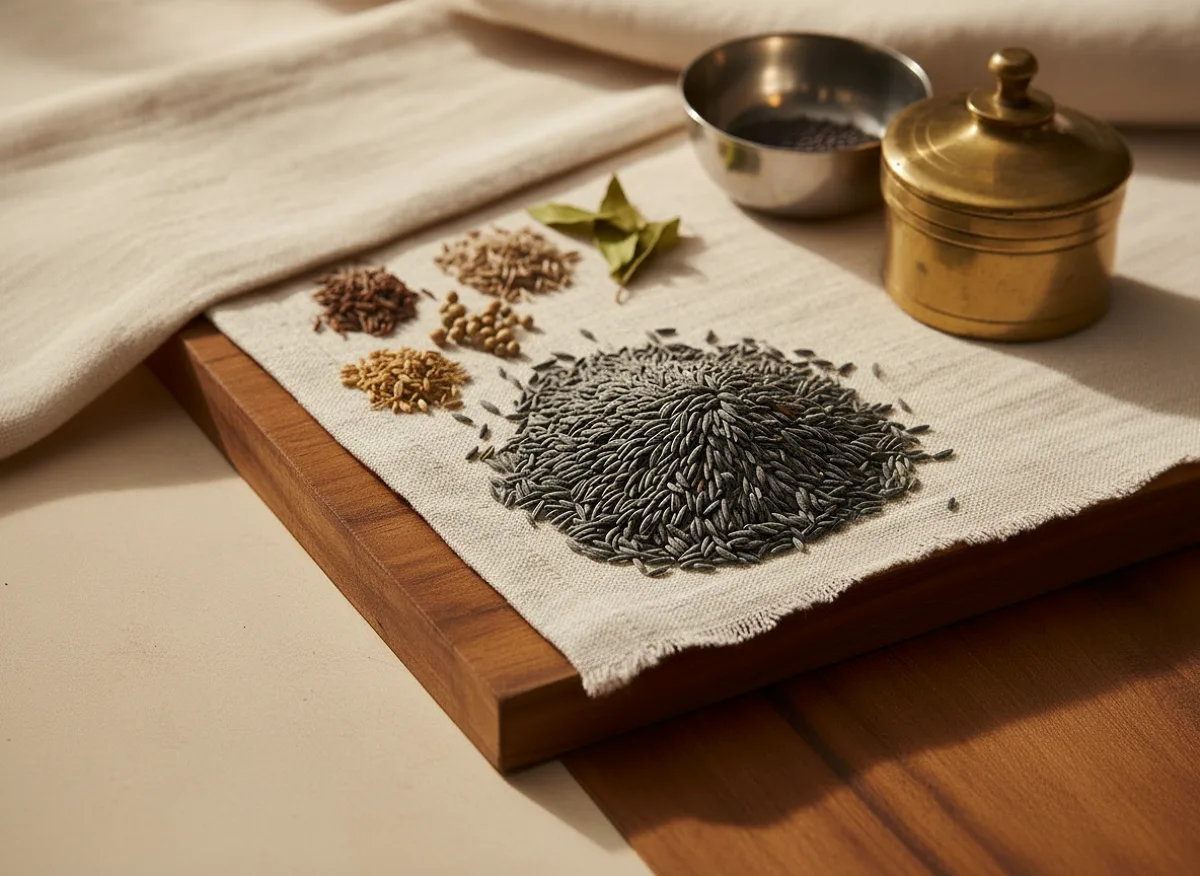
Niger seeds (also called ram til or kala til in Hindi) are tiny, slate-grey oilseeds with a mild, slightly nutty flavour. Whole or lightly roasted, they are a traditional tempering ingredient in South Indian dals and vegetable curries, and are ground into a fine flour for chutney...
Nutrition per 100 g
Mean values ± IFCT published SD (edible portion).
More macros
Classification
About Niger seeds, gray
What it is
Niger seeds (Guizotia abyssinica), known as ram til, kala til, or sorguja in Indian kitchens, are tiny oilseeds roughly the size of sesame grains, with a dark slate-grey to charcoal colour. They have a mild, slightly earthy and nutty taste, and are traditionally used whole or roasted as a tempering spice and in ground form for chutneys and spice pastes. Widely cultivated in South India and parts of the Deccan, they are a staple in home cooking across Tamil Nadu, Karnataka, and Andhra Pradesh. (IFCT 2017, Ref #H016)
Use in Indian Kitchen
Niger seeds are most commonly used as a tadka ingredient - tempered in hot oil or ghee with mustard seeds, dried chillies, and curry leaves to flavour sambar, rasam, and vegetable curries. In South Indian homes, they are often roasted lightly and ground into a fine powder to make chutneys, particularly when paired with coconut, tamarind, and jaggery. The seeds can also be added whole to dal preparations, rice dishes, and even sprinkled over yoghurt rice. A practical tip: dry roast them briefly in a pan over medium heat before grinding to deepen their flavour and make them easier to crush. Their mild profile means they blend well without overpowering delicate vegetable dishes or lentil soups.
Key Nutrients
Niger seeds are a source of plant-based oil, protein, and dietary fibre. They contain linoleic acid (an essential omega-6 fatty acid), vitamin E, and minerals including iron, magnesium, and phosphorus. Exact nutrient composition per serving is available in IFCT 2017, Ref #H016.
Health Benefits (Evidence-based)
- May support heart health through their linoleic acid and vitamin E content, which help protect cell membranes.
- Linked to stable blood sugar levels when consumed as part of a balanced meal, owing to their fibre and protein profile.
- Traditional use in Ayurvedic and home remedy contexts suggests mild digestive support, though clinical evidence is limited.
- The antioxidants present may help reduce oxidative stress in the body.
- A nutrient-dense addition to vegetarian and vegan diets, contributing plant-based protein and essential fatty acids.
Culinary Uses (Vegetarian)
- Tempered in hot oil with mustard seeds and curry leaves for sambar, rasam, and vegetable curries.
- Roasted and ground into chutneys with coconut, tamarind, and jaggery.
- Added whole to dal preparations and lentil soups for subtle nutty flavour.
- Sprinkled over yoghurt rice and mixed vegetable rice dishes.
- Ground into spice blends and masala powders for everyday cooking.
Caution
Niger seeds are generally safe for most people. Those with known seed allergies should exercise caution. Because they are oilseeds, they should be stored in cool, dry conditions to prevent rancidity. Pregnant and nursing mothers may consume them in normal culinary amounts without concern, though individual dietary needs vary.
References
- Indian Council of Medical Research - National Institute of Nutrition (ICMR-NIN). Indian Food Composition Tables (IFCT) 2017. Reference #H016 (Nuts and Seeds category).
- Gopalan, C., Rama Sastri, B. V., & Balasubramanian, S. C. (2007). Nutritive Value of Indian Foods. National Institute of Nutrition, ICMR, Hyderabad.
Sourcing & Storage
Storage
Store niger seeds in an airtight glass jar or metal container away from direct sunlight and moisture. Keep in a cool, dry cupboard or pantry; in humid climates, store in the refrigerator to prevent the oils from turning rancid. Whole seeds keep longer than ground flour. Once opened, transfer to an airtight container and use within 2-3 months for best flavour.
Shelf Life
Whole niger seeds, when stored in an airtight container in a cool, dry place, keep for 6-8 months. Ground niger seed flour has a shorter shelf life of 2-3 months due to exposure of the oils to air. Refrigeration extends shelf life by 1-2 months in both forms.
Check Before You Buy
When buying niger seeds from a mandi or kirana shop, look for seeds that are uniform in colour (slate-grey to charcoal), free of dust, debris, and insect damage. They should feel dry and not clump together. Avoid seeds that smell musty or rancid, which indicate poor storage or age. If buying packaged seeds, check the date and ensure the packet is sealed and undamaged.
In Ayurveda
Niger seeds are not extensively documented in classical Ayurvedic texts as a primary therapeutic ingredient. However, they are traditionally used in some regional Indian home remedies and folk medicine practices, particularly in South India, as a nutritive and warming food. The seeds are considered to have warming properties and are sometimes used to support digestive and metabolic function in traditional practice.