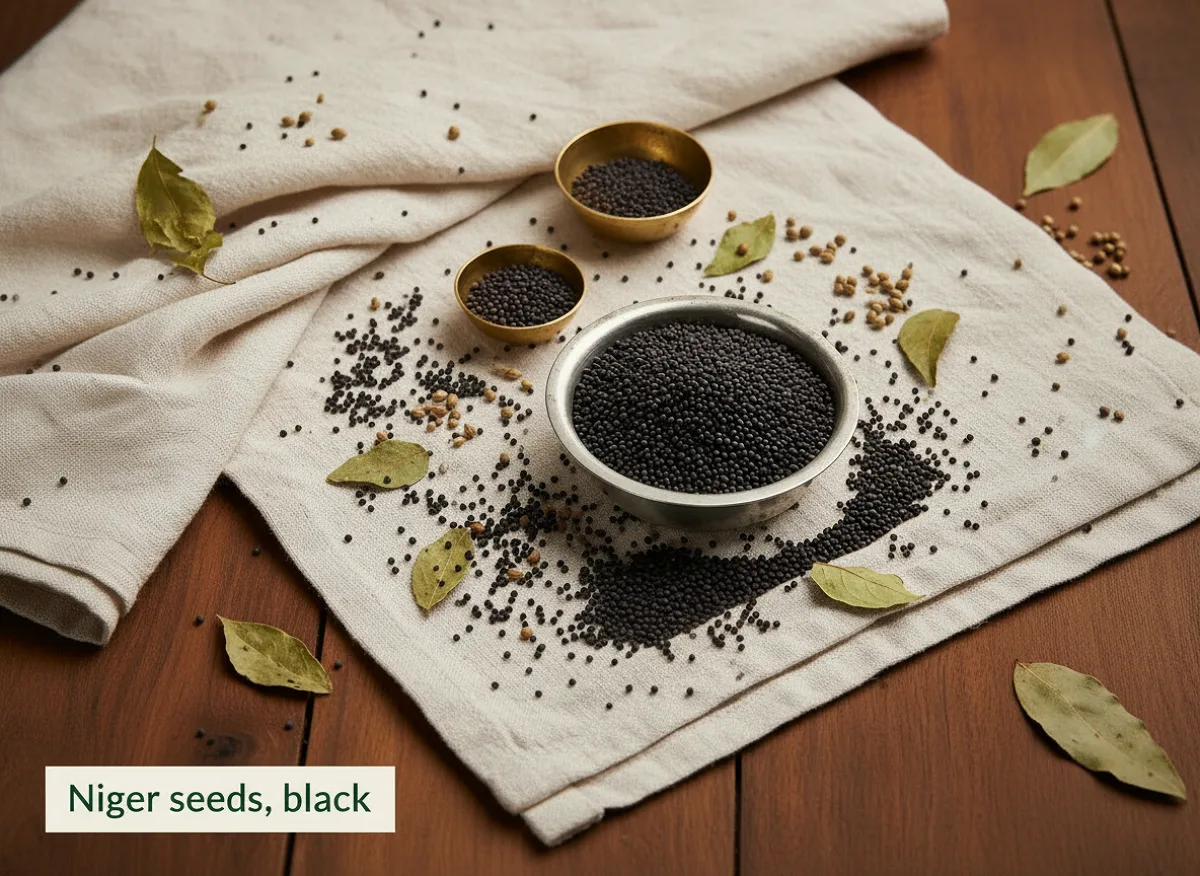
Niger seeds, black
Guizotia abyssinica · Also known as Sorguja, Ram til, Kada tal, Kala til, Gurellu, Bazar-Bhang, Karim jeerakam, Karale, Kattelu
Niger seeds (also called kala til or ramtil) are small, black oil-rich seeds from the niger plant, commonly used in Indian kitchens for tempering, garnishing, and pressing into nutritious oils. Rich in protein and healthy fats, they add a subtle nutty flavour to dal, rice, and ve...
Nutrition per 100 g
Mean values ± IFCT published SD (edible portion).
More macros
Classification
About Niger seeds, black
What it is
Niger seeds are tiny, elongated black seeds from the niger plant (Guizotia abyssinica), native to Ethiopia but widely cultivated in India, particularly in southern and central regions. They are pressed for oil and used whole in cooking, offering a mild, slightly nutty taste. Composition is typically described under the IFCT category H - Nuts and Seeds.
Use in Indian Kitchen
In South Indian kitchens, niger seeds are a staple tempering ingredient in sambar, rasam, and vegetable curries, where they pop in hot oil to release their flavour. They are also sprinkled as a garnish on rice, mixed into dal, and pressed into oil for cooking and dressing. In some regions, they are roasted lightly and added to chikhalwali (a traditional snack mix). The seeds are less common in North Indian cooking but appear in some regional breads and as a health supplement. Their affordability and nutritional density make them a quiet workhorse in everyday family kitchens, especially where oil-pressing traditions remain strong.
Key Nutrients
Niger seeds are a good source of protein, dietary fibre, and healthy fats (including linoleic acid). They also contain minerals such as iron, magnesium, and phosphorus, along with B vitamins. Exact nutrient composition can be found in detailed food tables; for precise figures, refer to ICMR–NIN or IFCT resources on oilseeds.
Health Benefits (Evidence-based)
- May support heart health due to their content of unsaturated fats and linoleic acid.
- High in protein and fibre, potentially helpful for sustained energy and digestive regularity.
- Rich in minerals like iron and magnesium, which are important for blood health and muscle function.
- Traditionally used in Indian home remedies as a mild digestive aid when added to warm water or oil.
- The oil pressed from these seeds has been used in Ayurvedic and folk medicine for skin and scalp care.
Culinary Uses (Vegetarian)
- Tempering in sambar, rasam, and vegetable curries - add to hot ghee or oil until they crackle.
- Garnish for rice dishes, dal, and khichdi for added texture and nutrition.
- Mixed into roasted snack blends, chikhalwali, and savoury trail mixes.
- Pressed into oil for cooking, dressing salads, or drizzling over finished dishes.
- Roasted and sprinkled over yoghurt or curd for a crunchy, nutty topping.
Caution
Niger seeds are generally safe for most people. Those with known seed allergies should exercise caution. The seeds are small and hard; ensure they are not a choking hazard for very young children. If consuming the oil regularly, source it from trusted suppliers to avoid adulteration. Pregnant or nursing women, and those on blood-thinning medications, should consult a healthcare provider before adding large quantities to their diet.
References
- Indian Council of Medical Research - National Institute of Nutrition (ICMR-NIN). Indian Food Composition Tables (IFCT 2017). Category H - Nuts and Seeds.
- Nutritional composition and health benefits of niger seeds: traditional use in Indian kitchens and emerging research on oilseed nutrition (general reference to ICMR–NIN publications on Indian oilseeds).
Sourcing & Storage
Storage
Store niger seeds in an airtight glass jar or metal container in a cool, dry place away from direct sunlight and moisture. Keep away from strong-smelling foods, as the seeds can absorb odours. In warm, humid climates, store in the refrigerator or a cool cupboard to prevent rancidity of the natural oils. Ensure the container is sealed tightly after each use to maintain freshness and prevent insect infestation.
Shelf Life
When stored properly in an airtight container in a cool, dry place, niger seeds will keep for 6 to 8 months. In the refrigerator, they can last up to a year. Once opened, use within 3 to 4 months for best flavour and nutritional quality. If the seeds develop a musty smell or taste bitter, they have likely gone rancid and should be discarded.
Check Before You Buy
Look for seeds that are uniformly black, small, and free from dust, debris, or discolouration. They should feel dry and crisp, not damp or clumpy. Avoid seeds with a musty or off smell, which indicates poor storage or age. Check the packaging date if buying from a kirana or online store; fresher stock is preferable. If buying loose seeds from a mandi or bulk supplier, ask about the harvest date and storage conditions. Reputable sellers will offer seeds that are clean, uniform in size, and free from stones or foreign matter.