Mint Leaves
Mentha spicata · Also known as Pudeena, spearmint, green mint, pudina
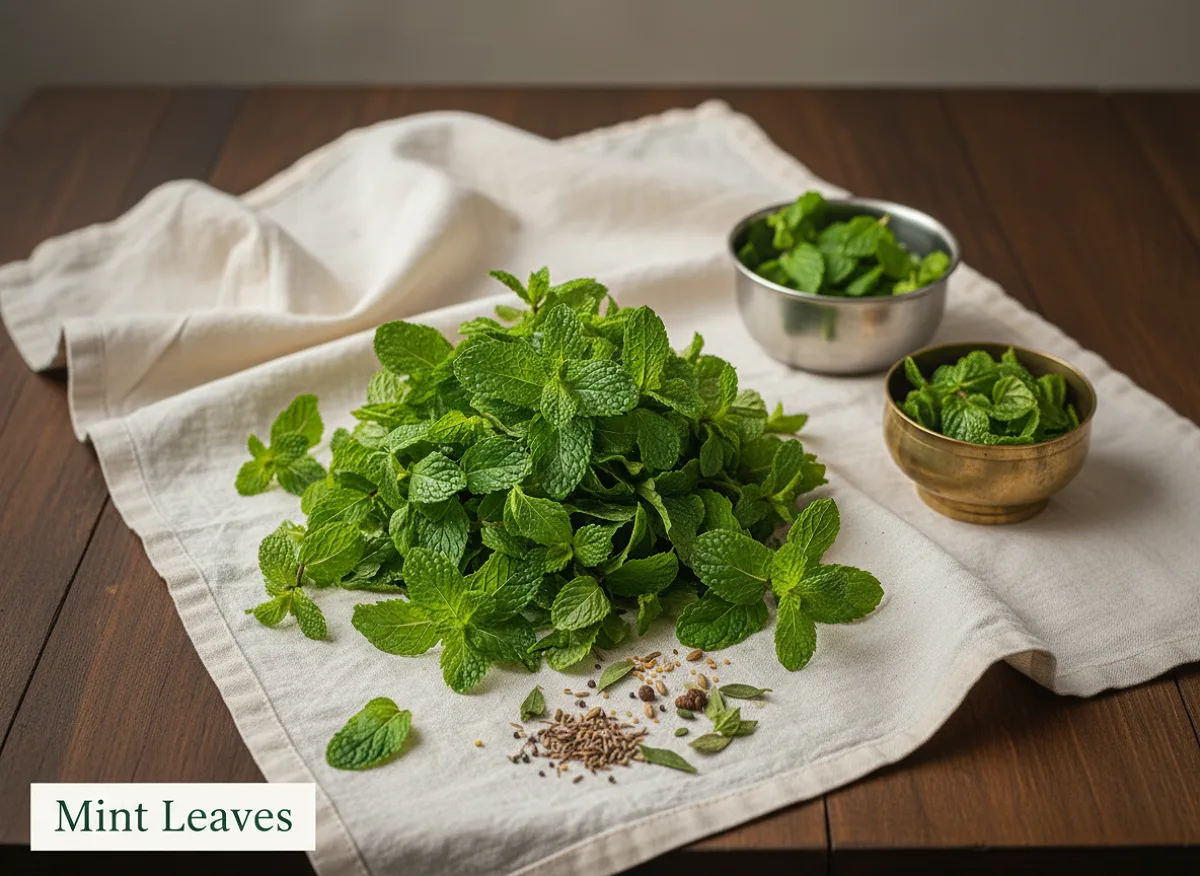
Mint leaves (pudeena) are bright green, aromatic herbs with a cool, refreshing flavour that lifts both savoury and sweet dishes across Indian kitchens. Fresh and tender, they're a staple tempering in chutneys, raitas, and cooling drinks like nimbu pani and lassi. A pinch of torn...
Nutrition per 100 g
Mean values ± IFCT published SD (edible portion).
More macros
Classification
About Mint Leaves
What it is
Mint leaves (pudeena in Hindi) are soft, fragrant green herbs with a distinctive cool bite and sweet undertone. The leaves are oval, slightly wrinkled, and release an instant aroma when crushed. Fresh mint is used whole or torn in Indian cooking; dried mint is ground into powders or steeped for tea. Widely grown in home gardens and available year-round in markets, mint is a cornerstone of Indian vegetarian cooking. (IFCT 2017, Ref #G016)
Use in Indian Kitchen
Mint is indispensable in South Indian rasam and sambar, where it's added fresh at the end for a cooling note. North Indian chutneys - mint-coriander chutney, mint-tamarind paste - rely on pudeena's bright flavour to balance spice and heat. Raita (yoghurt side dish) is incomplete without mint; it's also scattered over chaats, mixed into lassi and nimbu pani, and used as a garnish for curries and dals. A practical tip: add mint leaves at the very end of cooking to preserve their fresh aroma; dried mint can be added earlier to infuse flavour into broths and spice mixes.
Key Nutrients
Mint leaves contain vitamin A, vitamin C, and small amounts of calcium and iron. They are also a source of antioxidants and volatile oils (menthol and menthone) that give the herb its characteristic cooling sensation. Exact nutrient composition varies with freshness and growing conditions; refer to IFCT 2017 for standardised values.
Health Benefits (Evidence-based)
- May aid digestion and help ease mild bloating or gas when consumed as a tea or added to meals.
- Cooling properties traditionally used to soothe heat-related discomfort and support respiratory comfort.
- Rich in antioxidants that may help protect cells from oxidative stress.
- Often used in Ayurvedic and folk medicine to support oral health and freshen breath.
- May help ease mild tension and promote a sense of calm when inhaled or consumed as tea.
Culinary Uses (Vegetarian)
- Fresh mint chutney paired with samosas, pakoras, and dosa.
- Rasam and sambar garnish and flavouring.
- Mint raita with rice and curries.
- Lassi, nimbu pani, and iced tea.
- Stuffing for parathas and breads.
- Garnish for chaats, salads, and vegetable curries.
- Dried mint in spice blends, garam masala variations, and herbal teas.
Caution
- Mint is generally safe for most people; however, those with sensitive digestion or reflux may find large quantities stimulating.
- Pregnant and nursing women should consume mint in normal culinary amounts; excessive medicinal use is not advised without guidance.
- Mint oil (concentrated form) is not suitable for internal use without professional guidance.
References
- Indian Council of Medical Research - National Institute of Nutrition (ICMR-NIN). Indian Food Composition Tables (IFCT 2017). Reference #G016 - Condiments and Spices-Fresh category.
- Ayurvedic Pharmacopoeia of India and traditional Ayurvedic texts document mint (Mentha spicata) as a cooling, digestive herb with mild antimicrobial properties.
Health Benefits
- Improves Digestion
- Boosts Immunity
- Relieves Bloating
- Refreshes Breath
Sourcing & Storage
Storage
Store fresh mint leaves in a damp paper towel or cloth, placed in a sealed container or plastic bag in the refrigerator crisper drawer. Alternatively, place the stem ends in a small glass of water (like a bouquet), cover loosely with a plastic bag, and refrigerate. Keep away from direct sunlight and ethylene-producing fruits (apples, bananas). For longer storage, wash, dry thoroughly, and freeze leaves in ice-cube trays with a little water, or dry them in a cool, dark place for use as dried mint.
Shelf Life
Fresh mint leaves keep for 1 to 2 weeks in the refrigerator when stored properly. Once opened or removed from the stem, use within 3 to 5 days for best flavour and aroma. Frozen mint cubes last up to 3 months. Dried mint, stored in an airtight container away from heat and light, remains potent for 6 to 12 months.
Check Before You Buy
Choose fresh mint with bright green, unblemished leaves that feel soft and tender to the touch. Avoid yellowing, wilted, or blackened leaves, which indicate age or poor storage. Crush a leaf gently - it should release a strong, pleasant minty aroma with no musty or off smell. If buying packaged mint, check the date and ensure the leaves are vibrant green, not dull or dried out. In Indian markets (mandi or kirana), buy from vendors with good turnover; mint should feel crisp and smell fresh, never limp or slimy.
In Ayurveda
In classical Ayurveda, mint (पुदीना) is valued for its cooling (शीत) virya and its ability to balance Pitta dosha. The herb is traditionally used to support digestive health and to ease minor stomach discomfort. Its sharp, pungent taste (कटु रस) and light quality make it useful in Ayurvedic formulations for promoting healthy digestion and respiratory function.
Mint is often recommended in Ayurvedic practice as a natural coolant during hot seasons and is included in many traditional remedies for indigestion and bloating. The essential oil (मेंथॉल) is considered to have warming properties when used internally in small amounts, balancing its overall cooling nature.