Mango ginger
Curcuma amada · Also known as Amchur ginger, mango-flavoured ginger, आम अदरक (aam adrak), mango turmeric
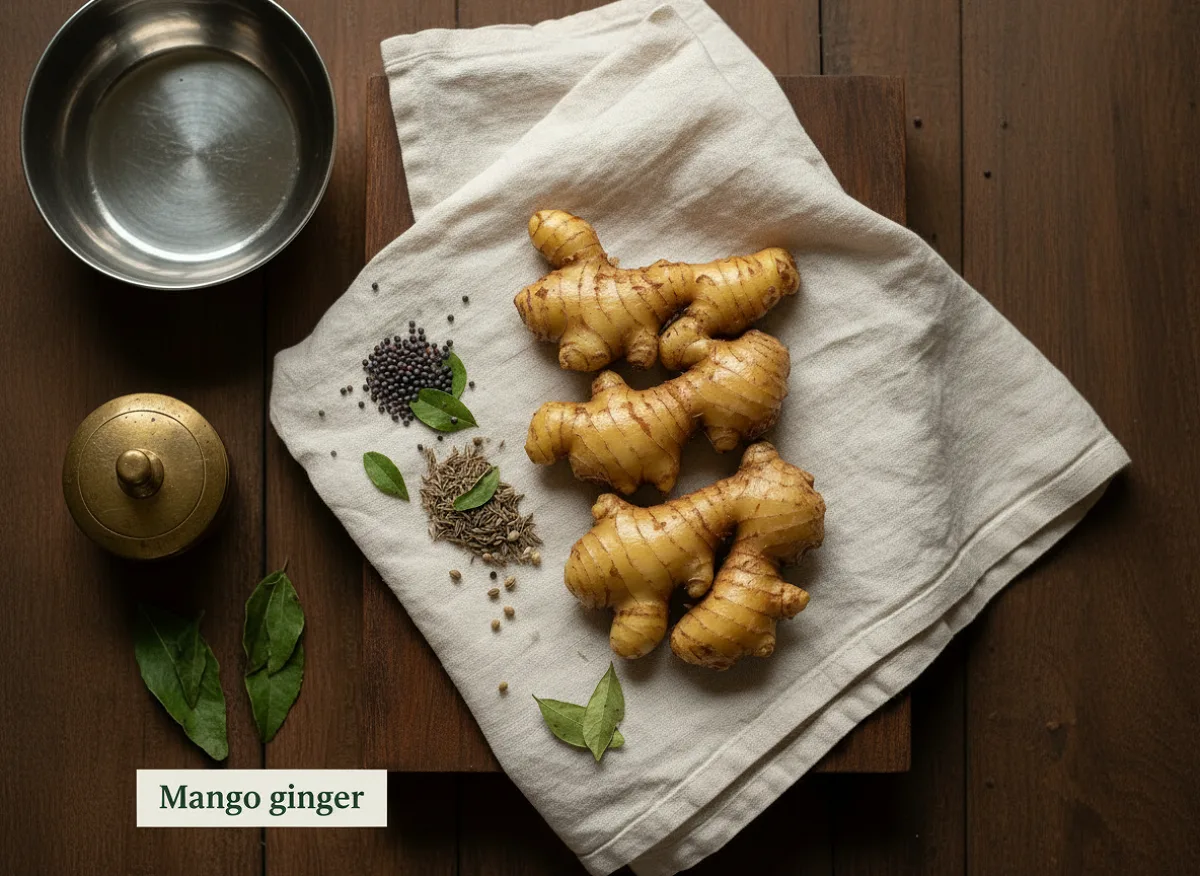
Mango ginger (आम अदरक, aam adrak) is a small, knobby rhizome with thin golden-brown skin and pale yellow flesh, prized for its distinctive sweet-tart mango-like aroma layered with warm ginger spice. Fresh or dried, it brings a unique fruity-peppery note to chutneys, pickles, curr...
Nutrition per 100 g
Mean values ± IFCT published SD (edible portion).
More macros
Classification
About Mango ginger
What it is
Mango ginger (आम अदरक, aam adrak) is a small, bumpy rhizome belonging to the ginger family, native to South Asia. Unlike common ginger, it has a thinner, more delicate skin and a pale golden interior with a striking fruity-mango aroma mixed with gentle ginger warmth. It is typically used fresh, dried whole, or ground into powder, and holds particular importance in South Indian, Bengali, and Odia cuisines. (IFCT 2017, Ref #G015)
Use in Indian Kitchen
Mango ginger is a beloved souring and flavouring agent in South Indian sambar, rasam, and vegetable curries, where its fruity tang replaces or complements tamarind and dried mango powder. In Bengal and Odisha, it appears in chutneys, pickles, and fish curries (though vegetarian uses include paneer and vegetable stir-fries). Slice thin and steep in warm water with jaggery and a pinch of salt for a traditional cooling drink during summer. A practical tip: grate or slice fresh mango ginger just before use to preserve its delicate aroma; if using dried, soak briefly or grind to a fine powder for even distribution in curries and spice pastes.
Key Nutrients
Mango ginger contains volatile oils (including compounds that give it its distinctive aroma), dietary fibre, and trace minerals including potassium and manganese. Exact nutrient composition varies with freshness and drying method; refer to IFCT 2017 for detailed micronutrient profiles.
Health Benefits (Evidence-based)
- May aid digestion and reduce bloating, thanks to its warming spice compounds and traditional use in digestive tonics.
- Linked to anti-inflammatory properties, supporting general joint and gut comfort.
- Traditionally used to ease mild nausea and support appetite, particularly in Ayurvedic and folk medicine.
- May help soothe cough and throat irritation when steeped in warm water with honey or jaggery.
- Contains antioxidant compounds that support overall cellular health.
Culinary Uses (Vegetarian)
- Sambar and rasam base - fresh or dried, ground into spice paste.
- Vegetable curries and kootu - adds fruity depth without heavy souring.
- Chutneys and pickles - fresh slices or powder for tangy, aromatic preserves.
- Summer coolers and digestive drinks - grated or sliced, steeped with jaggery and water.
- Spice blends and tadka - dried and ground for tempering dals and rice dishes.
- Paneer and tofu stir-fries - brings a subtle fruity note to quick vegetable dishes.
Caution
- Pregnant women should use in moderation; consult a healthcare provider if consuming regularly in medicinal amounts.
- Those with sensitive digestion may find large quantities warming; start with small amounts.
- May interact with blood-thinning medications; seek medical advice if taking anticoagulants.
- Individuals allergic to ginger or turmeric should exercise caution, as mango ginger belongs to the same plant family.
References
- Indian Council of Medical Research - National Institute of Nutrition (ICMR-NIN). Indian Food Composition Tables 2017. Hyderabad: NIN; 2017. Ref #G015.
- Ravindran, P. N., & Babu, K. N. (Eds.). Ginger: The Genus Zingiber. London: Taylor & Francis; 2005. (Covers botanical and traditional uses of Zingiber montanum and related species.)
Sourcing & Storage
Storage
Fresh mango ginger: Store in a cool, dry place (ideally 15-20°C) in a breathable cloth bag or paper envelope to prevent moisture buildup. In humid Indian climates, keep in the refrigerator's vegetable drawer wrapped loosely in paper towel, away from direct moisture. Dried or powdered: Transfer to an airtight glass jar or container, store in a cool, dark cupboard away from direct sunlight and heat sources (away from the stove). Keep away from moisture and strong-smelling foods.
Shelf Life
Fresh mango ginger keeps for 2-3 weeks in a cool, dry place, or up to 4-5 weeks refrigerated in paper wrapping. Dried whole rhizomes remain potent for 6-8 months in an airtight container. Ground powder loses aroma and potency after 3-4 months; store in a sealed jar away from heat and humidity for best flavour.
Check Before You Buy
Look for firm, unblemished rhizomes with thin, papery golden-brown skin and no soft spots or mould. Fresh mango ginger should feel dense and heavy for its size, with a pleasant fruity-ginger aroma when gently scratched. Avoid pieces that are shrivelled, sprouting, or have dark patches. When buying dried or powdered mango ginger from a kirana or spice merchant, check the packaging date and ensure the powder is bright golden-yellow (not dull or grey, which may indicate age or adulteration). If buying from bulk bins, ask the vendor when the stock was replenished and smell for freshness.
In Ayurveda
In Ayurvedic tradition, mango ginger is regarded as a gentler, more cooling alternative to common ginger. It is believed to support digestion and reduce excess heat in the digestive tract, making it suitable for those with sensitive constitutions. The herb is traditionally used to ease mild digestive discomfort and bloating.
Unlike pungent ginger, mango ginger is thought to have a more balanced thermal nature, often recommended when the warming intensity of regular ginger is undesirable. Some classical home remedies suggest its use in supporting overall digestive wellness and as a mild carminative agent.