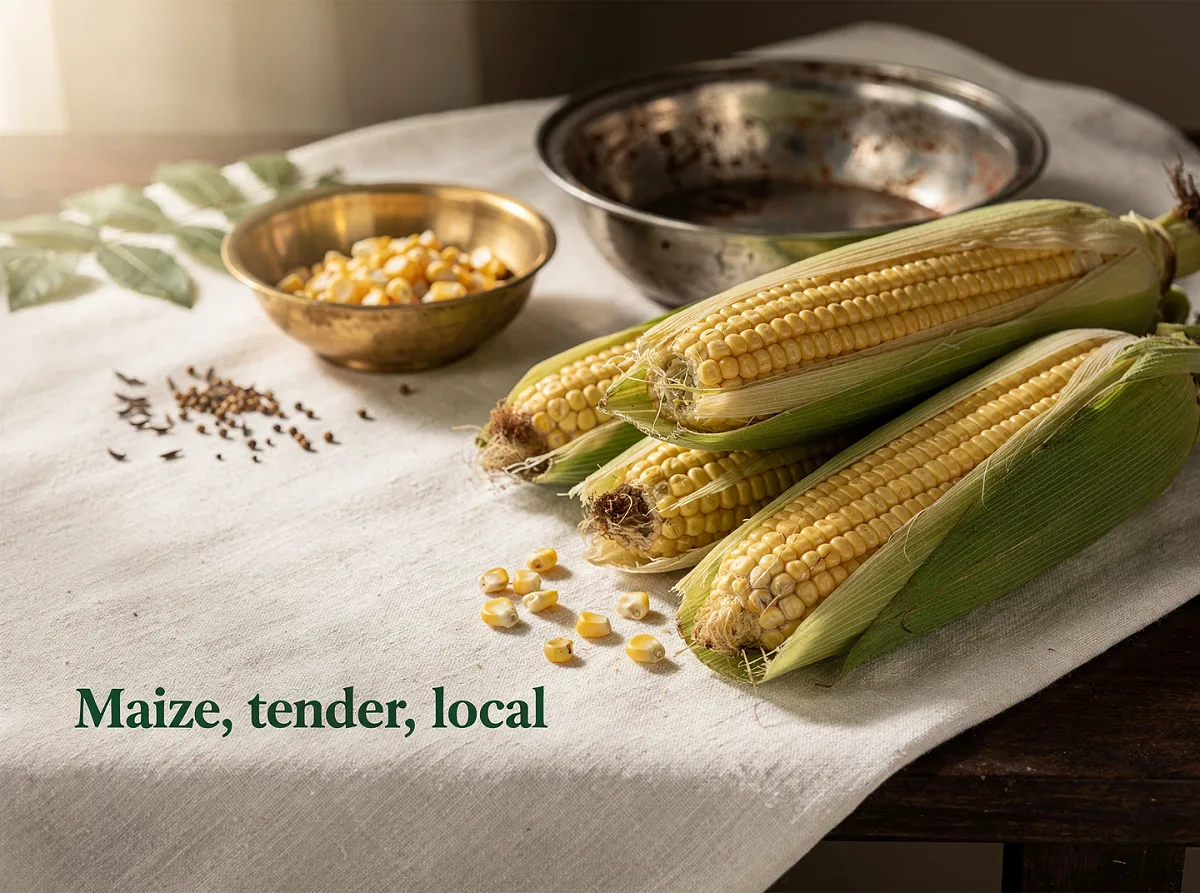
Maize, tender, local
Zea mays · Also known as Makoi, Bhutta, Corn, Lili makai, Makka, Mekke jola, Makai, Riewhadem Stem, Chujaak, Maka, Chhali, Makka Cholam, Mokkajonna
Tender maize (भुट्टा, bhutta) is young corn harvested before full maturity, with soft, milky kernels still clinging to the cob. Eaten fresh off the cob or stripped and cooked, it brings a natural sweetness and creamy texture to Indian kitchens. Roasted whole over charcoal, boiled...
Nutrition per 100 g
Mean values ± IFCT published SD (edible portion).
More macros
Classification
About Maize, tender, local
What it is
Tender maize (भुट्टा, bhutta) is young corn picked before full maturity, when kernels are still soft, milky, and pale yellow or white. The cob is tender enough to eat, and the kernels release a sweet, creamy juice when bitten. Fresh tender maize is a seasonal treasure in Indian markets, especially during monsoon and early harvest months, prized for its delicate flavour and ease of cooking. (IFCT 2017, Ref #A007)
Use in Indian Kitchen
Tender maize is most loved roasted whole over charcoal or open flame, brushed with ghee and sprinkled with salt and chaat masala - a monsoon street food and festival favourite. Kernels are stripped and added to vegetable curries (sabzi), mixed into dal, or cooked with peas and potatoes in a simple tadka. In South India, fresh maize is ground into a coarse flour for maize rotis or mixed into rice for a light, sweet porridge. A practical tip: boil whole cobs with a pinch of turmeric and salt to soften them quickly and bring out natural sweetness; the cooking water can be saved for soups or dal.
Key Nutrients
Tender maize contains carbohydrates, dietary fibre, plant-based protein, B vitamins (thiamine, niacin, folate), and minerals including phosphorus, magnesium, and manganese. It also provides lutein and zeaxanthin, carotenoids linked to eye health. Exact nutrient composition varies with maturity and variety; refer to IFCT 2017 for detailed values.
Health Benefits (Evidence-based)
- Good source of dietary fibre, which may support digestive health and regular bowel function.
- Contains folate and B vitamins, traditionally valued for energy and nervous system support.
- Lutein and zeaxanthin are linked to eye health and may help protect vision over time.
- Provides plant-based protein and carbohydrates, making it a filling, energising food for active days.
- Low in fat and naturally sweet, making it a lighter grain choice for balanced meals.
Culinary Uses (Vegetarian)
- Roasted whole cob with ghee, salt, and chaat masala - monsoon street food.
- Kernels stripped and cooked into vegetable curries, dal, or mixed vegetable rice.
- Ground into flour for maize rotis, makki di roti (North India), or mixed into wheat flour.
- Boiled with turmeric and salt as a simple side or snack.
- Added to soups, vegetable stews, and light porridges.
- Popped as a snack (when fully dry) or lightly pan-fried with spices.
Caution
- Tender maize is generally safe for all ages; however, very young children should have kernels mashed or finely chopped to avoid choking risk.
- Those with corn allergies or sensitivities should avoid.
- Maize is high in omega-6 polyunsaturated fats when dried and processed into oil; use in moderation as part of a balanced diet.
References
- Indian Council of Medical Research - National Institute of Nutrition (ICMR-NIN). Indian Food Composition Tables (IFCT) 2017. Reference #A007 (Cereals and Millet - Maize).
- Gopalan, C., Rama Sastri, B. V., & Balasubramanian, S. C. (2007). Nutritive Value of Indian Foods. National Institute of Nutrition, ICMR, Hyderabad.
Sourcing & Storage
Storage
Store fresh tender maize in a cool, dry place or in the refrigerator crisper drawer, wrapped loosely in a damp cloth or paper towel to retain moisture. Keep away from direct sunlight and heat. In warm, humid Indian climates, use within 2-3 days of purchase to prevent mould and sprouting. Stripped kernels can be stored in an airtight container in the fridge or frozen in a freezer bag for longer use.
Shelf Life
Fresh tender maize cobs keep for 2-3 days in a cool kitchen or up to 5-7 days when refrigerated in a damp cloth. Stripped kernels last 3-4 days in the fridge in an airtight container. Frozen kernels (blanched briefly in boiling water first) will keep for 2-3 months in the freezer. Dried maize flour, when stored in an airtight container away from moisture and pests, lasts 3-4 months in a cool pantry.
Check Before You Buy
Choose tender maize cobs that are plump, firm, and pale yellow or cream-coloured, with no brown spots, mould, or soft patches. The kernels should feel milky and tender when pressed gently - if they are hard or dull, the maize is over-mature. Fresh cobs should have a faint sweet aroma and feel slightly moist. Avoid cobs with dried-out husks, insect damage, or any sign of fermentation. In Indian markets and mandis, buy from vendors with good turnover to ensure freshness; packed maize should have a clear date and no visible moisture inside the bag.
In Ayurveda
In classical Ayurvedic texts, maize (makka) is recognized as a cereal grain with warming (ushna) properties and a sweet (madhura) taste. It is considered grounding and nourishing, particularly valued for building strength and supporting digestive fire when prepared with warming spices such as ginger, cumin, and ghee.
Tender maize, being fresher and lighter than dried corn, is traditionally used to support seasonal wellness during the warm months. It is often combined with cooling ingredients like coconut or buttermilk to balance its warming nature in hot climates.