Linseeds
Linum usitatissimum · Also known as Flax seeds, Tishi, Alsi, Agasi, Ailsh, Adsi, Jawas, Pesi, Atasii, Ali vidai, Avise ginzalu, Common flax, Cheruchana vithu
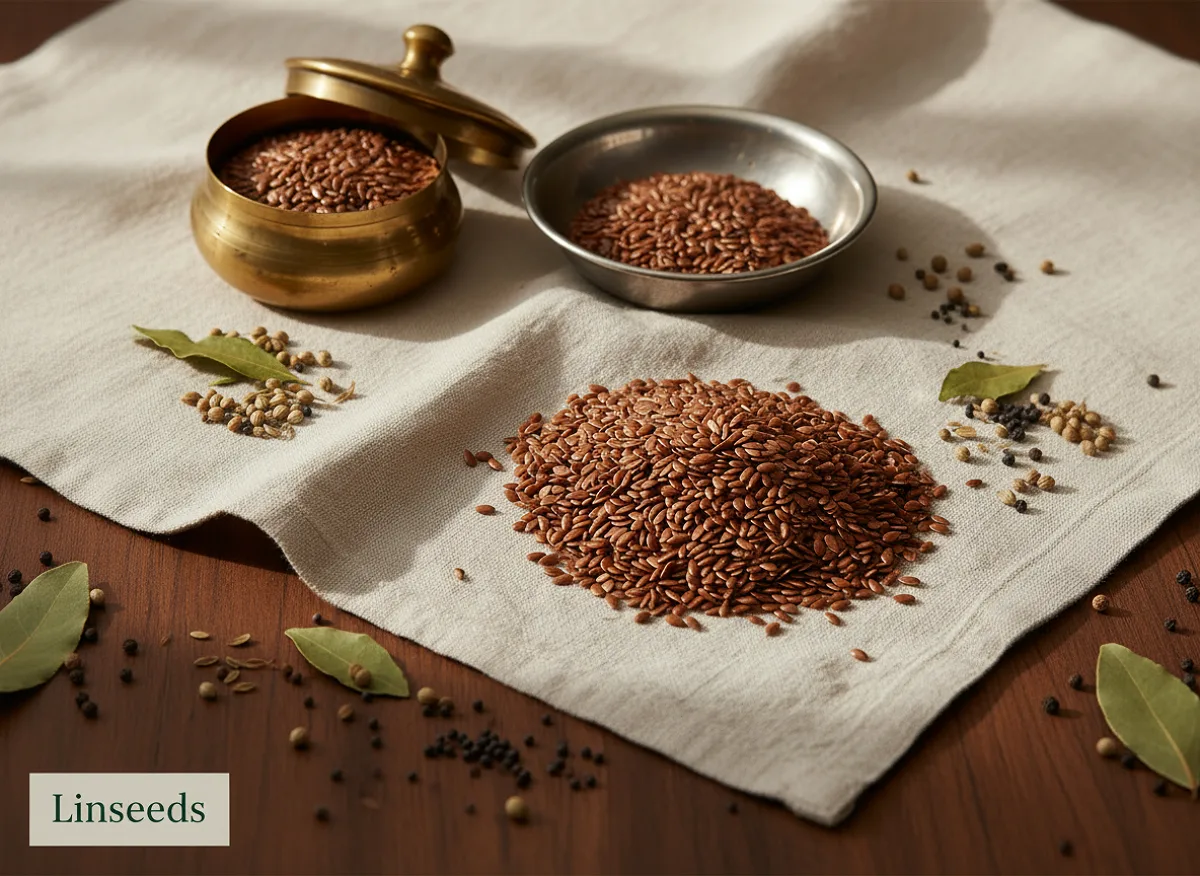
Linseeds (अलसी, alsi) are small, flat, glossy brown or golden seeds from the flax plant, prized in Indian kitchens for their nutty flavour and nutritional density. Whole or ground into powder, they feature in traditional ladoos, chutneys, and tempering across North and South Indi...
Nutrition per 100 g
Mean values ± IFCT published SD (edible portion).
More macros
Classification
About Linseeds
What it is
Linseeds (अलसी, alsi) are small, oval, flattened seeds from the flax plant (Linum usitatissimum), typically glossy brown or golden in colour. They have a mild, slightly nutty taste and a subtle earthy aroma when roasted. In Indian homes, they are used whole in tempering, ground into flour for breads and sweets, or pressed for oil. Linseeds are a traditional ingredient across Indian regions, valued both as food and in classical wellness practices. (IFCT 2017, Ref #H014)
Use in Indian Kitchen
Linseeds appear in many regional Indian dishes and preparations. In North India, they are roasted and ground into ladoos mixed with jaggery and ghee, or added to chikhalwali (a traditional winter sweet). Ground linseed flour is kneaded into rotis and parathas for extra nutrition. In South India, whole seeds are tempered in oil with mustard and curry leaves to dress dals and vegetables, or ground into chutneys. A light dry roast in a pan before grinding or consuming helps release their oils and makes them easier to digest. Linseeds pair well with jaggery, sesame, and warming spices like ginger and turmeric.
Key Nutrients
Linseeds are rich in plant-based omega-3 fatty acids (alpha-linolenic acid), dietary fibre, lignans, and protein. They also contain minerals such as magnesium, phosphorus, and manganese, along with B vitamins. Exact nutrient composition is documented in IFCT 2017.
Health Benefits (Evidence-based)
- May support heart health through their omega-3 and fibre content, linked to healthy cholesterol levels.
- High in lignans and antioxidants, traditionally used to support overall wellness.
- Dietary fibre content may aid digestive regularity and satiety.
- Traditionally valued in Ayurvedic practice for balancing vata and supporting joint comfort.
- Plant-based source of protein and minerals, useful in vegetarian and vegan diets.
- May help maintain stable blood sugar when consumed as part of a balanced meal.
Culinary Uses (Vegetarian)
- Whole seeds in tempering (tadka) for dals, vegetables, and rice dishes.
- Ground into flour for rotis, parathas, and breads.
- Mixed with jaggery and ghee for traditional ladoos and winter sweets.
- Added to chutneys and spice blends.
- Sprinkled on yoghurt, curds, and salads.
- Pressed into oil for cooking and dressings (though less common in home kitchens).
Caution
- Consume in moderation; excessive intake may cause digestive discomfort in sensitive individuals.
- Always drink plenty of water when consuming linseeds, as their fibre content requires adequate hydration.
- Pregnant and nursing mothers should consult a healthcare provider before adding large amounts to their diet.
- Those on blood-thinning medications should check with a doctor, as linseeds may have mild anticoagulant properties.
- Store away from heat and light to preserve their delicate oils and nutritional value.
References
- Indian Council of Medical Research - National Institute of Nutrition (ICMR-NIN). Indian Food Composition Tables 2017 (IFCT 2017). Reference H014 - Nuts and Seeds category.
- Goyal, A., Sharma, V., Upadhyay, N., Gill, S., & Sihag, M. (2014). Flax and flaxseed oil: an ancient medicine and modern functional food. Journal of Functional Foods, 17, 852-859.
Sourcing & Storage
Storage
Store linseeds in an airtight glass or metal container in a cool, dark, and dry place away from direct sunlight and heat. In warm or humid climates, keep them in the refrigerator or freezer to prevent the oils from turning rancid. Whole seeds store longer than ground powder. Keep ground linseed flour in an airtight container in the fridge or freezer, as it oxidises quickly once exposed to air.
Shelf Life
Whole linseeds, when stored in a cool dry place, keep for 6-12 months. Ground linseed flour lasts 2-4 weeks at room temperature, but 2-3 months in the refrigerator and up to 6 months in the freezer. Once opened, transfer to an airtight container and use within the recommended timeframe to retain flavour and nutritional value.
Check Before You Buy
Choose linseeds that are glossy, uniform in colour (brown or golden), and free from dust, debris, or discolouration. Smell them lightly - they should have a mild, pleasant nutty aroma with no musty or rancid odour, which signals spoilage. Buy from reputable kirana shops or mandi vendors with good turnover. Packaged seeds should have a clear date and be stored in sealed, opaque containers. Avoid seeds that feel damp or clumpy, as moisture encourages mould and rancidity.
In Ayurveda
In Ayurvedic tradition, linseeds (अलसी) are classified as snigdha (unctuous) and guru (heavy) in nature, with a shita (cool) virya. They are traditionally used to pacify vata and pitta doshas. Classical texts and home remedies have long employed flax for digestive support and to ease inflammation.