Jowar
Sorghum vulgare · Also known as Sorghum, Great Millet, Cholam, ज्वार (jwar)
Jowar (ज्वार, jwar) is a hardy, nutty-flavoured millet with small round grains ranging from cream to deep brown. Whole or ground into flour, it forms the backbone of South Indian rotis, North Indian bhakri, and traditional porridges across rural India. A gluten-free staple, jowar...
Nutrition per 100 g
Mean values ± IFCT published SD (edible portion).
More macros
Classification
About Jowar
What it is
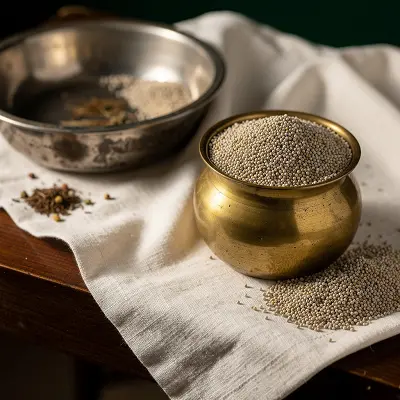
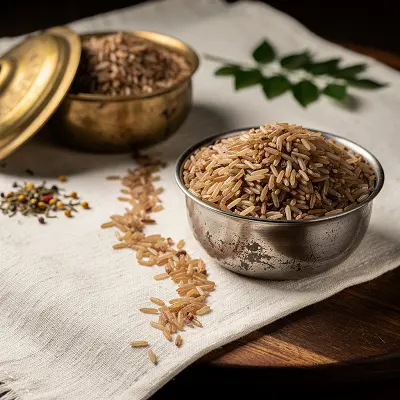
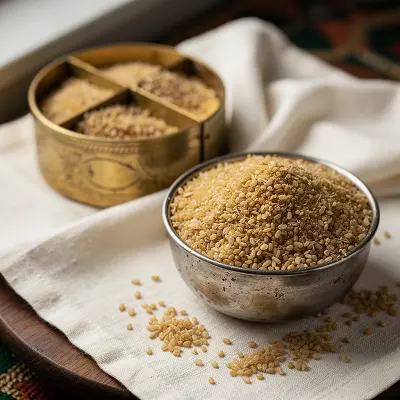
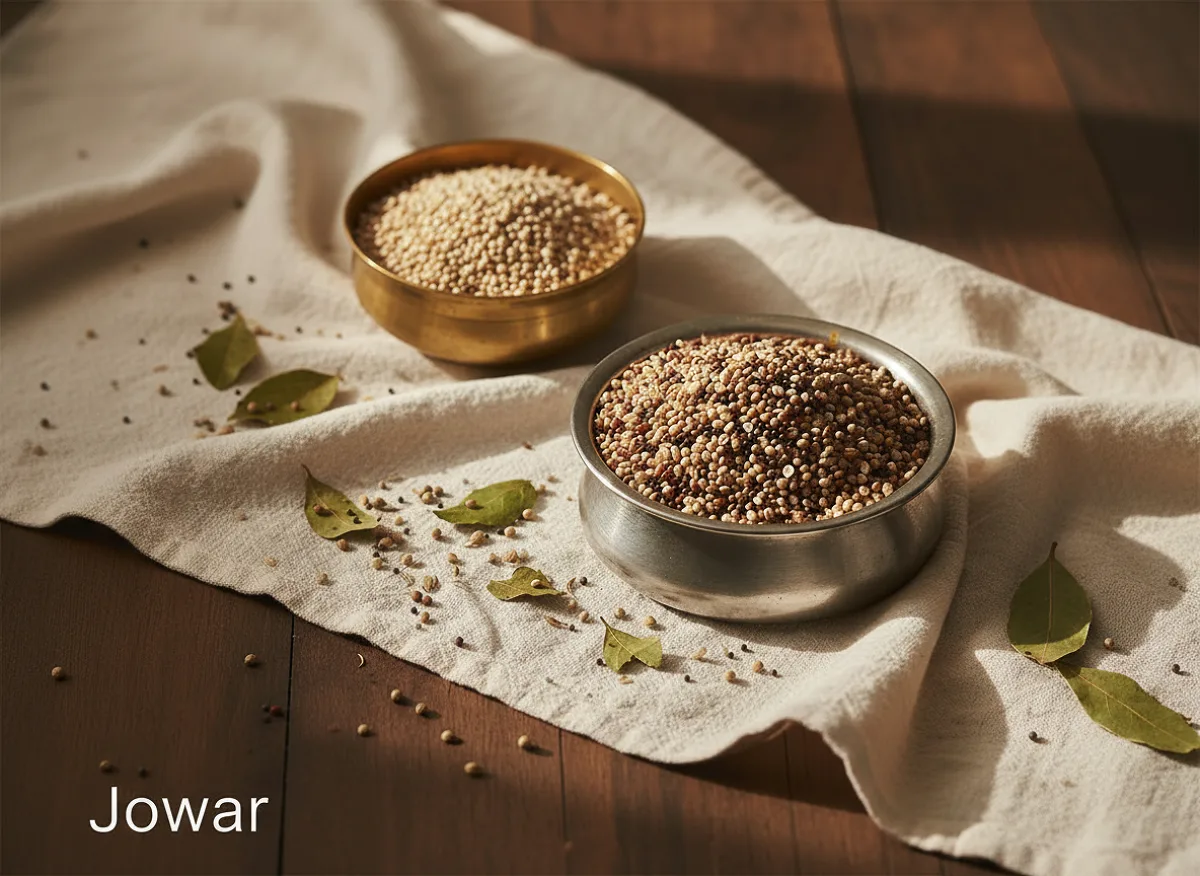
Jowar (ज्वार, jwar), also called sorghum or great millet, is a small, round grain with a mild, slightly sweet and nutty flavour. The whole grain ranges in colour from cream to reddish-brown, depending on variety and region. Jowar is naturally gluten-free and thrives in dry climates, making it a cornerstone cereal in semi-arid regions of India, especially Maharashtra, Karnataka, and Rajasthan. It is used whole for porridge and upma, or ground into flour for rotis and bhakri. (IFCT 2017, Ref #A005)
Use in Indian Kitchen
Jowar flour is the soul of bhakri - a thick, rustic flatbread beloved in Maharashtra and Karnataka that pairs perfectly with spiced curries, pickles, and ghee. In South India, jowar roti is a lighter, softer alternative to wheat, often served with sambar or rasam. Whole jowar grains are roasted and ground for a comforting breakfast porridge (jowar upma), sometimes mixed with vegetables and tempered with mustard and curry leaves. A practical tip: soak jowar flour briefly in water before kneading to improve dough elasticity and make the roti softer and easier to cook on a tawa.
Key Nutrients
Jowar is rich in carbohydrates, dietary fibre, and plant-based protein. It contains B vitamins (especially niacin and thiamine), iron, magnesium, and phosphorus. Being gluten-free, it is suitable for those with celiac sensitivity. Exact nutrient composition varies by variety and processing; refer to IFCT 2017 for detailed micronutrient profiles.
Health Benefits (Evidence-based)
- May support steady blood sugar levels due to its low glycaemic index and fibre content, making it a good choice for balanced meals.
- Linked to improved digestive health through its dietary fibre, which supports regular bowel function and gut microbiota.
- Naturally gluten-free, offering a safe grain alternative for those with coeliac disease or gluten sensitivity.
- Rich in antioxidants and polyphenols, which may help reduce oxidative stress in the body.
- Contains iron and other minerals that support energy production and overall vitality, particularly valuable in vegetarian diets.
Culinary Uses (Vegetarian)
- Bhakri - thick, rustic flatbread served with curries and pickles.
- Jowar roti - soft, slightly sweet flatbread for everyday meals.
- Jowar upma - roasted grain porridge with vegetables and tempering.
- Jowar dosa - fermented batter for crispy South Indian crepes.
- Jowar khichdi - one-pot comfort dish with lentils and vegetables.
- Jowar flour in traditional sweets and savoury snacks.
Caution
- Jowar contains tannins, which can reduce mineral absorption; soaking or sprouting may help minimise this effect.
- Those with a history of kidney stones should consume in moderation, as jowar contains oxalates.
- Always source from reputable suppliers to avoid adulteration with cheaper grains or fungal contamination.
References
- Indian Council of Medical Research - National Institute of Nutrition (ICMR-NIN). Indian Food Composition Tables (IFCT 2017). Reference #A005 - Cereals and Millet category.
- Dykes, L. & Rooney, L. W. (2006). Sorghum and millet phenols and antioxidants. Journal of Cereal Science, 44(3), 236-251.
Health Benefits
- Antioxidant
- Provides Energy
- Supports Digestion
- Supports Heart Health
- Helps Blood Sugar Control
Sourcing & Storage
Storage
Store jowar grains in an airtight container in a cool, dry place away from direct sunlight and moisture. In humid climates, keep in the refrigerator or freezer to prevent insect infestation and mould. Jowar flour should be stored in an airtight jar or tin, preferably in a cool cupboard or the fridge, as it can turn rancid if exposed to heat and humidity for extended periods.
Shelf Life
Whole jowar grains, when stored in an airtight container in a cool, dry place, keep for 6-8 months. Jowar flour has a shorter shelf life of 2-3 months at room temperature; refrigerated, it lasts 4-6 months. Once opened, transfer to an airtight container and use within the recommended timeframe to maintain freshness and prevent rancidity.
Check Before You Buy
When buying whole jowar grains, look for uniform colour (cream to reddish-brown depending on variety), clean grains free of dust, chaff, or discoloured spots, and a mild, slightly sweet aroma. Avoid grains that smell musty or show signs of moisture or insect damage. Check the packaging date on branded jowar flour and ensure the bag is sealed and undamaged. At the mandi or kirana shop, ask for freshly milled flour if possible, and inspect for any off-odours or clumping, which may indicate age or moisture exposure.
In Ayurveda
In classical Ayurveda, jowar (sorghum) is valued as a balancing grain for Vata and Kapha doshas. Its rasa (taste) is primarily madhura (sweet) and kashaya (astringent), with a sheeta (cool) virya (potency). Traditional Indian households have long used jowar as a digestive aid and cooling grain, particularly favoured in summer months. The grain is considered grounding and nourishing without being heavy, making it suitable for regular consumption in Ayurvedic dietary practice.