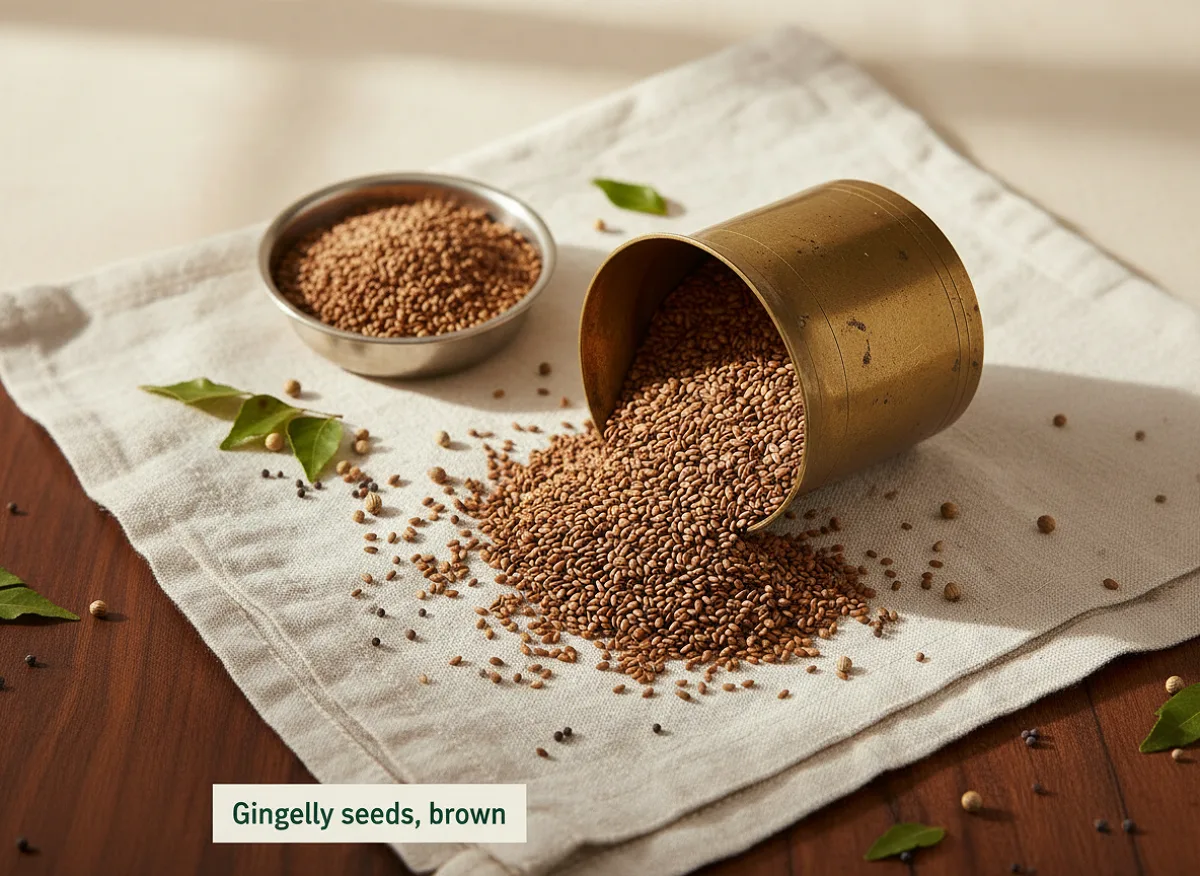
Gingelly seeds, brown
Sesamum indicum · Also known as Til, Sesame seeds, Matia rangar til, Tal, Acchellu, Nei, Ellu, Thoiding, Teel, Rasi, Nuvvulu
Brown gingelly seeds (til) are small, flat, nutty-flavoured seeds from the sesame plant, prized across Indian kitchens for their rich, toasted aroma and creamy texture when ground or roasted. Darker than white sesame, they carry a deeper, more robust flavour and are staple in Sou...
Nutrition per 100 g
Mean values ± IFCT published SD (edible portion).
More macros
Classification
About Gingelly seeds, brown
What it is
Brown gingelly seeds, or til (तिल), are small, flat, teardrop-shaped seeds from the sesame plant (Sesamum indicum). Darker and earthier than their white cousins, these seeds have a warm, nutty aroma that intensifies when roasted or ground. They are a cornerstone of Indian home cooking - used whole as a tempering seed, ground into paste for sweets and chutneys, or pressed for oil. Widely grown and used across India, from South Indian til laddu and chikhalwali to North Indian winter energy balls and Bengali til-er naru. (IFCT 2017, Ref #H010)
Use in Indian Kitchen
Brown til appears in countless regional dishes and preparations. In South India, they are roasted and ground into a paste for til chutney, mixed with jaggery for til laddu, or sprinkled whole into sambar and rasam. North Indian winter sweets like til-ke-laddoo and rewri (brittle with jaggery) rely on them for warmth and nourishment. They are also a classic tempering seed in dals, curries, and vegetable stir-fries across the country. A practical tip: dry roast the seeds lightly in a pan over medium heat for 2-3 minutes before grinding to deepen their flavour and make grinding easier; this also helps release their natural oils and makes them more digestible.
Ayurvedic Connection
In classical Ayurveda, til (sesame) is considered warming (ushna virya) and is traditionally used to balance Vata dosha, especially during winter months. The seeds are valued for their grounding, nourishing quality and are often recommended in winter tonics and energy-building preparations. Sesame oil (til ka tel) has long been used in Ayurvedic massage (abhyanga) and is believed to support joint health and skin vitality. However, those with high Pitta constitution should use them in moderation, as their heating nature may aggravate excess heat.
Key Nutrients
Brown gingelly seeds are nutrient-dense, providing protein, healthy fats (including linoleic and oleic acids), dietary fibre, and minerals such as calcium, iron, magnesium, phosphorus, and zinc. They also contain vitamin E and B vitamins. Exact nutrient composition varies by variety and growing conditions; refer to IFCT 2017 (Ref #H010) for detailed micronutrient profiles.
Health Benefits (Evidence-based)
- Rich in plant-based protein and healthy unsaturated fats, supporting heart health and sustained energy.
- High in calcium and magnesium, traditionally valued for bone and joint support.
- Contain lignans and sesamin, compounds linked in research to antioxidant and anti-inflammatory properties.
- May help support healthy cholesterol levels as part of a balanced diet.
- Good source of dietary fibre, supporting digestive wellness.
- Iron and copper content may contribute to healthy blood formation and oxygen transport.
Culinary Uses (Vegetarian)
- Roasted and ground into chutney with coconut, tamarind, and spices.
- Mixed with jaggery for traditional winter laddus and energy balls.
- Whole seeds as a tempering (tadka) in dals, sambar, and vegetable curries.
- Ground into paste for sweet and savoury preparations, including til barfi and til-based sweets.
- Sprinkled over rice, yoghurt, and salads for texture and nutrition.
- Pressed into oil for cooking and traditional massage.
Caution
- Sesame is a common allergen; those with known sesame allergy should avoid.
- High in oxalates; individuals prone to kidney stones may need to limit intake.
- Seeds are calorie-dense; portion control is wise for those managing weight.
- Heating nature means those with high Pitta or inflammatory conditions should use moderately and preferably in cooler seasons.
References
- Indian Council of Medical Research - National Institute of Nutrition (ICMR-NIN). Indian Food Composition Tables (IFCT 2017). Reference #H010 - Nuts and Seeds category.
- Namiki, M. (2007). Nutraceutical functions of sesame, olive, and palm oils. Journal of the Science of Food and Agriculture, 87(8), 1431-1438.
Sourcing & Storage
Storage
Store brown gingelly seeds in an airtight glass jar or container away from direct sunlight, heat, and moisture. Keep in a cool, dry place - ideally a kitchen cupboard or pantry at room temperature (below 25°C). In humid climates or during monsoon, store in the refrigerator to prevent moisture absorption and rancidity. Whole seeds keep longer than ground seeds; once ground into paste or flour, transfer to an airtight container and refrigerate to extend shelf life.
Shelf Life
Whole brown gingelly seeds, when stored in an airtight container in a cool, dry place, remain fresh for 6-8 months. In the refrigerator, they can last up to 10-12 months. Once ground into paste or flour, use within 2-3 weeks if stored at room temperature, or up to 1-2 months if refrigerated. Sesame oil (pressed from these seeds) keeps for 6-12 months in a cool, dark place, though refrigeration extends shelf life further.
Check Before You Buy
When buying brown gingelly seeds, look for a uniform dark brown colour and avoid seeds that appear pale, greyish, or discoloured, which may indicate age or poor storage. Smell the seeds - they should have a warm, nutty, pleasant aroma; a musty or rancid smell signals spoilage. Check the packaging for moisture or clumping; seeds should be dry and free-flowing. If buying loose from a mandi or kirana store, ask when the stock arrived and inspect for debris, dust, or insect damage. Avoid seeds that feel oily or sticky to the touch, as this suggests rancidity or improper storage.
In Ayurveda
In classical Ayurveda, sesame (तिल) is considered warming and grounding, with a sweet (madhura) rasa and oily (snigdha) quality. Sesame oil is traditionally used in abhyanga (self-massage) and is believed to nourish the nervous system and support joint health. The seeds are thought to balance Vata dosha when used in moderation, though they are warming and may increase Pitta if consumed in excess during hot seasons. Sesame is mentioned in classical texts as a rejuvenative (rasayana) food, particularly valued in winter wellness routines.