Fresh Coconut
Cocos nucifera · Also known as Naariyal, coconut, nariyal, khopra
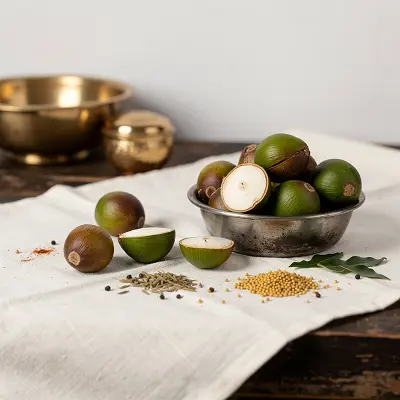
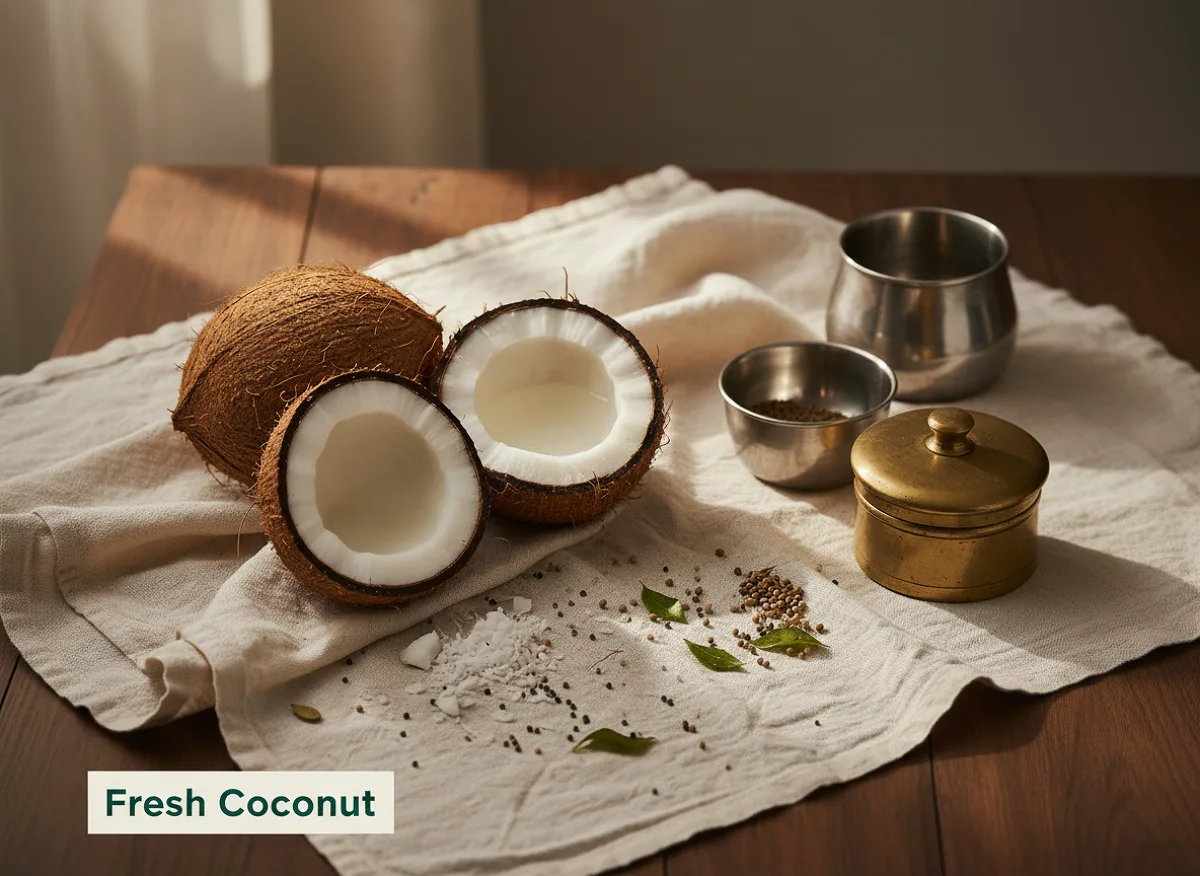
Fresh coconut (नारियल, naariyal) is the mature fruit of the coconut palm, prized across Indian kitchens for its creamy white flesh and sweet, nutrient-rich water. The hard brown shell houses tender white meat that can be grated, shredded, or pressed into rich milk - a cornerstone...
Nutrition per 100 g
Mean values ± IFCT published SD (edible portion).
More macros
Classification
About Fresh Coconut
What it is
Fresh coconut (नारियल, naariyal) is the mature fruit of the coconut palm, with a hard fibrous brown husk encasing a thick white kernel and clear, slightly sweet water inside. The flesh is firm and creamy, ranging from ivory to pale yellow depending on maturity and variety. Whole fresh coconuts are sold year-round in Indian markets, though peak season runs from October to March. The kernel can be eaten fresh, grated, or pressed into milk - a fundamental ingredient across South Indian, coastal, and festival cooking. (IFCT 2017, Ref #H007)
Use in Indian Kitchen
Fresh coconut is essential to South Indian cuisine: grated and ground into sambar powder, blended into rasam paste, and simmered into rich coconut milk for curries like kootu, avial, and fish moilee. In the North and West, fresh coconut appears in chutneys (coconut-coriander, coconut-jaggery), barfi, and laddoos. Coastal kitchens use coconut milk as a base for gravies and seafood preparations. A practical tip: soak freshly grated coconut in warm water for 10-15 minutes, then squeeze firmly to extract rich, creamy milk; the first pressing yields the thickest milk, ideal for finishing curries. Tender coconut water is drunk fresh or used in rice dishes and sweets.
Key Nutrients
Fresh coconut flesh is rich in medium-chain fatty acids (primarily lauric acid), dietary fibre, manganese, copper, and phosphorus. It also contains smaller amounts of iron, zinc, and B vitamins. Coconut water is low in calories and contains electrolytes including potassium, sodium, and magnesium. Exact nutrient composition varies with maturity and variety; refer to IFCT 2017 for detailed values.
Health Benefits (Evidence-based)
- May support heart health when consumed in moderation; lauric acid in coconut is linked to favourable cholesterol profiles in some studies.
- Coconut water is traditionally used as a natural electrolyte drink and may help with mild dehydration and post-exercise recovery.
- Dietary fibre in fresh coconut flesh supports digestive health and regular bowel function.
- Manganese and copper content may contribute to bone health and connective tissue formation.
- Traditionally valued in Ayurvedic practice for its cooling and nourishing properties.
Culinary Uses (Vegetarian)
- Grated fresh coconut in sambar powder, rasam paste, and curry bases.
- Coconut milk in South Indian gravies (kootu, avial, stew), rice dishes, and payasam.
- Fresh coconut chutney paired with idli, dosa, and upma.
- Tender coconut flesh in salads, rice preparations, and festive sweets.
- Coconut water as a refreshing drink or cooking liquid for rice and khichdi.
- Dried and grated coconut in barfi, laddoos, and traditional sweets.
Caution
- Coconut is calorie-dense; portion control is wise for those managing weight or blood lipids.
- Whole coconuts can be difficult to crack; use a sturdy knife or hammer carefully to avoid injury.
- Rancid or mouldy coconut flesh should be discarded; check for off odours or dark spots before use.
- Those with tree nut allergies should consult a healthcare provider, though coconut allergy is less common than other tree nuts.
References
- Indian Council of Medical Research - National Institute of Nutrition (ICMR-NIN). Indian Food Composition Tables (IFCT) 2017. Reference #H007 (Nuts and Seeds category).
- Fife, B. (2009). Coconut Water for Health and Healing. Piccadilly Books. Traditional and contemporary uses of coconut in Indian and tropical cuisines.
Health Benefits
- Improves Digestion
- Provides Energy
- Heart Health Support
- Supports Brain Health
Sourcing & Storage
Storage
Store whole fresh coconuts at room temperature (20-25°C) in a cool, dry, well-ventilated place away from direct sunlight. Coconuts can last 2-3 weeks or longer if kept dry. Once cracked, wrap the flesh tightly in cling film or store in an airtight container in the refrigerator. Freshly grated coconut should be refrigerated immediately and used within 2-3 days, or frozen in portions for up to 3 months. Coconut water can be refrigerated in a sealed bottle for 3-5 days or frozen for several months.
Shelf Life
Whole, uncracked fresh coconuts stored at room temperature last 2-3 weeks or longer if kept in a cool, dry place. Once opened, fresh coconut flesh keeps in the refrigerator for 3-5 days when wrapped tightly, or up to 3 months when frozen in portions. Freshly grated coconut lasts 2-3 days refrigerated; coconut milk made at home should be used within 1-2 days. Coconut water keeps refrigerated for 3-5 days in a sealed bottle.
Check Before You Buy
Choose coconuts that feel heavy for their size - a sign of plenty of water and flesh inside. Shake gently; you should hear liquid sloshing. Avoid coconuts with cracks, soft spots, or mould on the shell. The brown husk should be intact and fibrous, not dried out or splitting. At the market or kirana, inspect the three "eyes" (small circular marks) at one end; they should be firm, not sunken or leaking. Avoid coconuts with a sour or fermented smell, which indicates spoilage inside.
In Ayurveda
In Ayurveda, fresh coconut is classified as cooling (शीतल - sheetal) and sweet (मधुर - madhur), making it beneficial for balancing excess Pitta dosha. The coconut water is particularly valued for its hydrating and Pitta-pacifying properties, traditionally recommended during hot seasons and for those with inflammatory conditions. The flesh is considered nourishing (पौष्टिक - paushtic) and is used to support overall vitality and tissue health. Coconut oil, derived from the dried kernel, has been used in classical Ayurvedic practice for skin and hair care, and is believed to have cooling and rejuvenating qualities.