Flattened Rice
Oryza sativa · Also known as poha, chivda rice, beaten rice, aval (Tamil), atukulu (Telugu), pauwa (Marathi)
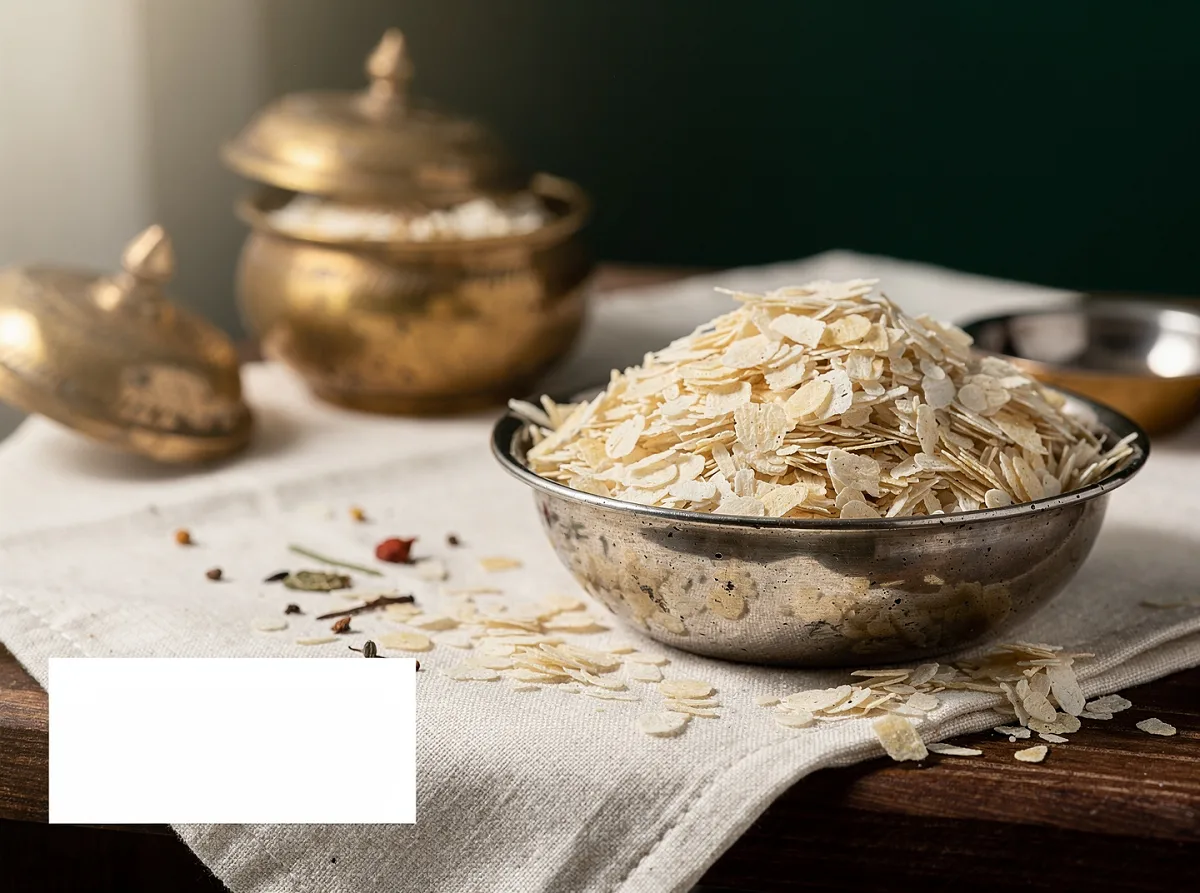
Flattened rice, or poha, is parboiled rice that has been flaked and dried into thin, crispy white or golden flakes. Light and quick to cook, it needs no soaking and absorbs flavours instantly - making it the backbone of breakfast dishes like poha upma across India, and a key ingr...
Nutrition per 100 g
Mean values ± IFCT published SD (edible portion).
More macros
Classification
About Flattened Rice
What it is
Flattened rice, known as poha in Hindi and Marathi, aval in Tamil, and atukulu in Telugu, is rice that has been parboiled, dried, and then rolled or beaten into thin, papery flakes. The result is a pale cream or golden-white ingredient that is instantly recognisable by its delicate, crisp texture and mild rice aroma. Unlike raw rice, poha requires no soaking or lengthy cooking - it softens in minutes when mixed with warm water or fried with vegetables. It is a staple across North and South India, especially beloved for quick breakfasts and light snacks. (IFCT 2017, Ref #A011)
Use in Indian Kitchen
Poha is the soul of comfort breakfasts: tossed with onions, green chillies, turmeric, and a squeeze of lemon to make poha upma in Maharashtra and Gujarat, or crisped with peanuts and curry leaves in South Indian versions. It is also pressed into savoury snack mixes like chivda, layered into poha chikhalwali (a Maharashtrian sweet-savoury breakfast cake), and used as a binder in vegetable fritters and cutlets. A practical tip: fry poha lightly in ghee or oil before adding wet ingredients to keep it from turning mushy and to deepen its flavour. In the monsoon, when humidity is high, store it in an airtight container to preserve its crispness.
Key Nutrients
Flattened rice is primarily carbohydrate-rich, providing quick energy. It contains small amounts of protein, dietary fibre, and B vitamins (thiamine, niacin). Exact nutrient composition varies by processing method and brand; refer to IFCT 2017 (Ref #A011) for standardised values.
Health Benefits (Evidence-based)
- Quick source of carbohydrates and energy, making it ideal for breakfast or light meals.
- Low in fat and cholesterol, supporting heart-friendly eating when prepared with minimal oil.
- Easily digestible, making it suitable for convalescence and gentle diets.
- Gluten-free by nature, safe for those with coeliac disease or gluten sensitivity.
- Fortified varieties (when available) may provide added iron and B vitamins to support energy metabolism.
Culinary Uses (Vegetarian)
- Poha upma - fried with onions, green chillies, turmeric, and peanuts for a quick breakfast.
- Chivda - mixed with peanuts, cashews, dried chillies, and spices for a savoury snack.
- Poha cutlets and fritters - bound with mashed potato or besan for vegetable patties.
- Poha chikhalwali - a sweet-savoury breakfast cake layered with jaggery and ghee.
- Poha khichdi - cooked with vegetables and mild spices for a light, comforting one-pot meal.
- Garnish for curries and dals - scattered on top for texture and visual appeal.
Caution
- Poha is low in protein and fibre compared to whole grains; pair it with lentils, vegetables, or yoghurt for a balanced meal.
- Some commercial poha may contain added salt or preservatives; check the label if you are watching sodium intake.
- Store away from moisture and strong odours, as poha absorbs both easily and loses its crispness in humid conditions.
References
- Indian Council of Medical Research - National Institute of Nutrition (ICMR-NIN). Indian Food Composition Tables (IFCT 2017). Reference #A011 (Cereals and Millet - Flattened Rice).
- Gopalan, C., Rama Sastri, B. V., & Balasubramanian, S. C. (2016). Nutritive Value of Indian Foods. National Institute of Nutrition, ICMR, Hyderabad.
Health Benefits
- Provides Energy
- Easy Digestion
- Quick Energy Source
- Light On Stomach
Sourcing & Storage
Storage
Store flattened rice in an airtight container or glass jar, away from direct sunlight and moisture. Keep it in a cool, dry place - ideally in a cupboard or pantry away from the kitchen stove. In humid climates or during the monsoon, consider storing the container in a cool corner or adding a food-grade silica sachet to absorb excess moisture. Avoid storing near strong-smelling spices or foods, as poha absorbs odours readily.
Shelf Life
When stored in an airtight container in a cool, dry place, flattened rice typically keeps for 2-3 months. Once opened, consume within 4-6 weeks for best crispness and flavour. In high humidity or warm climates, shelf life may be shorter; discard if it becomes soft, discoloured, or develops an off smell.
Check Before You Buy
Look for poha that is uniformly pale cream or golden-white in colour, with no dark spots, discolouration, or signs of moisture. The flakes should be crisp and break easily between your fingers - avoid any that feel soft or clumpy, which signals moisture absorption or age. Check the packaging for the manufacturing and expiry dates, and ensure the seal is intact. If buying from a loose bin at the market or kirana shop, ask the vendor how long the stock has been open and smell it briefly to confirm freshness and the absence of mustiness.
In Ayurveda
In classical Ayurveda, rice (Oryza sativa) is considered sattvic and easy to digest. Flattened rice, being pre-cooked, is lighter on the digestive system and is traditionally used to balance Vata and Pitta doshas, especially when prepared with ghee and salt. It has been a staple recovery food in Indian households for pregnant women, nursing mothers, and those recovering from illness or weakness.