Dry Maize
Zea mays · Also known as Dry Maize, Corn
Dry maize (corn) is a staple cereal grain widely used across Indian kitchens in both whole and ground forms. Rich in carbohydrates and fibre, it features in regional dishes from cornmeal porridges to flatbreads and is a key ingredient in many traditional preparations (IFCT 2017,...
Nutrition per 100 g
Mean values ± IFCT published SD (edible portion).
More macros
Classification
About Dry Maize
What it is
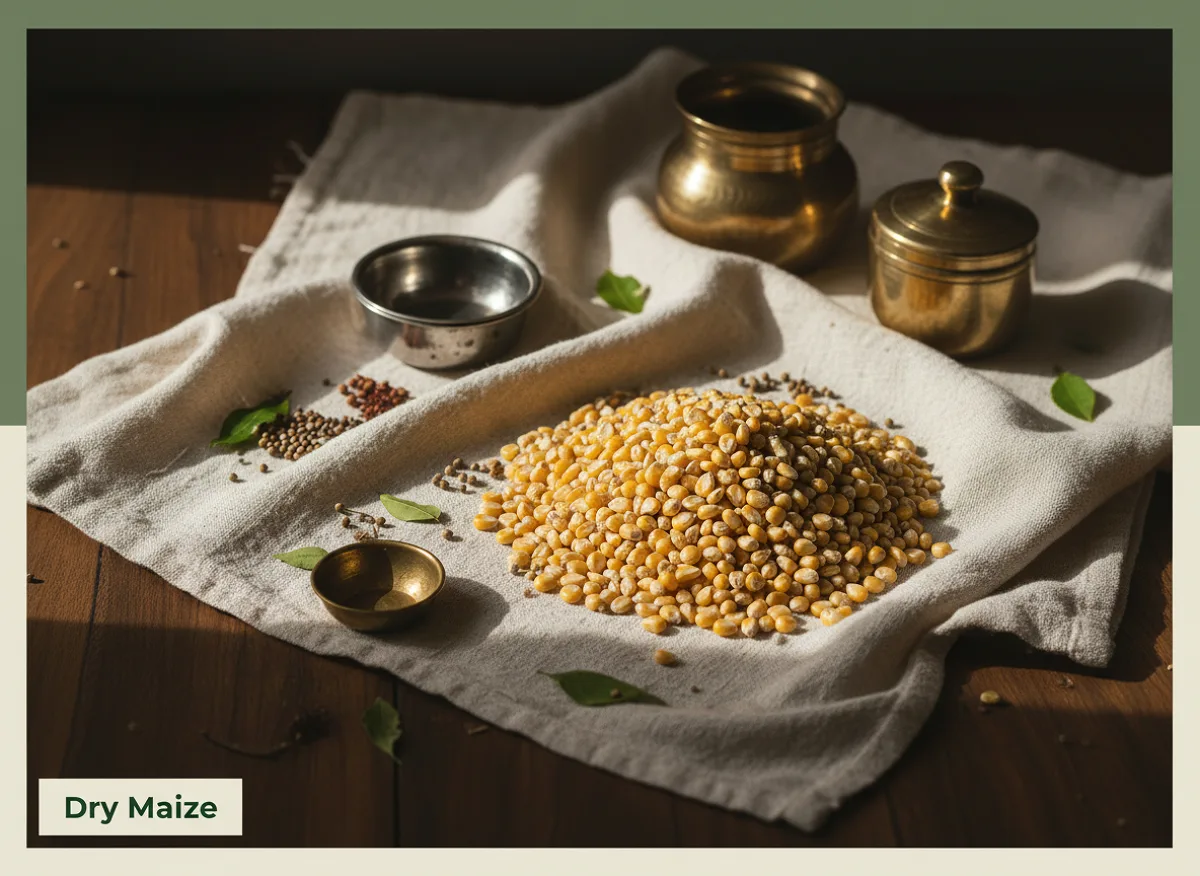
Dry maize, or corn, is a cereal grain belonging to the grass family. It is harvested when fully mature and dried for storage and use. In India, maize is grown across many regions and used in both whole kernel and ground (flour) forms. The grain is naturally gluten-free and has been a dietary staple for centuries (IFCT 2017, Ref #A006).
Use in Indian Kitchen
Dry maize holds different culinary roles across India's regions. In North India, maize flour (makki ka atta) is ground into flatbreads like makki di roti, traditionally paired with sarson da saag in Punjab. In the South, cornmeal is used in upma and porridges. Eastern kitchens favour maize in khichdi and savoury preparations. Roasted maize kernels are a popular street snack, and popped corn (bhutta) is enjoyed during monsoon and winter months. The grain's mild, slightly sweet flavour makes it versatile in both savoury and sweet dishes, from vegetable curries to cornmeal puddings.
Key Nutrients
Dry maize is a good source of carbohydrates, dietary fibre, and plant-based protein. It contains B vitamins (thiamine, niacin, and folate), minerals including phosphorus, magnesium, and iron, and antioxidants such as lutein and zeaxanthin. The exact nutrient profile varies slightly by variety and growing conditions; refer to IFCT 2017 for detailed composition data.
Health Benefits (Evidence-based)
- May support steady energy release due to its complex carbohydrate content, making it suitable for sustained physical activity.
- Dietary fibre in maize may help support digestive health and regular bowel function.
- Contains antioxidants linked to eye health, particularly lutein and zeaxanthin.
- Gluten-free nature makes it a safe grain choice for those with coeliac disease or gluten sensitivity.
- Plant-based protein and amino acids contribute to overall protein intake, especially when combined with legumes in traditional dishes.
- May help maintain stable blood sugar levels when consumed as whole grain or minimally processed forms.
Culinary Uses (Vegetarian)
- Ground into flour for flatbreads (makki di roti, cornmeal rotli).
- Cooked whole or cracked in upma, khichdi, and vegetable pulao.
- Roasted or popped as a snack (bhutta, popcorn).
- Ground into fine meal for porridges, puddings, and sweet preparations.
- Added to vegetable curries, mixed vegetable dishes, and dal preparations.
- Used in traditional chutneys and spice blends in some regional cuisines.
Caution
Dry maize is generally safe for most people. Those with corn allergies should avoid it. Some individuals may experience digestive discomfort if consuming large quantities of whole maize without adequate water intake. Maize flour products should be stored carefully to prevent mould growth in humid climates, as aflatoxin contamination is a potential risk in poorly stored grain; always buy from trusted sources and store in dry conditions.
References
- Indian Council of Medical Research - National Institute of Nutrition (ICMR-NIN). Indian Food Composition Tables 2017 (IFCT 2017). Reference code A006 - Cereals and Millet category.
- National Institute of Nutrition, ICMR. Dietary Guidelines for Indians - A Manual. New Delhi: NIN Publications.
Health Benefits
- Antioxidant
- Provides Energy
- Supports Digestion
- Supports Eye Health
- Supports Heart Health
Sourcing & Storage
Storage
Store dry maize in an airtight container in a cool, dry place away from direct sunlight and moisture. In humid climates, keep the container in a cupboard or pantry with good air circulation. Ensure the storage area is free from pests and rodents. For longer storage, refrigeration or freezing in sealed containers can help preserve freshness and prevent rancidity of the grain's natural oils.
Shelf Life
Well-stored whole dry maize kernels can last 6 to 12 months in a cool, dry pantry. Maize flour has a shorter shelf life of 2 to 3 months due to its larger surface area and exposure to air and moisture. Once opened, transfer flour to an airtight container and use within 1 to 2 months. Refrigeration extends flour shelf life to 4 to 6 months; freezing can preserve it for up to a year.
Check Before You Buy
When buying dry maize, look for kernels that are uniform in colour (typically yellow, white, or red depending on variety) and free from cracks, discolouration, or visible mould. The grains should feel dry and hard to the touch with no musty or off odours. Avoid kernels that are shrivelled, broken, or show signs of insect damage. Buy from reputable kirana shops or mandis with good stock turnover. Check packaged maize for a clear expiry date and ensure the packaging is intact and moisture-proof. If buying loose grain, ask the vendor about the harvest date and storage conditions to ensure freshness and safety.
In Ayurveda
Dry maize is regarded as a valuable grain with numerous health benefits. It is known for its ability to balance the body's doshas - Vata, Pitta, and Kapha. Rich in essential nutrients, maize supports digestive health, boosts energy levels, and aids in weight management. Its high fiber content is particularly beneficial for maintaining a healthy gut. In addition to its dietary importance, maize is also quite often used to prepare nourishing porridge that aids in recovery from ailments and promotes overall well-being.
The soothing properties of maize make it a preferred choice for calming digestive issues and enhancing vitality.