Dry Coconut
Cocos nucifera · Also known as Dried coconut, सूखा नारियल (sookha naariyal), copra, desiccated coconut, नारियल की गिरी (naariyal ki giri)
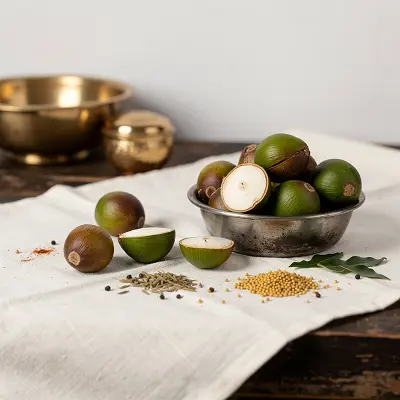
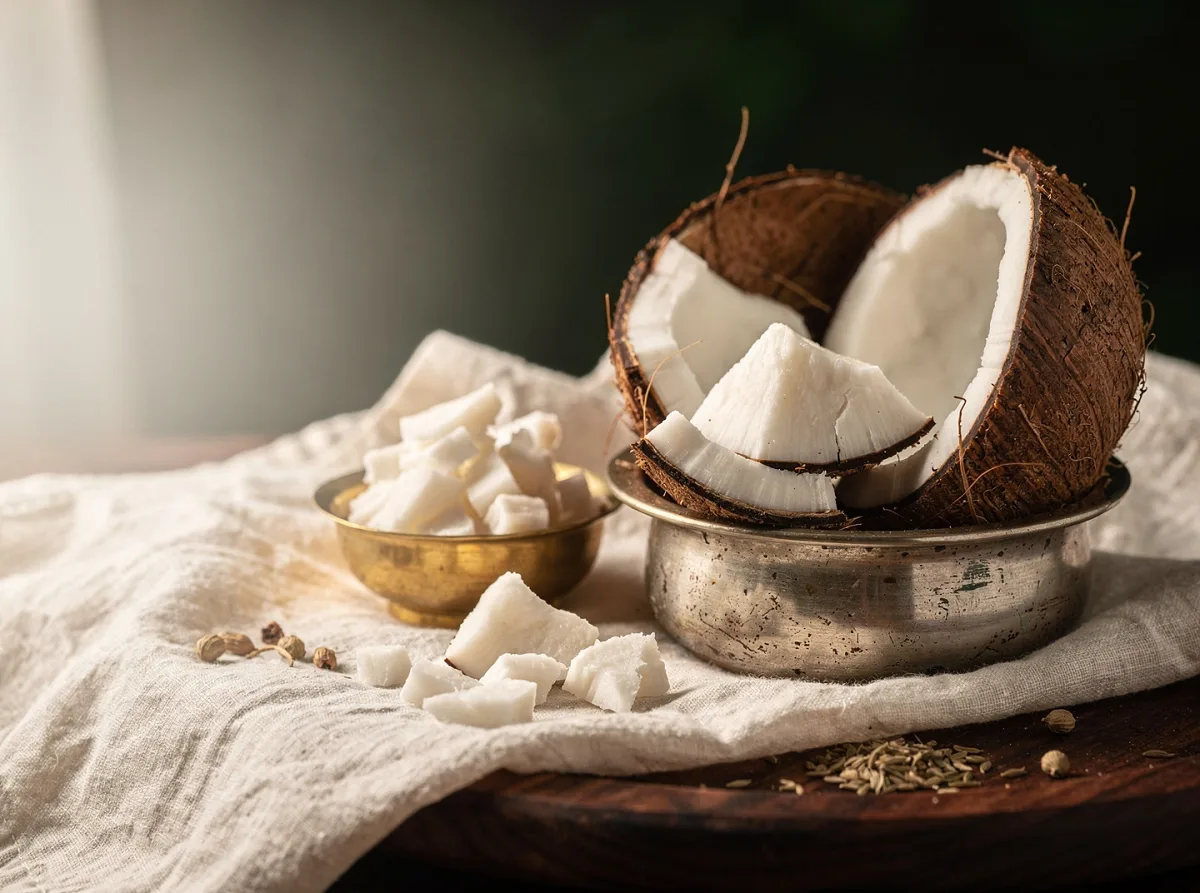
Dry coconut (सूखा नारियल, sookha naariyal) is the white kernel of mature coconut, dried and often shredded or grated. It has a dense, chewy texture and concentrated sweet, nutty flavour. Used across Indian kitchens in chutneys, curries, sweets, and tempering - a staple in South I...
Nutrition per 100 g
Mean values ± IFCT published SD (edible portion).
More macros
Classification
About Dry Coconut
What it is
Dry coconut (सूखा नारियल, sookha naariyal) is the white kernel of a mature coconut that has been dried and often shredded, grated, or powdered. It has a dense, slightly chewy texture and a concentrated sweet, nutty flavour that deepens when roasted. Available as whole pieces, shredded strands, or fine powder, dry coconut is a cornerstone of South Indian and festival cooking across India. (IFCT 2017, Ref #H006)
Use in Indian Kitchen
Dry coconut appears in countless vegetarian dishes: coconut chutney (fresh or roasted), sambar, rasam, kootu, avial, and curries across Kerala, Tamil Nadu, and Karnataka. North Indian sweets like barfi, laddu, and kheer often use powdered dry coconut. It is also ground into paste for gravies, sprinkled as garnish on upma or idli, or roasted and tempered with mustard and curry leaves. A practical tip: lightly roast dry coconut before grinding to intensify its flavour and reduce any musty notes, especially if stored for several months.
Key Nutrients
Dry coconut is rich in healthy fats (including medium-chain triglycerides), fibre, manganese, copper, and phosphorus. It also contains small amounts of iron, zinc, and B vitamins. Exact nutrient composition varies with moisture content and processing method; refer to IFCT 2017 (Ref #H006) for detailed micronutrient profiles.
Health Benefits (Evidence-based)
- May support energy and satiety due to its fat and fibre content, making it useful in traditional energy-dense sweets and snacks.
- Linked to improved digestion when used in curries and chutneys, particularly in South Indian cuisine where it is a base ingredient.
- Contains manganese and copper, minerals traditionally valued for bone health and connective tissue support.
- Fibre content may help maintain healthy cholesterol and blood sugar levels when consumed in moderation.
- Traditionally used in Ayurvedic preparations for its cooling and nourishing properties.
Culinary Uses (Vegetarian)
- Roasted coconut chutney (South Indian breakfast staple).
- Sambar, rasam, and vegetable curries across Tamil, Telugu, and Kannada kitchens.
- Sweets: barfi, laddu, kheer, halwa, and festival preparations.
- Tempering and garnish for upma, idli, dosa, and rice dishes.
- Paste base for gravies and korma-style curries.
- Powdered form in batter for fritters and snacks.
Caution
- High in calories and saturated fat; use in measured quantities, especially for those managing weight or cholesterol.
- May trigger allergies in sensitive individuals; always check for cross-contamination in packaged products.
- Rancidity risk if stored in warm, humid conditions; inspect for off-odours or discolouration before use.
- Choking hazard for young children if used in large, unground pieces.
References
- Indian Council of Medical Research - National Institute of Nutrition (ICMR-NIN). Indian Food Composition Tables (IFCT) 2017. Reference #H006 (Nuts and Seeds category).
- Fife, B. (2009). Coconut Water for Health and Healing. Piccadilly Books. [General reference on coconut nutrition and traditional use in Asian cuisines.]
Health Benefits
- Improves Digestion
- Provides Energy
- Heart Health Support
- Supports Brain Health
Sourcing & Storage
Storage
Store dry coconut in an airtight container or glass jar away from direct sunlight and heat. Keep in a cool, dry place (ideally below 20°C if possible, or in a cool cupboard away from the stove). In humid climates, store in the refrigerator or freezer to prevent moisture absorption and rancidity. Ensure the container is sealed tightly after each use to keep out moisture and insects.
Shelf Life
Well-stored dry coconut keeps for 3-4 months at room temperature in a cool, dry place, and up to 6-8 months in the refrigerator. Frozen dry coconut can last up to a year. Once opened, use within 2-3 weeks if stored at room temperature, or 1-2 months if refrigerated. Discard if you notice an off-odour, rancid smell, or visible mould.
Check Before You Buy
Look for dry coconut that is white or pale cream in colour, with no dark spots, discolouration, or visible mould. Smell should be fresh and mildly sweet - avoid any musty, sour, or rancid odour, which signals spoilage. If buying loose from a mandi or kirana, ask the vendor when it was dried and packaged; fresher stock is preferable. For packaged products, check the manufacturing and expiry dates, and ensure the packet is intact with no moisture or oil seepage inside.
In Ayurveda
In classical Ayurvedic texts, coconut (नारियल, naariyal) is recognized as a cooling (शीतल, sheetal) and nourishing ingredient. Dry coconut is traditionally used to support digestive health and is believed to have a sweet (मधुर, madhur) rasa and a grounding quality. It is often recommended in Ayurvedic cooking for its ability to balance pitta dosha due to its cooling nature, though its oily quality also supports vata balance when used in moderation.