Paneer
Also known as Cottage cheese, Indian cheese, chhena, panir
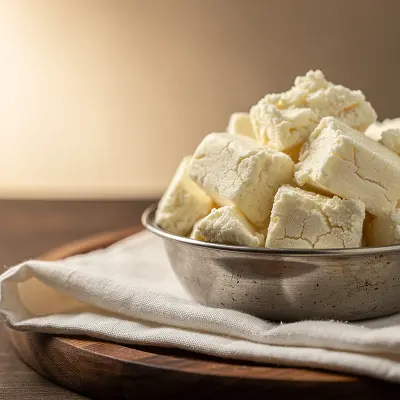
Paneer is a fresh, unripened cheese made by curdling milk with lemon juice or vinegar, then pressing the curds into soft blocks. Mild, creamy, and slightly tangy, it holds its shape when cooked, making it ideal for curries, grilling, and frying. A staple protein in Indian vegetar...
Nutrition per 100 g
Mean values ± IFCT published SD (edible portion).
More macros
Classification
About Paneer
What it is
Paneer (पनीर, panir) is a fresh, acid-set cheese made by heating milk and curdling it with lemon juice or vinegar, then draining and pressing the curds into firm, crumbly blocks. It has a mild, slightly tangy flavour and a soft, squeaky texture that becomes creamy when cooked. Unlike aged cheeses, paneer does not melt; instead, it softens and absorbs the flavours of spices and sauces around it. It is sold fresh in blocks or cubes at most Indian grocers and is best used within days of purchase. (IFCT 2017, Ref #L003)
Use in Indian Kitchen
Paneer is the backbone of North Indian vegetarian cooking and increasingly popular across all regions. It is cubed and simmered in creamy spinach gravy for palak paneer, marinated and grilled for paneer tikka, crumbled and stir-fried with peas and onions for paneer bhurji, and layered with cream and fruit for the dessert shahi tukda. In South India, paneer appears in kurma and some modern sambhar variations. A practical tip: if paneer is too soft or crumbly, briefly soak it in ice-cold water to firm it up, or pan-fry it gently over medium heat to develop a light crust before adding to curries. This prevents it from breaking apart during cooking.
Key Nutrients
Paneer is rich in protein, calcium, and phosphorus, making it a valuable source of these nutrients for vegetarian diets. It also contains fat, vitamin A, and B vitamins. Exact nutrient composition varies with the milk used and the pressing method; refer to IFCT 2017 (Ref #L003) for detailed values.
Health Benefits (Evidence-based)
- High in protein, supporting muscle maintenance and repair, especially valuable in vegetarian diets.
- Rich in calcium and phosphorus, linked to bone health and strength.
- Contains conjugated linoleic acid (CLA), which may support metabolic health.
- Provides vitamin B12 and other B vitamins, important for energy and nervous system function.
- May help maintain satiety and stable blood sugar when paired with fibre-rich vegetables and whole grains.
Culinary Uses (Vegetarian)
- Cubed in creamy curries: palak paneer, paneer makhani, paneer tikka masala, paneer korma.
- Marinated and grilled or baked: paneer tikka, paneer seekh, tandoori paneer.
- Crumbled and stir-fried: paneer bhurji, paneer do pyaza.
- Shallow-fried until golden: paneer fry, paneer pakora, paneer cutlet.
- Layered in desserts: shahi tukda, paneer kheer.
- Stuffed in parathas, samosas, and pastries.
Caution
- Paneer is high in saturated fat and calories; portion control is wise for those managing weight or cholesterol.
- Fresh paneer can spoil quickly in warm climates; store in the coldest part of the fridge and use within 3-4 days.
- Some people may experience digestive discomfort if paneer is eaten in large quantities or with heavy spices; pairing with digestive aids like ginger or asafoetida may help.
- Those with lactose intolerance may tolerate paneer better than milk, but should still be cautious, as some lactose remains.
References
- Indian Council of Medical Research - National Institute of Nutrition (ICMR-NIN). Indian Food Composition Tables (IFCT 2017). Reference #L003 (Milk and Milk Products category).
- Prajapati, J. B., & Nair, B. M. (2003). The history of fermented foods. In E. R. Farnworth (Ed.), Handbook of fermented functional foods (pp. 1-24). CRC Press.
Health Benefits
- Provides Energy
- Supports Muscle Health
- Improves Bone Health
Sourcing & Storage
Storage
Store paneer in an airtight container or wrapped tightly in plastic film in the coldest part of your refrigerator (ideally 2-4°C). If paneer is very fresh and moist, place it on a clean cloth or paper towel to absorb excess moisture before sealing, to prevent bacterial growth. Keep it away from strong-smelling foods, as paneer absorbs odours easily. In hot, humid climates, check daily for any signs of spoilage (sour smell, discolouration, or sliminess).
Shelf Life
Fresh paneer keeps for 3-4 days when stored properly in the refrigerator. Once opened or cut, use within 1-2 days. Paneer can be frozen in an airtight container for up to 1 month, though freezing may slightly alter its texture, making it crumbly; thaw in the fridge before use. Cooked paneer dishes (curries, fries) typically keep for 2-3 days in the fridge.
Check Before You Buy
Look for paneer that is white or pale cream in colour, with no yellowing or dark spots. It should feel firm and slightly springy to the touch, not mushy or overly soft. Smell it gently - fresh paneer has a mild, slightly tangy dairy aroma; any sour or off smell indicates spoilage. Check the packaging date if buying pre-packed paneer; avoid any with visible moisture pooling or condensation inside the pack. At the mandi or kirana, buy from vendors with good turnover and clean, cool storage. Homemade paneer is often fresher and creamier than some commercial brands, so if you have access to a trusted local maker, it is worth trying.
In Ayurveda
In classical Ayurveda, paneer is valued as a nourishing and strength-building food. It is classified as having a sweet (madhura) rasa, unctuous (snigdha) quality, and cooling (sheeta) virya. Paneer is traditionally considered beneficial for balancing vata and pitta doshas, though it may increase kapha when consumed in excess. In traditional Indian households, paneer has long been recommended as a wholesome protein source for children, the elderly, and those recovering from illness, believed to support physical strength and vitality.