Buffalo Milk
Also known as doodh, buffalo doodh, भैंस का दूध (bhains ka doodh)
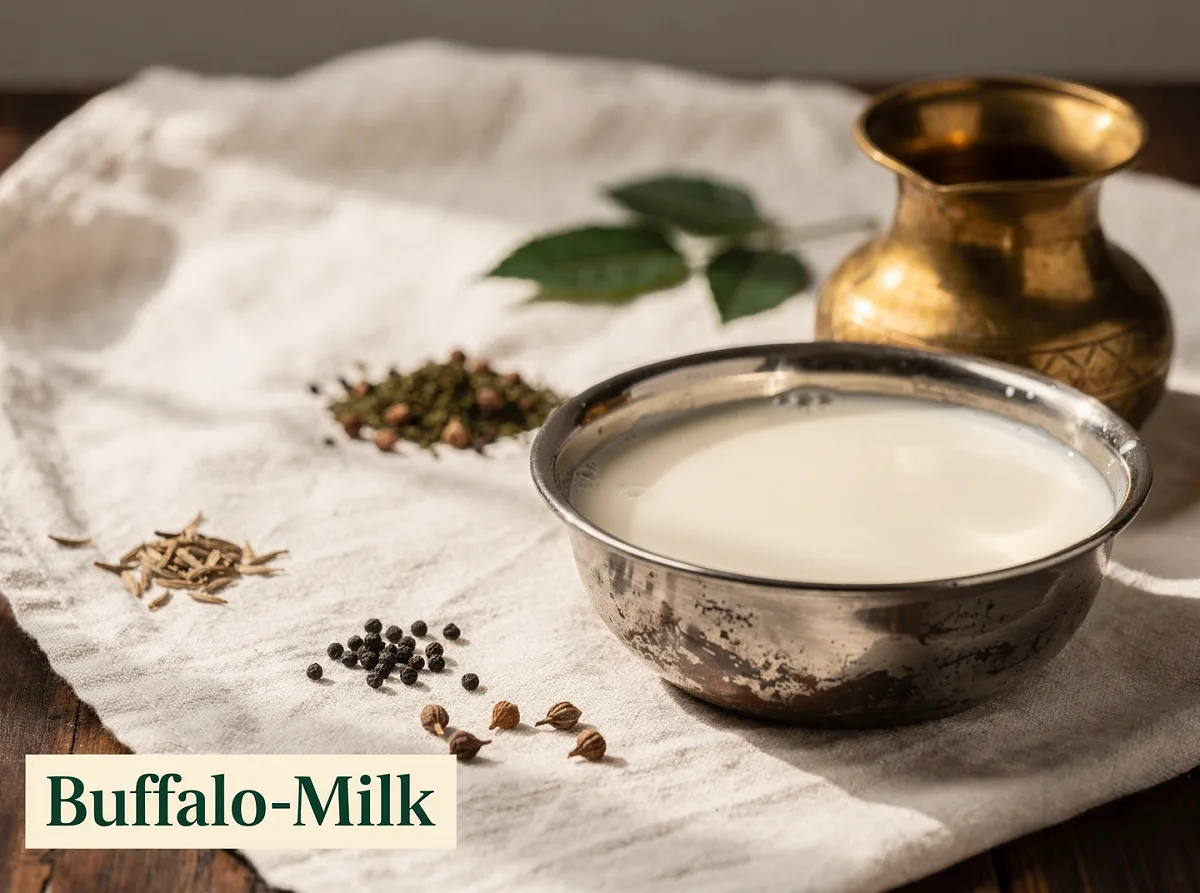
Buffalo milk (भैंस का दूध, bhains ka doodh) is a rich, creamy dairy staple across India, prized for its higher fat and protein content compared to cow milk. Thicker and naturally whiter, it is the preferred base for paneer, ghee, kheer, rabri, and traditional sweets. A single gla...
Nutrition per 100 g
Mean values ± IFCT published SD (edible portion).
More macros
Classification
About Buffalo Milk
What it is
Buffalo milk (भैंस का दूध, bhains ka doodh) is a nutrient-dense dairy product sourced from water buffalo, widely consumed across India, particularly in North and Central regions. It is noticeably creamier and whiter than cow milk, with a naturally higher fat and protein profile. Typically sold fresh (often still warm from the dairy) or pasteurised in urban markets, buffalo milk is the foundation of many Indian sweets, curries, and fermented foods. (IFCT 2017, Ref #L001)
Use in Indian Kitchen
Buffalo milk is the preferred choice for making paneer (fresh cheese curds), ghee (clarified butter), and traditional milk-based desserts such as kheer, rabri, and barfi. In North India, it is simmered into creamy gravies for korma and makhani curries; in the South, it features in payasam and milk-based chutneys. Curd (dahi) made from buffalo milk sets thicker and tangier, ideal for lassi, raita, and marinating paneer. A practical tip: if making paneer at home, use full-fat buffalo milk and heat it slowly to just below boiling point to yield the softest, most delicate curds.
Key Nutrients
Buffalo milk is rich in protein, fat-soluble vitamins (A, D, E), calcium, phosphorus, and B vitamins (particularly B12). It contains higher levels of fat and lactose than cow milk, making it more satiating and energy-dense. Exact nutrient composition varies by season, feed, and individual animal; refer to IFCT 2017 for standardised reference values.
Health Benefits (Evidence-based)
- High in protein and fat, supporting muscle maintenance and sustained energy, particularly valuable for growing children and active adults.
- Rich in bioavailable calcium and phosphorus, linked to bone health and dental strength when consumed regularly.
- Contains conjugated linoleic acid (CLA) and other fatty acids that may support metabolic wellness.
- Naturally higher in vitamin A and beta-carotene, supporting eye health and immune function.
- The fat content aids absorption of fat-soluble vitamins and may promote satiety and stable blood sugar when part of a balanced meal.
- Traditionally used in Ayurvedic wellness routines as a nourishing, grounding food for vata and pitta constitutions.
Culinary Uses (Vegetarian)
- Fresh paneer (cheese curds) for sabzi, tikka, and curry.
- Ghee (clarified butter) for tempering, cooking, and finishing dishes.
- Curd (dahi) for lassi, raita, marinating, and fermented preparations.
- Milk-based sweets: kheer, rabri, barfi, peda, and halwa.
- Creamy gravies and korma curries in North Indian cuisine.
- Payasam and milk-based desserts in South Indian festivals.
- Milk puddings (phirni) and custard-style preparations.
Caution
- Those with lactose intolerance may find buffalo milk harder to digest than cow milk due to higher lactose content; fermented forms (curd, ghee) are often better tolerated.
- High fat content makes it unsuitable for those on strict low-fat diets; portion control is advisable for weight management.
- Ensure milk is from a trusted, hygienic source and is properly pasteurised or boiled before consumption to reduce foodborne illness risk.
- Individuals with dairy allergies should avoid; buffalo milk proteins may cross-react with cow milk allergies in some cases.
References
- Indian Council of Medical Research (ICMR) - National Institute of Nutrition (NIN). Indian Food Composition Tables (IFCT 2017). Reference #L001 (Milk and Milk Products category).
- Pandya, P. R., & Ghodke, S. K. (2007). "Goat and Buffalo Milk Composition and Its Suitability for Manufacturing Dairy Products." International Journal of Dairy Science, 2(4), 383-391.
Health Benefits
- Supports Bone Health
- Provides Energy
- Weight Gain Support
Sourcing & Storage
Storage
Store buffalo milk in a clean, airtight glass or food-grade plastic container in the coldest part of the refrigerator (2-4°C). Keep away from direct sunlight and strong-smelling foods. If using a traditional clay pot (matka), ensure it is clean and store in a cool, shaded corner of the kitchen. In warm Indian climates, transfer to the fridge immediately after purchase to prevent souring.
Shelf Life
Fresh, pasteurised buffalo milk keeps for 3-4 days in the refrigerator when stored properly. Raw, freshly drawn milk may last 1-2 days in summer and up to 2-3 days in cooler seasons. Once opened, consume within 2-3 days. Boiled milk (a common practice in Indian homes) may last slightly longer if cooled and refrigerated promptly. Frozen buffalo milk can be stored for up to 3 months, though texture and taste may change slightly upon thawing.
Check Before You Buy
When buying fresh buffalo milk from a dairy or mandi, check that it is creamy white (not overly bright white, which may indicate added water or starch), has a fresh, mild dairy aroma, and shows no sour or off smell. The milk should feel smooth and slightly thick when poured. Avoid milk with visible sediment, froth, or a thin, watery appearance. If buying packaged milk, verify the pasteurisation date and expiry, and ensure the seal is intact. In urban areas, opt for branded, pasteurised buffalo milk from reputable dairies to reduce contamination risk.
In Ayurveda
In classical Ayurveda, buffalo milk (bhains ka doodh) is considered a nourishing and cooling dairy product that balances Vata and Pitta doshas. It is traditionally valued for building ojas (vital essence), strengthening dhatus (body tissues), and promoting overall vitality. The milk is believed to support bone health, enhance digestion when consumed as yoghurt or buttermilk, and promote restful sleep when taken warm in the evening.