Sugarcane
Saccharum officinarum · Also known as गन्ना (ganna), cane sugar, sugar cane
Sugarcane (गन्ना, ganna) is a tall, fibrous grass stalk prized across India for its sweet juice and crystalline sugar. Fresh cane juice, pressed from the stalk, is a beloved street drink and ingredient in traditional sweets, jaggery, and molasses. The plant yields multiple forms...
Nutrition per 100 g
Mean values ± IFCT published SD (edible portion).
More macros
Classification
About Sugarcane
What it is
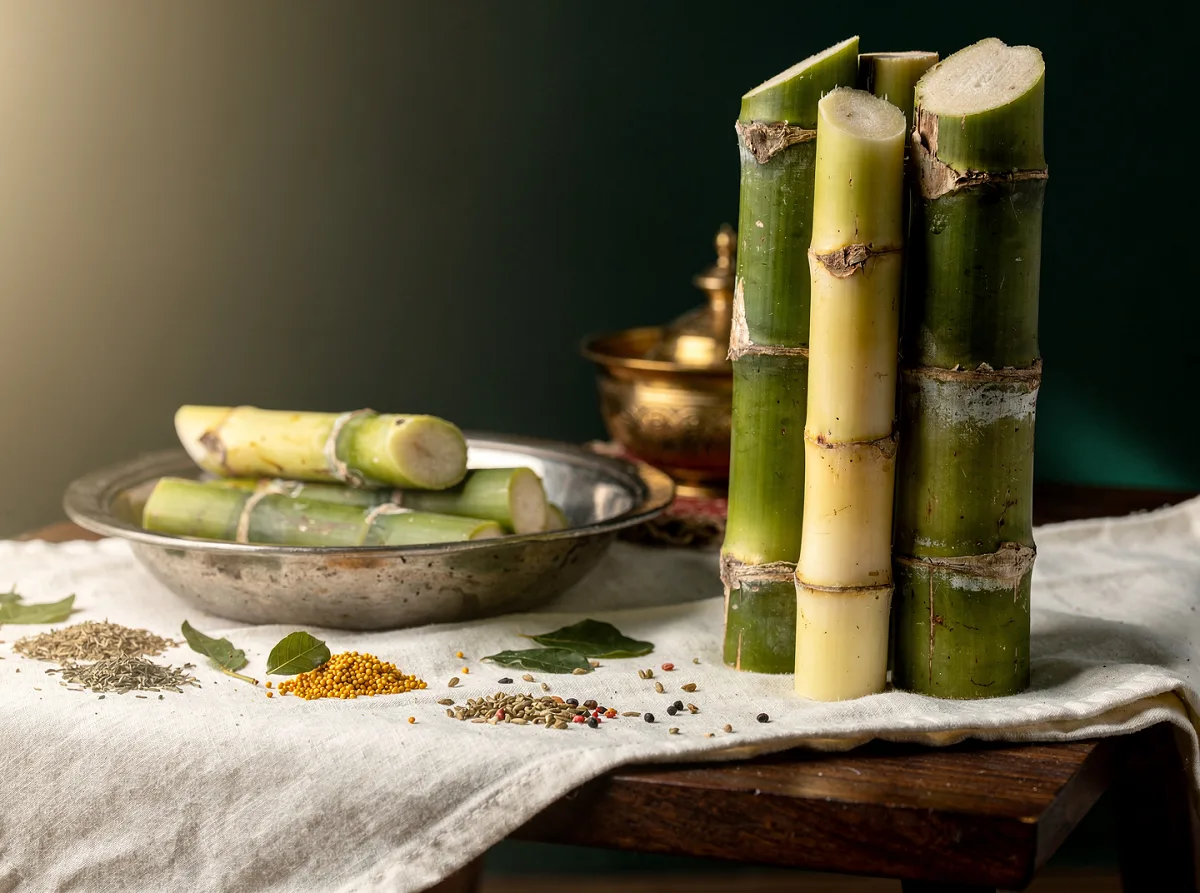
Sugarcane (गन्ना, ganna) is a tall, jointed grass stalk with a fibrous, woody core and a sweet, watery interior. The plant grows 1.5 to 2 metres tall, with thick, segmented stalks ranging from pale green to purple-tinged varieties. When fresh, the cane is crisp and juicy; when processed, it yields clear juice, golden jaggery, white crystalline sugar, and dark molasses. Across India, sugarcane is harvested in winter and early spring, and the juice is consumed fresh or reduced into traditional sweets and preserves. (IFCT 2017, Ref #I002)
Use in Indian Kitchen
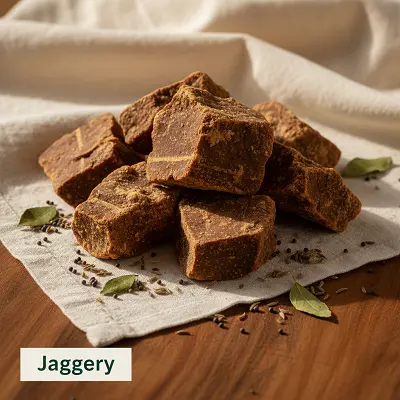
Fresh sugarcane juice is a winter staple, sold at street corners and consumed chilled or warm with a squeeze of lime and ginger. The juice is also simmered into gur (jaggery), a dark, unrefined sugar used in til-gur laddoos, chikhalwali, and winter sweets across North India. In South India, jaggery sweetens payasam, halwa, and chikhalali. Molasses (the byproduct of sugar refining) is used in traditional gud-based chutneys and fermented drinks. A practical tip: when buying fresh cane juice, ensure it is pressed in front of you to guarantee freshness and hygiene; store it in the fridge and consume within 24 hours.
Key Nutrients
Fresh sugarcane juice contains carbohydrates (primarily sucrose), small amounts of potassium, calcium, magnesium, and trace minerals. Jaggery retains more minerals than refined white sugar, including iron and manganese. Exact nutrient composition varies by variety, soil, and processing method; refer to IFCT 2017 for detailed values.
Health Benefits (Evidence-based)
- May provide quick energy due to high natural sugar content, useful for athletes and those needing rapid glucose replenishment.
- Jaggery is traditionally linked to improved digestion and may support liver function, though clinical evidence is limited.
- Contains small amounts of minerals such as potassium and magnesium, which support heart and muscle function.
- Molasses retains more micronutrients than refined sugar and may offer modest iron content, particularly valuable in plant-based diets.
- Traditionally used in Ayurvedic and folk medicine to soothe cough and support respiratory comfort during winter.
Culinary Uses (Vegetarian)
- Fresh juice: consumed as a chilled or warm drink, often with ginger, lime, or mint.
- Jaggery (gur): sweetener in laddoos, halwa, payasam, kheer, and winter festival sweets.
- Molasses: ingredient in chutneys, fermented drinks, and traditional energy balls.
- White sugar: refined form used in everyday cooking, beverages, and desserts.
Caution
- High sugar content makes it unsuitable for those managing blood sugar levels or diabetes without medical guidance.
- Fresh juice should be consumed immediately after pressing to avoid fermentation and bacterial growth; store in the refrigerator if kept longer than a few hours.
- Excessive consumption may contribute to dental decay and weight gain.
- Those with candida overgrowth or yeast sensitivity should limit intake.
References
- Indian Council of Medical Research - National Institute of Nutrition (ICMR-NIN). Indian Food Composition Tables 2017. IFCT 2017, Ref #I002.
- National Institute of Nutrition, ICMR. Nutritive Value of Indian Foods. Hyderabad: NIN Publications.
Health Benefits
- Improves Digestion
- Hydration
- Cooling Effect
Sourcing & Storage
Storage
Fresh sugarcane stalks: Store in a cool, dark place (ideally 10-15°C) or in the vegetable drawer of the refrigerator for up to 2 weeks. Keep away from direct sunlight and moisture to prevent mould and sprouting. Wrap in damp cloth or newspaper if storing for extended periods.
Fresh sugarcane juice: Refrigerate immediately in a clean, airtight glass bottle. Consume within 24 hours to avoid fermentation and spoilage.
Jaggery (gur): Store in an airtight container in a cool, dry place away from humidity. In humid climates, keep in the refrigerator to prevent hardening and mould.
White sugar and molasses: Store in airtight containers in a cool, dry cupboard away from moisture and pests.
Shelf Life
Fresh sugarcane stalks keep for 1-2 weeks in cool storage or the refrigerator. Fresh juice lasts 24 hours when refrigerated in a sealed bottle; it will ferment if left at room temperature. Jaggery (gur) lasts 6-12 months in an airtight container in a cool, dry place; in humid conditions, refrigerate to extend shelf life. White sugar and molasses remain stable for several years when stored in airtight containers away from moisture.
Check Before You Buy
Fresh sugarcane stalks: Choose firm, unblemished stalks with a slight sheen and no soft spots or mould. The stalk should feel heavy for its size, indicating good juice content. Avoid stalks that are dried out, cracked, or have a musty smell. At the mandi or kirana, ask the vendor to cut a small section so you can check the interior for colour and freshness.
Fresh sugarcane juice: Buy from vendors with clean equipment and high turnover. Ensure the juice is pressed in front of you; it should be clear, pale golden, and free of foam or off-odours. Avoid juice that has been sitting in open containers or exposed to sunlight.
Jaggery (gur): Look for a uniform dark brown or golden colour without white spots (which indicate crystallisation or mould). The texture should be slightly soft and crumbly, not rock-hard or sticky. Smell for a clean, caramel-like aroma; avoid any musty or fermented odour. Check the packaging date if buying packaged gur.
In Ayurveda
In classical Ayurveda, sugarcane (and especially jaggery / guda) is classified as having a sweet (madhura) rasa and cooling (sheeta) virya. It is traditionally considered nourishing and supportive to digestion. Jaggery is often recommended in Ayurvedic practice as a gentle sweetener that is easier to digest than refined sugar and is believed to support overall vitality.
Traditional Ayurvedic texts mention guda as helpful for respiratory comfort and general weakness. However, modern Ayurvedic practitioners advise moderate consumption, especially for those with elevated blood sugar or weak digestion.