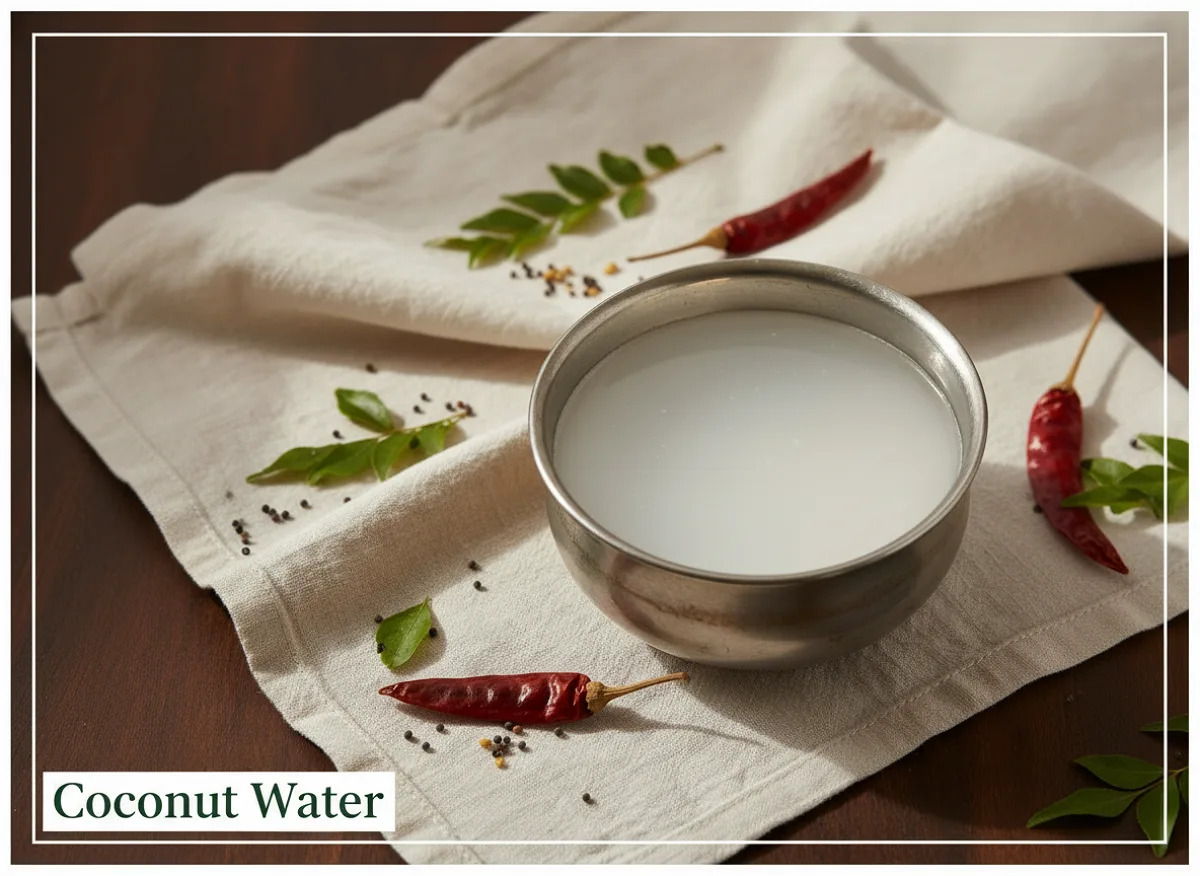
Coconut Water
Also known as naariyal paanee, nariyal jal, tender coconut water, green coconut water
Coconut water (naariyal paanee) is the clear, slightly sweet liquid found inside young green coconuts, harvested at 5-7 months of maturity. Naturally isotonic and rich in electrolytes, it is sipped fresh as a cooling summer drink across India, or used in curries, chutneys, and tr...
Nutrition per 100 g
Mean values ± IFCT published SD (edible portion).
More macros
Classification
About Coconut Water
What it is
Coconut water (naariyal paanee) is the translucent, mildly sweet liquid extracted from the cavity of young green coconuts, typically harvested before the kernel hardens. It is pale, refreshing, and naturally isotonic - containing potassium, sodium, and magnesium in proportions close to human plasma. In India, it is drunk fresh from the nut (often with a straw cut into the shell at the market), or collected and used in cooking. (IFCT 2017, Ref #K002)
Use in Indian Kitchen
Coconut water is primarily enjoyed as a chilled summer drink, especially in Kerala, Tamil Nadu, and coastal regions where coconuts are abundant. It is also used to cook rice (for a subtle sweetness and nutrition), to prepare traditional payasam and kheer, and occasionally to thin coconut milk-based curries or sambhar. In some regions, it is fermented into a mildly alcoholic toddy. A practical tip: use fresh coconut water within a few hours of extraction, or refrigerate immediately; the flavour and nutrient profile degrade quickly at room temperature.
Key Nutrients
Coconut water contains potassium, sodium, magnesium, calcium, and phosphorus. It also provides small amounts of carbohydrates (mainly sugars), amino acids, and B vitamins. Exact nutrient composition varies with coconut maturity and growing conditions; refer to IFCT 2017 for standardised Indian values.
Health Benefits (Evidence-based)
- May support natural hydration and electrolyte balance, particularly in hot climates or after physical activity.
- Linked to gentle digestive support and may help soothe the stomach lining due to its mild, easily absorbed composition.
- Contains potassium, which is traditionally valued for heart and muscle function.
- May help maintain healthy blood pressure when consumed as part of a balanced diet.
- Traditionally used in Ayurvedic practice as a cooling, pitta-balancing beverage.
Culinary Uses (Vegetarian)
- Chilled fresh drink, served in the shell or poured into glasses.
- Base for rice dishes (coconut water rice, pulao).
- Ingredient in payasam, kheer, and traditional milk-based sweets.
- Thinning agent in coconut milk curries and sambhar.
- Fermented into traditional beverages in coastal regions.
Caution
- Those with kidney disease or on potassium-restricted diets should consult a healthcare provider before regular consumption.
- Coconut water is not a substitute for medical rehydration therapy in severe dehydration or electrolyte imbalance.
- Packaged coconut water may contain added sugars or preservatives; check labels if using store-bought versions.
- Allergic reactions to coconut are rare but possible; discontinue if any adverse reaction occurs.
References
- Indian Council of Medical Research - National Institute of Nutrition (ICMR-NIN). Indian Food Composition Tables (IFCT) 2017. Reference K002 - Miscellaneous Foods category.
- Yong, J. W. H., Ge, L., Ng, Y. F., & Tan, S. N. (2009). The chemical composition and biological properties of coconut (Cocos nucifera L.) water. Journal of Functional Foods, 1(2), 161-169.
Health Benefits
- Improves Digestion
- Hydration
- Heart Health Support
- Restores Electrolytes
Sourcing & Storage
Storage
Fresh coconut water should be refrigerated immediately after extraction and consumed within 24-48 hours for best flavour and nutrient retention. Store in a clean, airtight glass bottle or container at 4°C (refrigerator temperature). If using packaged coconut water, follow the manufacturer's instructions on the label. Do not store at room temperature for more than 2-3 hours, as fermentation and spoilage occur rapidly in warm Indian climates.
Shelf Life
Fresh coconut water: 24-48 hours when refrigerated at 4°C. Unopened packaged coconut water: typically 12-18 months when stored in a cool, dark place, depending on processing method and preservatives used. Once opened, packaged coconut water should be consumed within 3-5 days if refrigerated.
Check Before You Buy
When buying fresh coconuts for water, choose young green nuts (5-7 months old) that feel heavy for their size and have no cracks, soft spots, or mould. Shake gently - you should hear liquid sloshing inside. Avoid nuts with brown patches or a musty smell. At the market or mandi, vendors often cut the top open so you can taste the water before purchase. If buying packaged coconut water, check the expiry date, ingredient list (avoid added sugars or artificial preservatives if possible), and ensure the bottle or carton is intact with no leaks or dents.
In Ayurveda
In Ayurveda, coconut water is classified as sheeta virya (cooling in potency) and laghu (light), making it traditionally recommended for pacifying excess pitta (heat) during summer months. It is valued for its natural electrolytes and is believed to support ojas (vital essence) and maintain the body's fluid balance. Classical Ayurvedic texts suggest its use as a gentle hydrating agent, particularly beneficial after physical exertion or in hot climates.