Why We Are Building AamoAI™
: The Intelligence Gap in Indian Nutrition Technology
Est. read time: 4 minutes | Category: Nutrition Science & Technology
There was a specific moment when this became unavoidable.
We were reviewing the iron content of palak (spinach) inside a popular nutrition-tracking app. The value shown: 2.7 mg per 100g. A reasonable number — unless you know Indian food. The Indian Food Composition Tables (IFCT), published by the National Institute of Nutrition, places cooked palak at closer to 1.9 mg per 100g, with significant variation based on variety, cooking method, and pairing ingredients like lemon (which boosts absorption) or tea (which reduces it).
The app was pulling from a USDA database. An American database. For Indian spinach. Served to Indian users managing iron-deficiency anaemia — one of the most prevalent nutrition disorders in the country.
That is the intelligence gap we are building AamoAI™
Indian Food Is the World's Most Complex Culinary System
No other cuisine on earth operates at this level of regional, seasonal, religious, and household-level variation — all simultaneously.
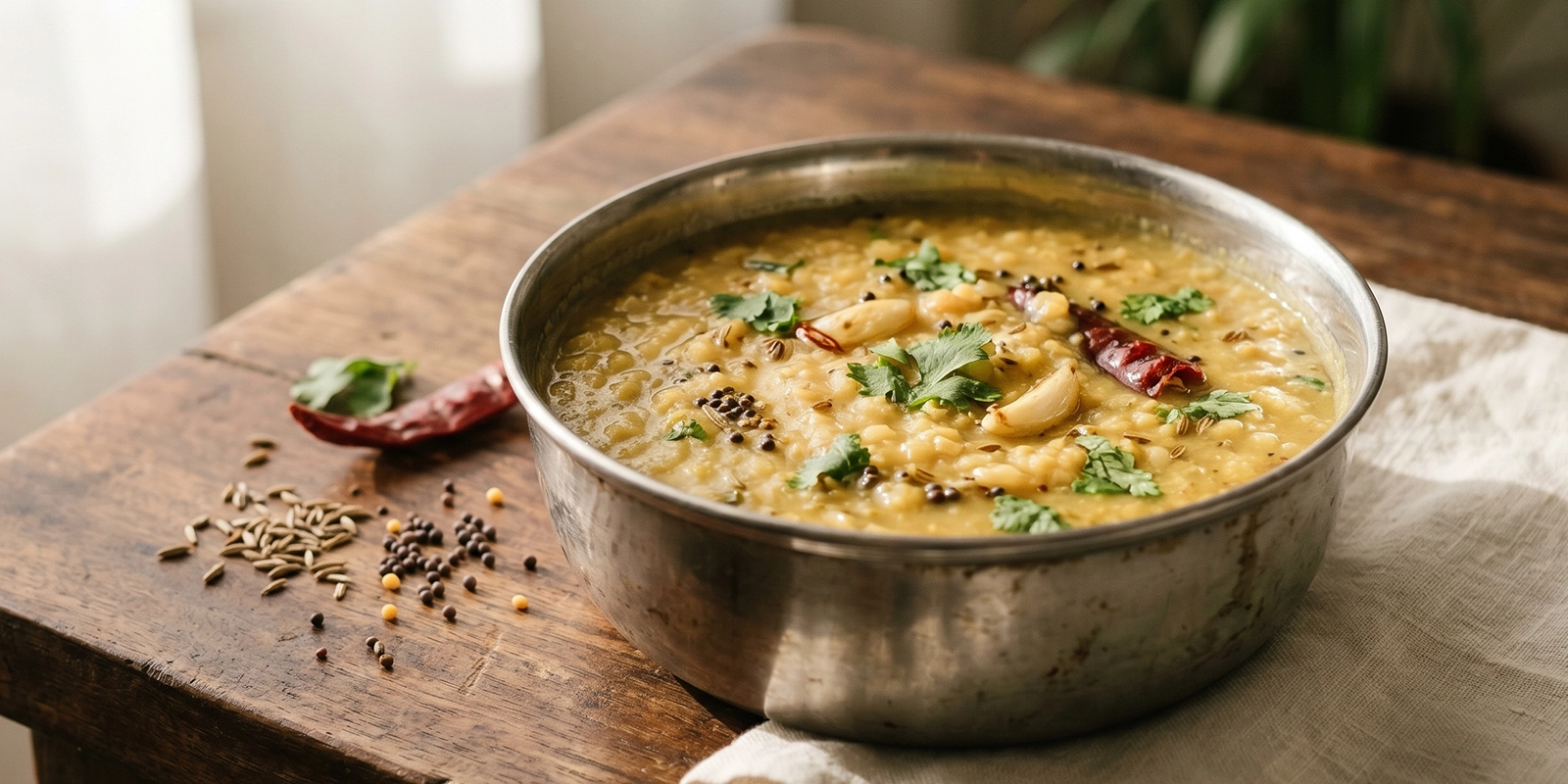
Consider just one ingredient: dal.
- A dal tadka in Delhi uses yellow moong, a ghee tempering, and dried red chillies.
- A Bisi Bele Bath in Karnataka uses toor dal, jaggery, coconut, and tamarind — and doubles as a full meal.
- A dal baati in Rajasthan adds clarified fat at a ratio that fundamentally changes its caloric density.
Global nutrition platforms treat all three as the same ingredient. They are not. Not nutritionally, not culturally, not physiologically.
Layer onto this the reality of Indian cooking techniques — tempering changes fat absorption, slow cooking on a tawa alters glycaemic response, fermentation boosts bioavailability — and you begin to see the problem. Indian nutrition cannot be approximated. It must be understood from the inside.
The Science Exists. The Technology Layer Doesn't.
India has done the hard scientific work. The Indian Council of Medical Research (ICMR) published updated Recommended Dietary Allowances in 2020 — specific to Indian bodies, Indian lifestyles, and Indian disease burdens. The Indian Food Composition Tables (IFCT) document the nutrient profiles of thousands of indigenous ingredients across regional varieties.
What does not exist is a technology infrastructure that puts this science to work at scale.
No B2B API. No embedded intelligence layer. No platform that hospitals, insurance companies, catering operations, or consumer apps can build on. The knowledge sits in PDFs and research papers while practitioners work around it — or worse, substitute it with Western data that was never designed for our population.
This is the gap that nutrition intelligence India has been waiting for someone to fill.
Why Infrastructure — Not Another Consumer App
The instinct in Indian health tech has been to build consumer-facing calorie trackers. Log your meals. Hit your macros. Get a score.
We thought carefully about this path — and chose a different one.
The more fundamental need is an intelligence layer: a platform that other products can build on. Hospitals need it to automate therapeutic diets for renal, diabetic, and cardiac patients. Corporate wellness platforms need it to give employees meaningful, India-native health guidance. Grocery and quick-commerce apps need it for pantry-aware meal recommendations. Families need it to plan meals across the diabetic grandfather, the growing teenager, and the toddler — all from one kitchen.
We are calling this model NIaaS — Nutrition Intelligence as a Service. An API-first infrastructure that makes Indian nutrition science programmable, embeddable, and scalable.
What
AamoAI™
Is Building: An Honest PreviewWe are early stage. We are honest about that. But the foundation is real:
- 4,110 vegetarian recipes built for Indian households — regional, seasonal, festival-aware
- 642 IFCT-verified ingredients mapped with cooking-method-adjusted nutrient profiles
- ICMR RDA 2020 aligned dietary recommendations — not borrowed from Western standards
- Support for Indian portion language — katoras, "thodi si", "ek mutthi" — not clinical grams
- Protocol handling for Navratri, Jain fasting, Satvik cooking, and 40+ other dietary contexts
The vision is larger: to become India's foundational nutrition operating system — the intelligence layer every health and food platform is eventually built on.
Join Us in Building This Right
If you are a dietician frustrated by tools that don't understand your patients' food, a hospital nutritionist building therapeutic diets by hand, a wellness platform that knows its users deserve better — we want to hear from you.
AamoAI™
Join the waitlist. Tell us what you need. Help us build this right.
Because Indian food — the most complex, most deeply human food system in the world — finally deserves a nutrition intelligence layer worthy of it.
🌿 AamoAI™
We are onboarding hospitals, wellness platforms, and institutional partners for our beta programme.
Request early access →
Translate insights into your client plans.
Use AamoAI™ to build culturally-grounded meal plans in minutes — not hours.